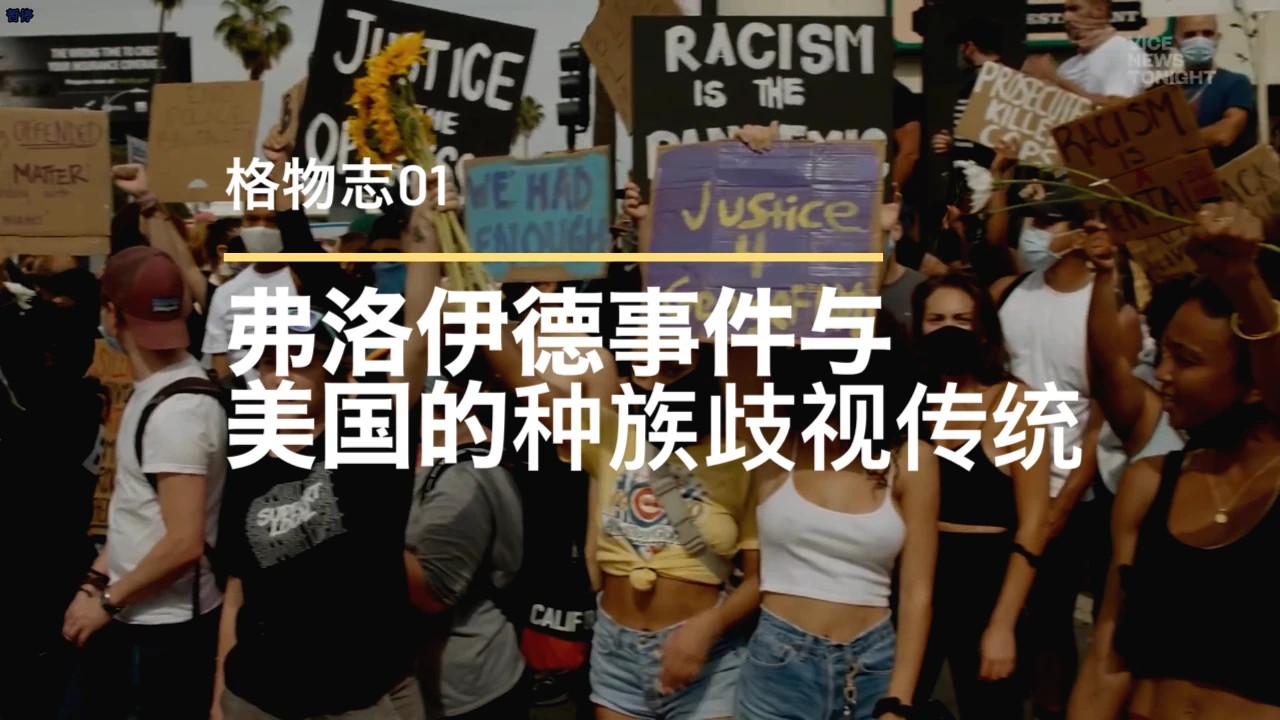
#The causes and consequences of the Floyd incident
On May 25, 2020, in Minnesota, the United States, an African American named George Floyd was negligently killed by a local white police officer during his arrest. This incident became the trigger for a nationwide riot, with large and small protests breaking out in various states across the United States. These protests have developed from initially peaceful demonstrations to violent incidents of smashing, looting, and burning. There have been vicious incidents in various places where shops were smashed and looted by thugs.
The story begins with the “Floyd incident” 20 days ago. At 8 pm on May 25, in Minneapolis, the capital of Minnesota in the northern United States (yes, the place where Dong Ge was exposed as a “sexual assault scandal”), a convenience store clerk dialed 911. According to call records released by the police, the clerk said when calling the police that an African-American man used counterfeit money when checking out in the store, but he was discovered by the clerk. The clerk asked him to return the cigarettes he purchased, but he refused.
The African American who used counterfeit money is the protagonist of the story-George Floyd. He was born in Texas, USA, and is 46 years old. In 2009, 11 years ago, Floyd was sentenced to prison for armed robbery and served 5 years in a Texas prison. After he was released from prison, he moved to Minnesota and worked as a security guard at a Minneapolis restaurant for five years. Until recently, I lost my job due to the COVID-19 pandemic.
After receiving the alarm, the local police rushed to the scene quickly. When police arrived, Floyd was still near the convenience store where the incident occurred. According to the description of the clerk who called the police, Floyd was “drunk and unconscious” at the time and was sitting in his car. The police body camera shows that in addition to Floyd, there were two other people sitting in the car at the time, a man and a woman. A police officer pointed a gun at Floyd and ordered him to put his hands on the steering wheel, and Floyd complied. Afterwards, another police officer at the scene pulled Floyd out of the car and handcuffed him. During this period, Floyd resisted several times. Afterwards, Floyd sat on the side of the road. The police briefly questioned him and told him that he was arrested for using counterfeit money.
The next scene was filmed by passers-by on their mobile phones: Floyd suddenly fell down while being led to the police car by the police, and said he had claustrophobia. At this time, the other protagonist in this case, the 44-year-old white police officer Derek Michael Chauvin, arrived at the scene in another police car. According to the prosecutor’s subsequent indictment against Chauvin, four police officers tried several times to put Floyd into the back seat of a police car, but Floyd deliberately fell down, stood crookedly, and kept saying he couldn’t breathe. Chauvin then pulled Floyd into a police car with the help of two colleagues.At 8:19 p.m., Chauvin pulled Floyd out of the right back seat of the police car. Three police officers pushed him to the ground at the same time. Chauvin put his left knee on Floyd’s neck. Colleagues around him once asked whether Floyd should be turned over, but Chauvin refused. In this way, Chauvin pressed his knee on Floyd’s neck for several minutes. The law enforcement recorder shows that Floyd was struggling and calling for help during this period, but Xiao Wan ignored it. According to the complaint, Chauvin knelt on Floyd’s neck for a total of 8 minutes and 46 seconds. After Floyd became unresponsive, he continued for 2 minutes and 53 seconds, and did not remove his knee until 8:27. After the ambulance arrived, police put Floyd on a stretcher. Unfortunately, the rescue was not successful, and at 9:25 that night, the hospital announced Floyd’s death.
Because Xiao Wan behaved extremely coldly in this incident, and the entire incident was filmed by onlookers on their mobile phones, the incident quickly spread on social media. On May 26, the day after Floyd’s death, thousands of demonstrators took to the streets, clashing with the police and turning into nationwide riots. In addition to the United States, protests have also swept across other countries such as the United Kingdom, France, Australia, and New Zealand. People carried signs saying “I can’t breathe” to express their sympathy for Floyd and their dissatisfaction with issues such as racial discrimination and police brutality that have been rooted in the United States for many years.
Although the riots are also related to the nationwide unemployment wave caused by the new crown epidemic and the presidential campaigns of the two parties, the problem of racial discrimination is indeed a chronic disease in American society. To understand why the United States has such severe racial problems, we must start with the colonial history before American independence.
#America’s Tradition of Racial Discrimination
In 1492, when Columbus’s fleet first arrived on the North American continent, racial conflicts on this land had already begun. Conflict first broke out between European colonists and Native Americans. Due to the huge disparity in technological levels and physical conditions between the two sides, the vast majority of the indigenous people in North America were either killed by Europeans, died of diseases brought by Europeans, or were driven away from the land where they lived in their own time. This is also one of the “black histories” of the United States that many people talk about.
However, what we call racial discrimination in the United States today actually does not refer to the discrimination of Europeans against indigenous peoples, but the discrimination of white people against people of color. The people of color here are actually just like white people, they are also foreign ethnic groups. The time they arrived in North America was different from that of white Europeans, that is, the front and rear feet. Besides skin color and culture, the only difference between these races is the order of immigration. Here is an idea. If the first colonists arriving in North America were not white Europeans, but yellow people from East Asia, then the order of racial discrimination in the United States today might be reversed. Of course, there are no what-ifs in history. My purpose in making this analogy is just to let you understand the nature of racial discrimination in the United States.
Although other people of color, including Chinese, are also victims of racial discrimination in the United States, we have to admit that the main and most acute targets of racial discrimination in the United States are black people, what we call African Americans, such as this one. If you come to the United States in the future, it is best not to habitually call these people “Black”, but strictly call them “African American”, otherwise you may be mercilessly attacked by the iron fist of “political correctness”.Unlike other ethnic groups who actively immigrated to the North American continent, the ancestors of the vast majority of African Americans today immigrated to the Americas passively. While the Europeans were busy opening up new routes, the African continent was still in a state of fragmentation. Tribes or ethnic groups often engage in life-and-death struggles. This was precisely exploited by the Europeans, who usually took an empty ship to Africa and spent a small amount of money to buy some slaves from some local tribes and stuff them into the cabin. These slaves were usually prisoners of the losing side in tribal wars. Europeans transported black slaves to the “New World” by ship, in exchange for a shipload of agricultural and sideline products from the “New World” (such as tea, coffee, or tobacco), and then shipped these products back to Europe and sold them at high prices. This is a complete closed loop of trade, which is the “triangular trade” mentioned in our middle school history books.
The reason why the “triangular trade” was established was that the early economic model of the North American colonies was highly dependent on labor. Industries such as crop cultivation and agricultural and sideline product processing require a large amount of labor. Since the number of European immigrants was small and their wages were high, black slaves transported from Africa became the only choice for colonial plantation owners. After all, they are strong, eat less, and are cheap. The key is a one-time investment. As a means of production, they are extremely cost-effective.
This is a good explanation of why there is such a serious problem of racial discrimination in the United States. Because for those colonial planters and their descendants, black people were not human beings, but just working machines that they paid for and part of the means of production for the estate’s economy. Do you feel empathy for the computers in your company’s office? Of course not. Then you might say, after all, black slaves are not machines. At least they don’t look much different from us. We are all human beings. Why are those manor owners so cruel? Of course these issues are valid today, but in ancient times hundreds of years ago, China’s senior officials at the provincial and ministerial levels would be beaten to death with wooden sticks by eunuchs. Times are different, and of course people’s concepts and the level of civilization in society are also different.
This manorial economy of intensive agricultural production based on slaveholding existed until the 19th century. Especially in the southern states with developed agriculture, the manor economy has become a pillar industry almost everywhere. In our current terms, the South of the United States was a “large rural area” at that time. Opposite to the “large rural areas” in the south is the rising urban industry in the north. From ancient times to the present, cities have always been the areas where advanced ideas first sprouted and spread. Therefore, in the 19th century North of the United States, cruel slavery had almost become a “street rat”. This was an ideological aspect. On the economic side, the North also had reasons to oppose slavery. As we all know, urban industry and plantation agriculture have one thing in common, that is, they both have a huge demand for labor. The northerners were definitely not willing to use slave labor like the south, so they began to advocate the liberation of black slaves, because once the black slaves in the south were released, northern factories would receive a large amount of cheap labor.In this way, at that time, the northern states of the United States became increasingly wealthy through the development of modern industry, and at the same time they always criticized slavery in the South from the moral high ground. In this way, the economic and ideological gap between the North and the South grew wider. You know, at the beginning of the founding of the United States, the North and the South had differences on the organizational form of the federal government. At that time, the South favored conservative liberalism and advocated the establishment of a “small government” to minimize government interference in private rights; while the North favored radical federalism and advocated the establishment of a “big government” to better safeguard the well-being of the people. In the eyes of southerners, northerners are just a group of upstarts who regard themselves as aloof. They were not satisfied with the content of the Constitution in the first place, and now they even want to fly away.
In 1860, the newly formed Republican Party won a majority in the general election, and its candidate Abraham Lincoln was also successfully elected president. The South completely lost its voice in the new federal government. As a result, seven states known as the “Deep South” declared their separation from the Union of America and formed their own Confederate States of America. The Civil War was about to break out.
Although the reasons that led to the outbreak of the Civil War are extremely complicated, it is undeniable that the debate about the liberation of black slaves was the direct cause of the outbreak of the Civil War. Although the war ultimately ended in victory for the North, the black slaves on the southern plantations were finally liberated. But both the South and the North paid a heavy price for this. It can be said that the black civil rights movement in the 1960s and the current nationwide riots had their roots laid as early as the Civil War era. The century-long history of racial discrimination in the United States does not end here. Although black people have obtained the same rights as other races at the national level, systemic discrimination still exists and continues to this day.
My program today is mainly about the origins of racial discrimination in the United States. With the progress of the times, the specific situations and methods of discrimination are constantly changing in one way or another. The United States has never been able to escape the shadow of racial discrimination and its derivative problems. From today’s national riots to the Civil War, they are all inextricably linked to racial issues. As for how the racial issue evolves and agitates, until it triggers riots again and again, and how black people rise up to resist in this process, that is the content of our subsequent program.
Follow-up
After listening to the above, many people may start to criticize the United States as “rotten capitalism” and “the American people live in water and fire” and use these clichés. But what I want to say is that you may only see one side of the matter and ignore (or selectively ignore) the other side of the matter.
The political system of the United States has been operating relatively smoothly for more than two hundred years. Over the past two hundred years, Americans have constantly stepped on pitfalls, corrected them, and stepped on them again. Their political system has also been continuously polished and improved in the process, and they have many error-correction mechanisms that other countries do not have. On May 26, the Minneapolis Police Department announced the suspension of the officers involved; on May 27, the FBI began an investigation into the Floyd incident; on May 29, Derek Chauvin was arrested by the Minnesota Bureau of Criminal Investigation; on June 3, Derek Chauvin was formally charged with second-degree murder. The trial is still continuing.In the past 20 days, some police officers across the United States have knelt down to express support for the peaceful demonstration movement. I have also mentioned before that George Floyd is actually a “social delinquent” with multiple criminal records, and his behavior of using counterfeit money is indeed a crime in the United States. However, these are not enough to whitewash police brutality, nor are they enough to erase the fact that serious racial discrimination still exists in the United States. The vast majority of those who took to the streets to protest peacefully did not want to defend a criminal. What they wanted was to change the current situation of serious police brutality and racial discrimination in the United States.
I am Gu Yue, thank you for watching “Ge Wu Zhi”, I will do my best to clarify history and society in this program. If you think this video is interesting, please give me a like or leave your own thoughts in the comment area. See you next time.
#Video material- CBS Evening News - Derek Chauvin charged with third degree murder in death of George Floyd
- CBS Evening News - New video shows Minneapolis police arrest of George Floyd before death
- CBS News - 4 Minneapolis officers fired after arrest of man who later died
- CNBC Television - Scenes from protests, riots across the U.S. after killing of George Floyd
- Sky News Australia - The Left has tried to define deadly US riots as ‘peaceful’ protests
- The New York Times - How George Floyd was killed in police custody_visual Investigations
- The New York Times - Thousands March to the White House _ George Floyd Protests
- TODAY - 4 Minneapolis Officers Fired After Death Of George Floyd In Police Custody
- VICE News - Cops Are Taking a Knee. Not Everyone Is Convinced
- VICE News - George Floyd Protests Around the World Are Calling for Racial Justice
- Ming Dynasty1566.EP01.2007
- act.tv - Systemic Racism Explained
- CCTV Records - “The Turning Point of History: The Voyage to the West” Episode 1 - Dreaming of the Ming Dynasty
- Mrs. Martinez - life of a plantation slave
- Newsy - Remembering Chinese railroad workers
- Shotgun BomBom - French Defensive from American Natives Attack
- Anthony Hazard - The Atlantic slave trade What too few textbooks told you
- Vox - Why the US celebrates Columbus Day
- WatchMojo.com - History of the Civil Rights Movement
- Yesterday Today - 43 Haunting Photos Of The American Civil War
- mixkit-highway-between-trees-506
- mixkit-traffic-in-an-underground-tunnel-4067
- FreeSchool - The Statue of Liberty for Kids Famous World Landmarks for Children