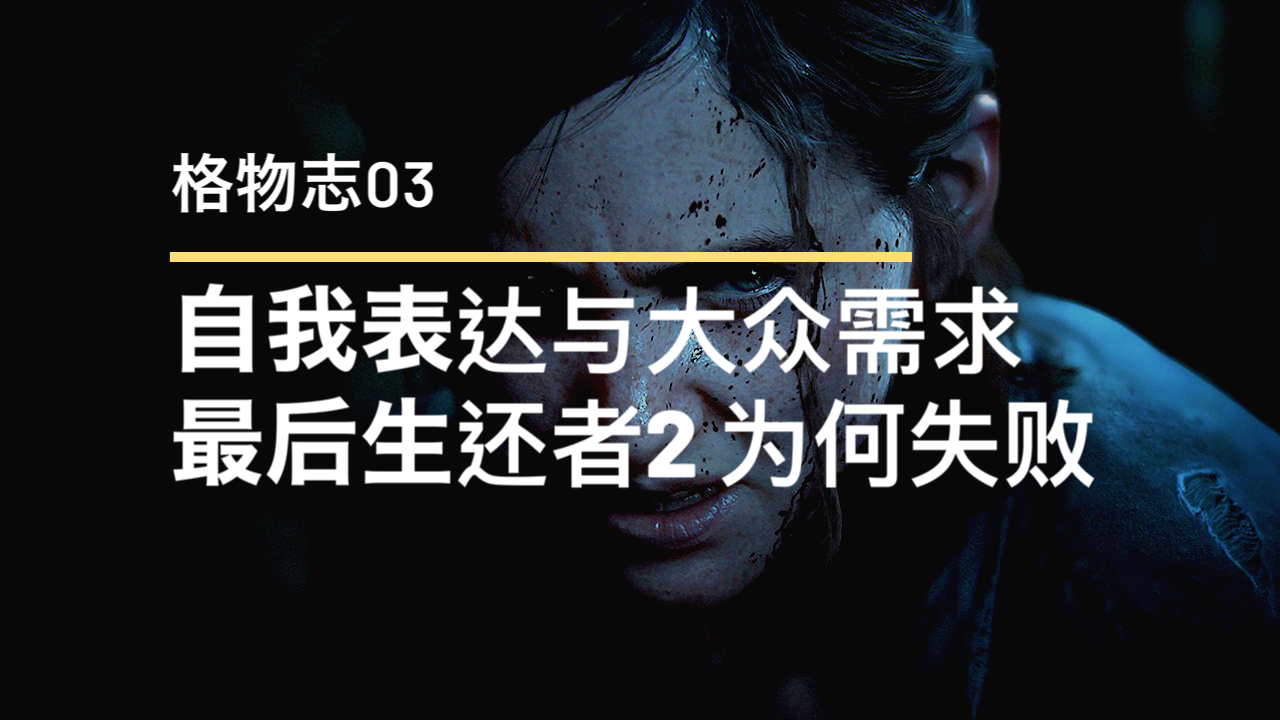
On June 19, Sony PlayStation’s first-party masterpiece “The Last of Us”, once regarded as a masterpiece by many players, finally unlocked its sequel. However, despite the fact that many game media had previously given “The Last of Us 2” very high praise,** only the second day after the game was released, its score on Metacritic was brushed to a low score of 3.8 by players**. The polarizing evaluations of “The Last of Us 2” by the media and players have pushed this AAA masterpiece, which was supposed to be a strong contender for the 2020 Game of the Year, to the forefront.
The main reason why players are so disappointed and even angry about “The Last of Us 2” is the game’s script. As the male protagonist of the previous generation and the most important controllable character in the previous generation, Joel got the benefit of the doubt in the prologue of this game. Just imagine, a game character with whom you have spent dozens of hours, a tough guy father who was portrayed extremely plump in the previous generation story, was brutally murdered by a woman you didn’t know at all with a golf club in less than 2 hours after the game started. And just ten minutes before this woman tortured Joel, she was saved by Joel from a group of zombies. This is truly a textbook-level “Farmer and Snake” story.
After that, the heroine Ellie and her little girlfriend embarked on the long road of “avenging their father”. Do you think this is over? Do you think the next story is about how the heroine overcame all kinds of difficulties and dangers, finally came to Seattle, killed her enemies with her own hands, and then left in style, living a life of poverty and determination in the apocalypse? You are still too simple! The most disgusting thing about the script of this game is that it not only forces you to accept the fact that the protagonist of the previous generation was killed at the beginning, but also forces you to personally control the woman who will take revenge on Jorn, forcing you to experience her mental journey. In the end, when Ellie finally went through all kinds of hardships and came to the enemy who killed her father, after a fierce hand-to-hand fight, Ellie actually let her go! Yes, when I watched the boat of the enemy who killed my father slowly sailing away, and Ellie was crying alone in the water, I almost dropped the controller.
A AAA game that has also experienced this kind of “player’s Waterloo” experience is the famous FPS game “Battlefield 5” released by EA in 2018. Compared with the situation of “The Last of Us 2” that failed immediately after its release, “Battlefield 5” is much worse. Its first trailer before the official release of the game has already caused an uproar among players. Criticisms of this promotional video mainly came from traditional players of the “Battlefield” series, namely the majority of first-person shooter game fans. They believe that the images in the “Battlefield 5” promotional video are seriously out of touch with the real history of World War II. Whether it is a female soldier with mechanical prosthetics or a game scene that does not belong to any classic World War II battle, most players have doubted whether this is a game about World War II.
The response of Patrick Soderlund, CEO of DICE Studio and Chief Design Officer of EA, who is responsible for the development of “Battlefield 5”, when faced with players’ questions caused even more widespread anger and dissatisfaction. He said in an interview: “These people lack education, and they don’t know that this is a reasonable scenario.” He also said: “Players have only two choices about this matter: either accept this setting, or don’t buy our game.” You know, uneducated is a very ugly word in English. Many core players of the “Battlefield” series were completely offended, and their anger caused “Battlefield 5” to cool down before it was released.Whether it is the polarization in the evaluation of “The Last of Us 2” by the media and players, or the debate between authors and players about “Battlefield 5”, they all reflect a fundamental contradiction in video games, that is, the contradiction between artworks and commodities. Many people like to call video games the “ninth art” because games, like movies, can use various techniques to express certain points of view or tell certain stories, thereby arousing emotional reactions from the audience or players. But just like movies rely on box office to make profits, the essence of games is just products used by manufacturers to make profits. Once something has the dual missions of artistic expression and commercial profit, it will inevitably fall into the contradiction between art and commodities.
The construction of artwork is highly personal. It is more of a private expression of the values, aesthetics and techniques of the individual author or the creative team. Since it is a private expression, it will naturally arouse the approval of some people and the disapproval of others. But in the field of pure art, there is an unequal relationship between the expresser and the appreciator, that is, the expresser does not need to care about the appreciator’s feelings, he just expresses himself to his heart’s content. In this sense, artists should be proud.
However, on the other hand, the construction of high-end products is highly public. Only by catering to its own audience as much as possible can it maximize commercial interests. Therefore, businessmen often do not care about what they want to express, but more about what the audience wants. Because in the commercial field, producers and consumers are in a relatively equal relationship, and only when they reach a consensus can economic benefits be generated. If a product is not recognized by the market, it is a failure and there is no room for maneuver.
Commercial movies and video games happen to straddle the two fields of art and commerce. Since their birth, they have struggled between self-expression and public demand, seeking to survive in the constant tug of war between the two parties. The production team of “The Last of Us 2” may indeed have great ideas. They want the game to go beyond the scope of a commodity and carry some noble values. But this is obviously not to the players’ liking. As a Sony first-party game team with a heavy responsibility, Naughty Dog should not act like a condescension and forcefully instill its own values into players without considering the players’ feelings at all. Doing so is neither commercially logical nor will it cast an unknowable shadow on the future development of the studio.
After all, “The Last of Us” is not an independent game for self-entertainment, nor is it a work of art placed in a game museum for future generations to admire. It is a real commodity. It was born with only one purpose, and that is to make money**. Of course, it is better to be able to express yourself while making profits, but when the two conflict and it is obvious that you can only choose one of them, as a manufacturer with investor money, you can only choose the logic of business, not the logic of art. This may not sound romantic, but it is the basic way our society works.
I still remember the beautiful scene of Joel and Ellie riding horses and walking past the giraffe. Naughty Dog is a studio that has brought us so many wonderful memories. I hope they can learn from this lesson and make more popular and popular games in the future.
My name is Gu Yue. Thank you for listening to “Ge Wu Zhi”. I will try my best to learn more about history and society in this program. If you like this episode, don’t forget to subscribe to my channel, give my video a like, and leave your thoughts in the comment area. See you next time.