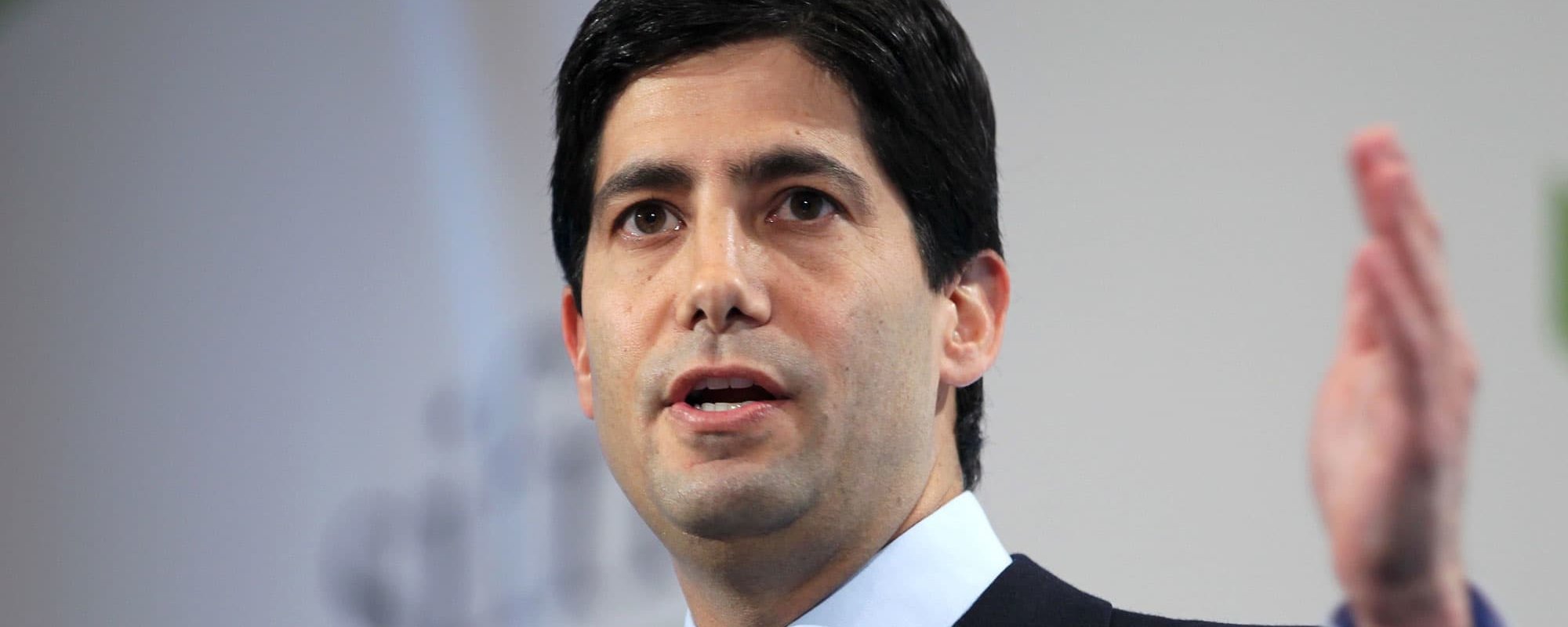
On January 30, 2026, after months of speculation and both public and backroom political fighting, Donald Trump dropped a bombshell on Truth Social: he formally nominated Kevin Warsh as the next chair of the Federal Reserve.
The language was unmistakably Trumpian. He called Warsh a “central casting” choice and predicted that the former Fed governor would become a “great, maybe even the greatest” Fed chair in history.
The nomination marks the end of the Jerome Powell era. It also suggests that the century-old Federal Reserve is about to enter a period of sharp regime change. But this is not a calm handoff surrounded by flowers and applause. At the very moment the nomination was announced, the Fed’s headquarters on Constitution Avenue was sitting at the center of an unprecedented legal storm. The Justice Department’s criminal investigation into Powell was still underway, and allegations of cost overruns in the building renovation hung over Fed officials like a blade.
Kevin Warsh, once a Wall Street golden boy, the youngest governor in Federal Reserve history, and the son-in-law of the Estee Lauder family, now returns from Stanford’s academic world to the arena of power. Trump expects from him two things at once: lower interest rates and deregulation.
The world is left asking: how will a former inflation hawk steer the flagship of the global financial system in an age of populism, geopolitical shocks, and heavy debt? Is his rise the beginning of the Fed’s return to tradition, or the prelude to the final loss of its independence?
The Power Game Behind the Fed Chair
To understand how brutal this fight has become, we first need to look at the real weight of the Fed chair. In the modern global economy, the chair of the Federal Reserve is often considered the second most powerful person after the president of the United States. In some dimensions, the chair’s influence over markets is even greater.
The Fed is not merely America’s central bank. It is the heart of the dollar system. The federal funds rate it sets is the anchor for global asset pricing. The size of its balance sheet determines how loose or tight dollar liquidity is around the world. From Tokyo’s stock market to London’s bond desks, from Brazilian exporters to Shanghai property developers, every tremor in the global economy is connected to decisions made inside the Eccles Building in Washington.
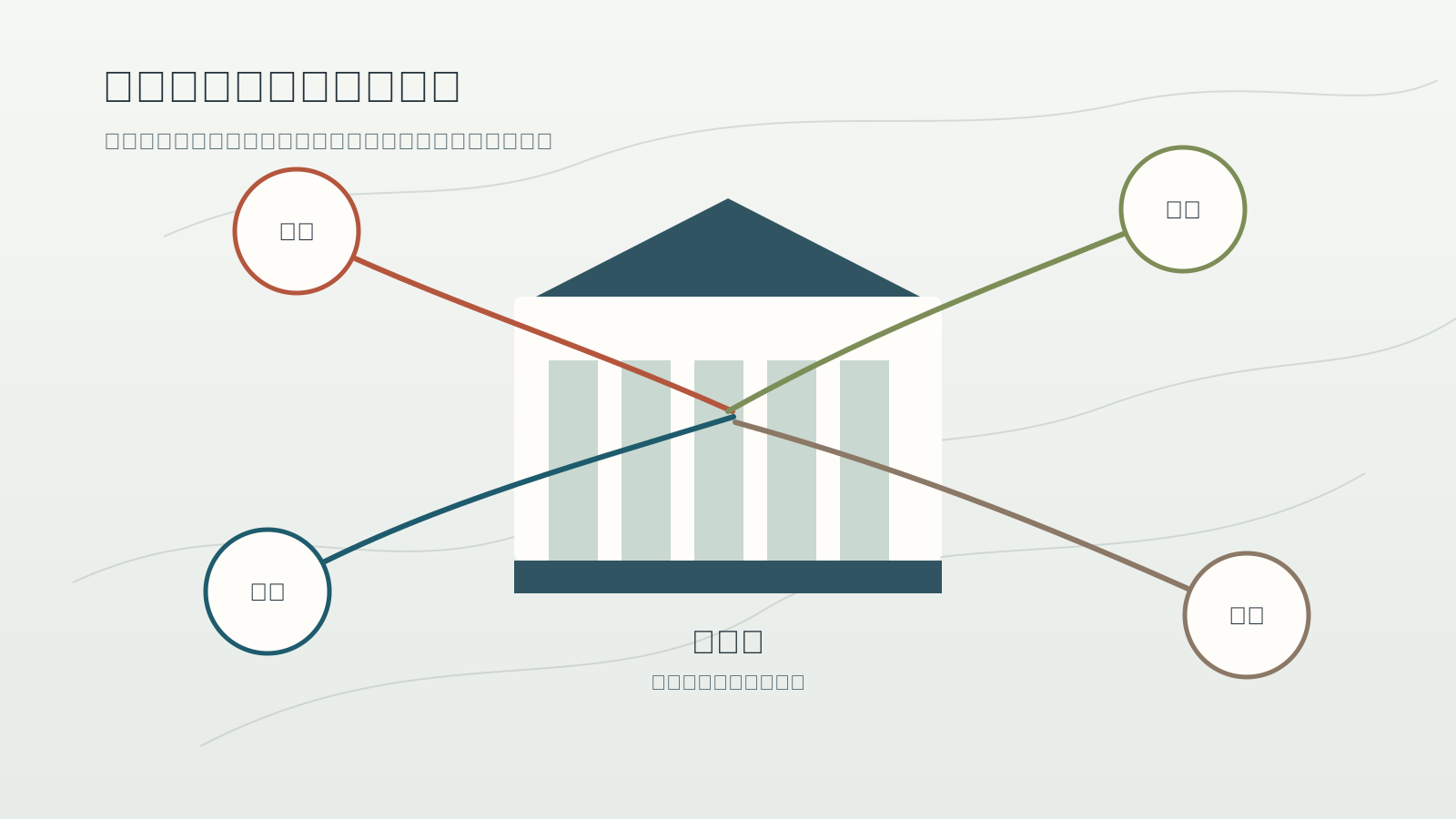
The Fed does not only shape the U.S. economy. Through the dollar system, it moves global equities, bonds, currencies, and credit.
The power structure of the office is complicated by design. The Fed chair is nominated by the president and confirmed by the Senate for a four-year term. But that is only half the story. The chair must also be one of the seven governors of the Federal Reserve Board, and governors serve fourteen-year terms. This dual-track design was meant to protect the Fed’s independence and prevent a president from controlling monetary policy by rapidly replacing governors. In the political reality of 2026, however, this design has become a trigger for constitutional conflict.
Powell and Trump: from “my pick” to “enemy of the country”
The feud between Jerome Powell and Donald Trump reads like a modern political thriller. It did not begin today. It had years of painful buildup.
In 2017, Trump broke with decades of custom by declining to reappoint Janet Yellen. Instead, he chose Powell, a Republican lawyer rather than an economics PhD, hoping he would keep rates low and help power the economy during Trump’s term. But Powell’s technocratic instincts soon infuriated him. Faced with the risk of overheating, Powell insisted on gradual rate hikes. To Trump, that looked like betrayal.
During Trump’s first term, he shattered the old taboo against presidents publicly commenting on monetary policy. He attacked Powell on Twitter, calling him stubborn and accusing him of lacking “guts,” “sense,” and “vision.” The attacks reached a peak during the 2024 campaign, when Trump asked on social media: “Who is our bigger enemy, Jay Powell or Chairman Xi?”
President Biden’s 2022 renomination of Powell temporarily gave the Fed a layer of political protection. But after Trump won the 2024 election and returned to the White House, a showdown became inevitable. By 2025, with inflation recurring and Trump eager for stimulus, the White House had run out of patience. Trump declared that the Fed chair should be someone who could “talk” to the president, not a bureaucrat hiding behind data.
Renovation-gate: a staged palace coup
Earlier attacks were mostly verbal. The “renovation-gate” crisis of late 2025 and early 2026 moved the fight into a much harsher legal phase.
The issue was not monetary policy. It was the renovation of the Fed’s headquarters.
The Eccles Building and the nearby Martin Building had aged visibly since their construction in the 1930s. The Fed launched a major renovation project to remove asbestos, update outdated mechanical systems, and improve security. Under ordinary circumstances, this would have been an administrative matter. The Trump administration saw something else: a weapon to use against Powell.
Trump personally visited the site and confronted Powell in front of cameras. The awkward scene was recorded: Trump pointed at the construction site and challenged Powell on cost overruns, while Powell shook his head and tried to explain that the numbers in the president’s hand confused the completed Martin Building with the still-underway Eccles project.
The situation escalated quickly. The Justice Department opened a criminal investigation into Powell, accusing him of concealing the true state of the renovation project in congressional testimony. Washington’s legal and financial communities were stunned. Powell responded with a sharply worded video statement, calling the investigation “unprecedented” and saying that the threat of criminal charges was the consequence of the Fed setting rates based on its best judgment rather than presidential preference.
It was against this near-constitutional crisis that the search for a successor accelerated. Trump needed someone who could replace Powell, reassure markets, carry out his will, and still survive Senate scrutiny.
Why Kevin Warsh?
The shortlist included Kevin Warsh, National Economic Council director Kevin Hassett, Fed governor Christopher Waller, and BlackRock executive Rick Rieder. The press jokingly called it “the battle of the two Kevins.”
Warsh won in the end. That was no accident. He offered Trump the best balance across several demands.
First, Warsh is handsome, wealthy, polished, and exactly the kind of “central casting” figure Trump likes in senior office. More importantly, he is married into the Estee Lauder family. His father-in-law, Ronald Lauder, has been Trump’s friend and donor for decades. In Trump’s world, that kind of personal connection often matters more than a doctorate.
Second, compared with Hassett, Warsh has deeper roots on Wall Street. He was a Morgan Stanley partner and played a meaningful role during the 2008 financial crisis. Markets tend to see him as a “safe” choice: politically compliant, perhaps, but not someone likely to crash the dollar.
Third, Warsh used to be a famous inflation hawk, which seems to clash with Trump’s demand for low rates. In recent years, however, he has successfully recast his economic philosophy around a new argument: use supply-side reform and deregulation to suppress inflation, thereby creating room for rate cuts. That logic fits Trump’s political wish perfectly: low rates and high growth at the same time.
Kevin Warsh: From Wall Street to the Center of Power
The elite path: Stanford, Harvard, and Morgan Stanley
Warsh’s biography is almost a textbook version of the American elite track. Born on April 13, 1970, into a wealthy family in upstate New York, he studied public policy at Stanford, focusing on economics and statistics, and then earned a law degree from Harvard. That West Coast plus Ivy League background gave him the ability to move across academia, law, and business.
In 1995, at just twenty-five, Warsh joined Morgan Stanley’s mergers and acquisitions division. In that top-tier Wall Street arena, he quickly showed a sharp business instinct. Over seven years as an investment banker, he worked on major deals across manufacturing, technology, and financial services.
That experience did more than make him rich. It taught him how markets work at a granular level: how banks operate, how credit flows, and what happens when liquidity dries up. That set him apart from many central bankers who had spent their entire lives on university campuses.
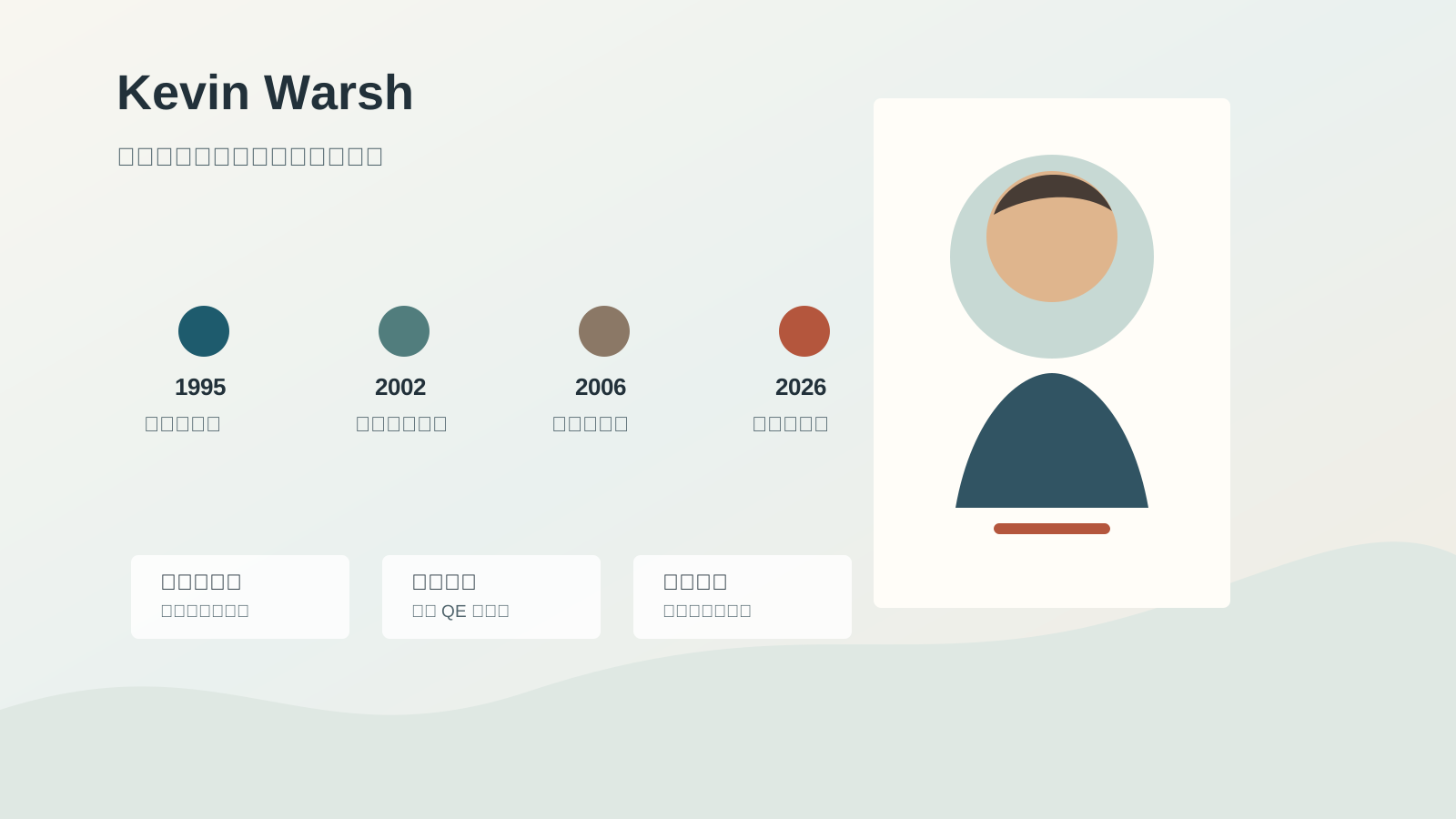
Warsh has moved through investment banking, the White House, the Fed, and academia. That is one reason he is seen as a market-friendly nominee.
The White House and the youngest Fed governor
In 2002, Warsh passed through the revolving door into the George W. Bush administration as a special assistant at the National Economic Council. There, he became one of Bush’s key advisers on capital markets and learned how to operate where politics and economics meet.
In 2006, Bush nominated him to the Federal Reserve Board. At thirty-five, Warsh became the youngest governor in the Fed’s history.
Many observers wondered whether this young lawyer could handle such a technical institution. The Board was usually the home of older economics professors. History soon gave Warsh a chance to prove himself, and in the harshest possible way.
Trial by fire: the 2008 financial crisis
Just two years after Warsh joined the Fed, the subprime crisis erupted and the global financial system came close to collapse. In that moment, Fed chair Ben Bernanke discovered that the young former banker beside him had something many academic officials lacked: a direct sense of Wall Street fear and a deep network of contacts.
Warsh became a key link between Bernanke and Wall Street CEOs. In March 2008, he was directly involved in the emergency negotiations for JPMorgan’s acquisition of Bear Stearns, trying to stop systemic risk from spreading before the weekend ended.
In September 2008, during the fateful weekend that decided Lehman Brothers’ future, Warsh sat in the New York Fed’s war room as the Fed’s eyes and ears. He lived through the late-night meetings that would shape the fate of countless people. He had to explain to Bernanke why a complex derivative could bring down a bank, while also communicating the Fed’s intentions to panicked markets.
Warsh showed unusual calm for his age. He supported the Fed’s first round of quantitative easing, seeing it as an emergency measure when markets had stopped functioning: break the glass and pull out the fire extinguisher.
Breaking with quantitative easing
Once the emergency phase passed, however, Warsh’s honeymoon with Bernanke ended. When the Fed launched QE2 in 2010, his position changed sharply.
He published an op-ed in The Wall Street Journal and raised objections inside the Fed. He worried that prolonged unconventional monetary policy would bring serious side effects:
- Misallocation of capital: cheap money would flow into speculation rather than productive investment.
- Loss of fiscal discipline: central bank purchases of government debt would encourage unchecked borrowing.
- Inflation risk: he warned that the main risk still lay with inflation and doubted the Fed’s confidence in its ability to manage expectations.
In 2011, Warsh resigned from the Fed Board before the end of his term. The move seemed aloof at the time, but it later helped him build a reputation among conservative economists as a principled hawk. That reputation became an important piece of political capital in his nomination.
A marriage into power
Any account of Warsh’s rise has to mention his marriage. In 2002, he married Jane Lauder, heiress to the Estee Lauder cosmetics empire and now global brand president of Clinique. Her personal fortune is measured in billions.
The marriage brought Warsh into a powerful social and political network. Jane’s father, Ronald Lauder, is not only president of the World Jewish Congress but also a longtime friend and major donor to Donald Trump. Some reports have even said that Trump’s strange idea of buying Greenland was originally inspired by Ronald Lauder.
In Trump’s view of appointments, personal trust often outranks professional credentials. As biographer Tim O’Brien has put it, connections to powerful or famous people matter deeply to Trump. Ronald Lauder’s quiet advocacy surely helped Warsh in this contest. To Trump, Warsh is not merely a technocrat. He belongs, in some sense, to the circle.
Warsh’s Economics: A Blend of Old and New
Warsh is not a traditional Keynesian, nor is he a pure monetarist. His thinking mixes Wall Street pragmatism, old-style fiscal conservatism, and real enthusiasm for new technology. From his recent comments, we can sketch the outline of what might be called Warshism.
Point one: the Fed needs regime change
Warsh’s most radical view is his criticism of the Fed itself. He believes the institution has suffered from “institutional drift”: it has repeatedly misjudged inflation and expanded into areas such as climate change and social equity that he thinks lie outside its proper role.
His phrase “regime change” refers not only to personnel but also to a reset of the policy framework. He has criticized Powell’s “data dependence” as driving by looking in the rearview mirror. In his view, the Fed should be more forward-looking, using theory and market signals to anticipate the economy rather than waiting for lagging employment data. He also thinks the Fed should focus more narrowly on price stability, pay less attention to short-term employment swings, and avoid deliberately creating unemployment just to bring down inflation.
Point two: inflation is a choice, and AI is the cure
Unlike mainstream economists who place much of the blame for inflation on supply chains or geopolitics, Warsh insists that “inflation is a policy choice.” Its roots, in his view, are excessive money creation by the Fed and excessive spending by the government.
To reconcile that view with Trump’s demand for rate cuts, Warsh introduces a new variable: artificial intelligence. He is extremely bullish on the productivity revolution AI may bring, seeing it as a powerful disinflationary force.
His logic is simple. AI will sharply raise productivity and reduce the cost of goods and services. Even if monetary policy is relatively loose, a supply-side boom could keep inflation down. This gives him a theoretical basis for supporting lower rates without triggering immediate inflation panic.
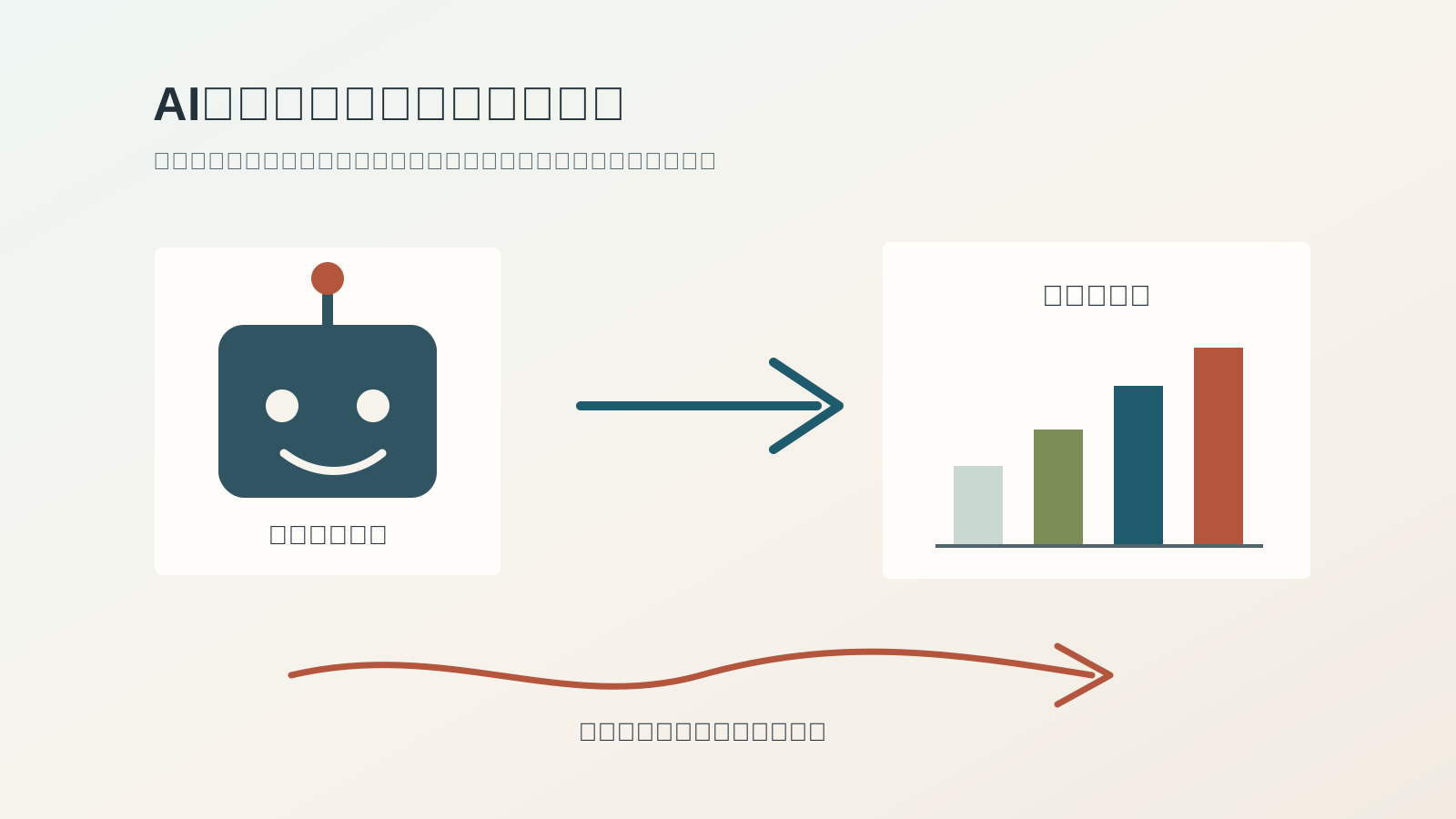
In Warsh’s story, AI is a key variable: productivity growth is expected to offset inflationary pressure.
Point three: ally of crypto, enemy of CBDCs
Warsh’s view of digital assets is sharply divided, which has made him popular in parts of the crypto community.
He has said clearly that Bitcoin does not make him uncomfortable. He sees it as an important asset that can provide signals to policymakers and even serve as a useful check on the dollar system. At the same time, he strongly opposes a retail central bank digital currency, calling it a financial panopticon that would allow excessive government surveillance and crowd out private innovation. He prefers regulated private stablecoins as the path for digitizing the dollar, rather than direct government issuance.
Point four: shadow banking and deregulation
Despite his Wall Street background, Warsh has been critical of too-big-to-fail banking. He has argued for stronger market discipline so banks bear the cost of their own risks rather than relying on government bailouts.
In the current political environment, however, he appears more inclined to loosen constraints on traditional banks, such as the capital requirements under the Basel III endgame, while watching the disorderly growth of shadow banking and private credit. His deeper argument is that excessive bank regulation may simply push risk into less transparent parts of the financial system. That is the logic behind his deregulatory instinct.
The World Economy in the Warsh Era
With Warsh’s nomination now settled, global attention turns to what comes next. If he is confirmed by the Senate and takes over the Fed in May, or perhaps earlier, what will the world economy face?
A new monetary mix: tighter assets, looser rates
Warsh may try a bold policy combination: quantitative tightening plus rate cuts.
He has long criticized the Fed’s seven-trillion-dollar balance sheet as a source of market distortion. He may accelerate balance sheet reduction and drain excess liquidity. In exchange, the inflation room created by shrinking the balance sheet could be used to satisfy Trump’s demand for rate cuts.
This strategy attempts to balance hawks, through balance sheet tightening, and doves, through lower rates. But the operation is extremely difficult. If the balance sheet shrinks too fast, the repo market could freeze, as it did in September 2019. If rates fall too quickly, inflation could reignite.
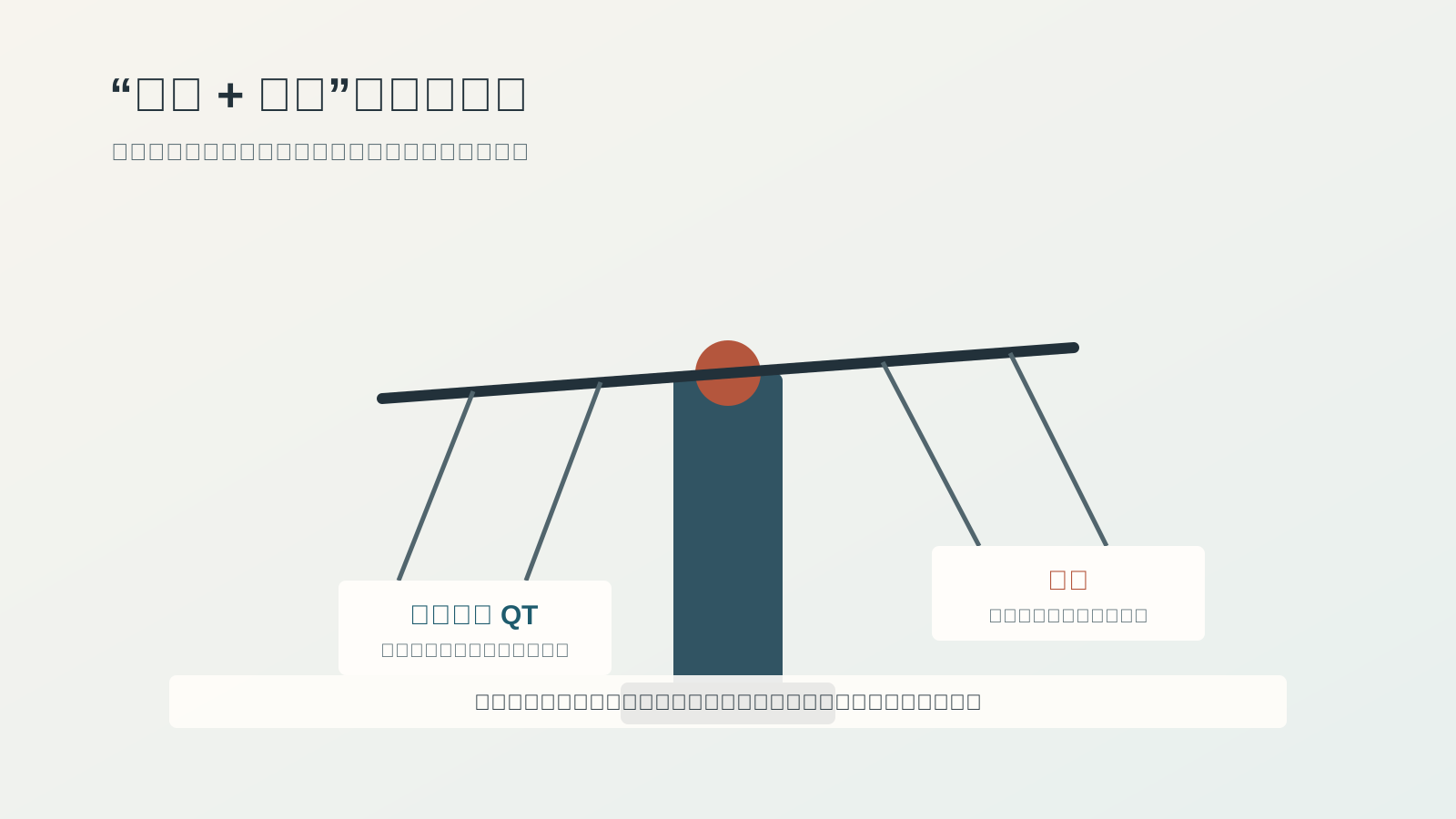
QT plus rate cuts appears to satisfy both sides, but in practice it requires precise control over liquidity and inflation expectations.
The Warsh paradox for the dollar
Trump has long complained that a strong dollar hurts exports. Yet Warsh’s appointment may push the dollar higher in the short run.
Markets believe that even if Warsh is politically obedient, he still carries a hawkish instinct. If the U.S. economy outperforms Europe and China under the combined stimulus of AI and deregulation, capital may continue flowing back into America. A strong dollar would keep squeezing emerging markets and increase their debt-servicing pressure.
But if Trump intervenes directly in the exchange rate, Warsh may have to coordinate with the Treasury through verbal intervention or even joint action. That would be a major test of his independence.
Powell as shadow chair
One huge uncertainty remains: will Jerome Powell leave? His term as chair ends in May 2026, but his term as a governor runs until January 2028. If anger over the Justice Department investigation leads Powell to remain on the Board, the Fed could enter an unprecedented period of dual power.
There is a historical echo. In 1948, Marriner Eccles stayed on the Board after President Truman removed him as chair, and later helped push through the famous Fed-Treasury Accord, which established the Fed’s independence. Powell, if he remains, could become a de facto opposition leader inside the FOMC, using his influence and vote to check Warsh’s more radical policies. That would make Fed decision-making more gridlocked and markets more uncertain.
A chain reaction among global central banks
European central bankers have already voiced support for Powell and stressed the importance of central bank independence. Facing a more politicized Fed, Christine Lagarde and Andrew Bailey may be forced to run more independent monetary policies to protect their economies from U.S. spillovers, including imported inflation.
At the same time, Warsh’s sympathy for trade protectionism may accelerate financial decoupling between China and the United States. If the Fed cooperates with trade-war goals and exchange-rate policy, China may speed up renminbi internationalization and asset diversification to reduce reliance on the dollar system.
Dancing on a Wire
Kevin Warsh’s nomination is more than a personnel change. It marks the fading of the central bank era we learned about in textbooks, one built around technical neutrality and political independence. Warsh represents a new spirit of the age: deep entanglement between markets and politics, and a strange fusion of elite networks with populist demands.
He will be dancing on a wire. On one side is the president in the Oval Office demanding lower rates, faster. On the other is the trillion-dollar bond market, always ready to punish policy mistakes. Beneath him is a world economy being reshaped by the AI revolution, debt pressure, and geopolitical fragmentation.
If he succeeds, he may become, as Trump says, a great chair who restores American economic dynamism and proves that supply-side reform can defeat inflation. If he fails, the Fed’s century of credibility could be damaged in his hands, and the world economy may have to face a chaotic age without a monetary anchor.
For Kevin Warsh, the real test has only just begun.