This is the transcript of episode 14 of my podcast Reasoned Talk (议正言辞). Listen on Xiaoyuzhou or Apple Podcasts . The episode is in Chinese; this transcript has been translated into English.
Executive Order 14321
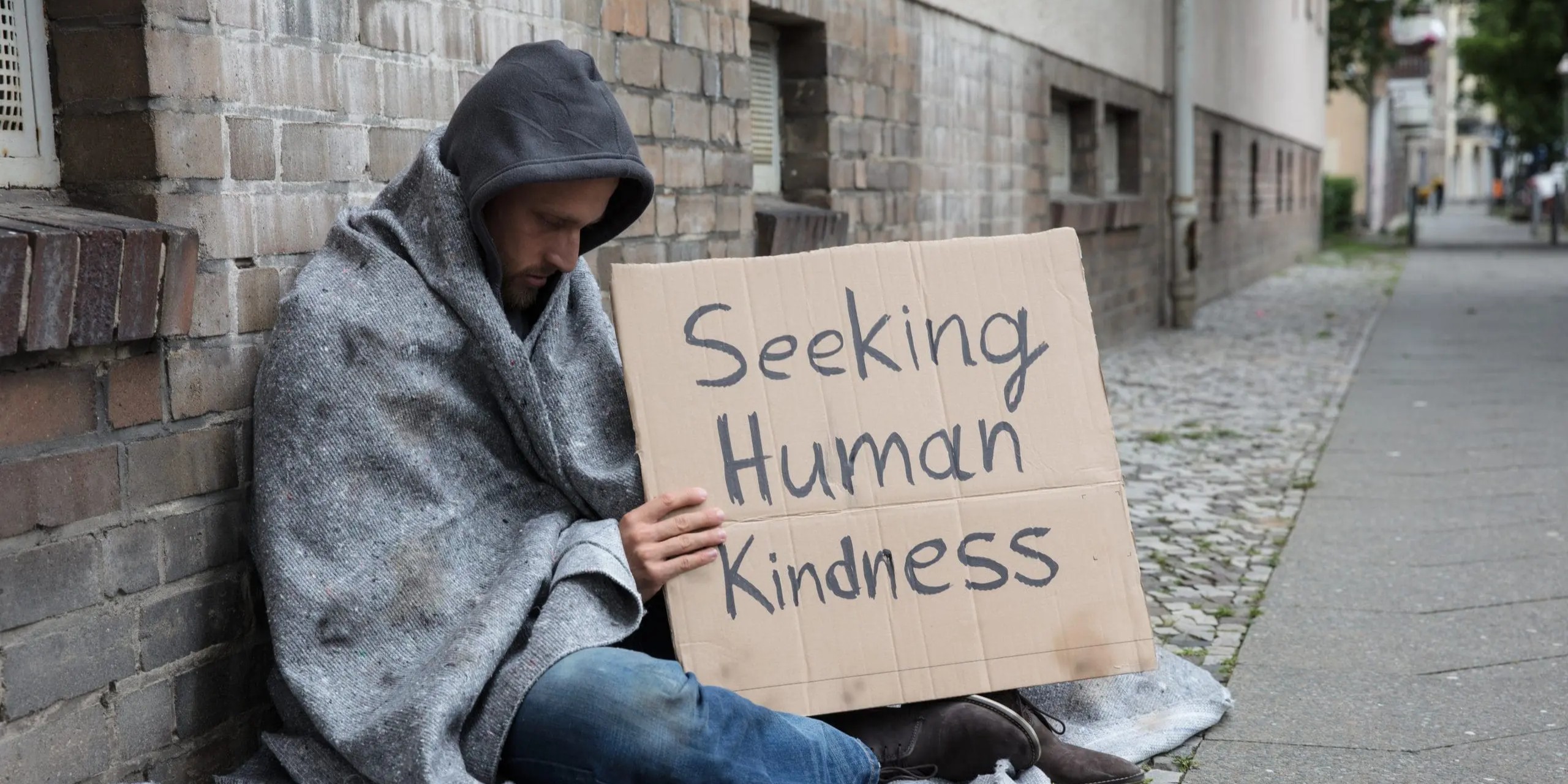
On July 24, 2025, President Donald Trump signed Executive Order 14321, titled “Ending Crime and Disorder on America’s Streets.” Shortly before it appeared, the latest official figures had shown a marked rise in homelessness in the United States.
The 2024 count found that roughly 771,000 people were experiencing homelessness nationwide, an increase of about 18 percent from the previous year. Approximately 274,000 of them were sleeping on streets, in parks, or in other places not meant for human habitation. These figures were a snapshot of a single night, not the total number of people who experienced homelessness at any point during the year. Even so, the total was the highest recorded since the count began.
There are many reasons why the number was so high. Rising housing costs and prices, stagnant or falling wages, layoffs, and the lingering effects of the pandemic may all have contributed. The Trump administration’s order, however, connected homelessness and unsheltered living with public disorder, drug use, and mental-health crises. Executive Order 14321 emerged from that framing.
Its central provisions can be reduced to two broad moves. First, it encouraged local governments to enforce restrictions on sleeping outdoors, loitering, and squatting, and instructed federal agencies to consider prioritizing grants for states and cities that did so. Second, it called for civil-commitment and treatment measures for certain people with serious mental illness who posed a danger to themselves or others, or who were living on the streets and unable to care for themselves. Put simply, the administration sought to use federal funding and policy direction to make local governments more aggressive in clearing encampments, enforcing public-order laws, and moving some unsheltered people into treatment or institutional settings.
The order did not itself create a nationwide crime of vagrancy, nor did it directly command local police to arrest everyone sleeping outdoors. Its main instruments were federal grants and policy guidance. Yet section 3 was expressly titled “Fighting Vagrancy on America’s Streets.” A phrase that seemed to belong to a nineteenth-century statute had returned in a twenty-first-century federal policy document.
But the Supreme Court had declared the old style of vagrancy law unconstitutional more than half a century earlier. Why, then, did “vagrancy” again become an object of presidential policy in 2025? Do today’s camping and loitering bans punish identifiable conduct, or do they offer a new way to single out people whom society would rather not see?
Four Young People Charged with “Prowling by Auto”
To understand those questions, we need to return to 1969.
Early one Sunday morning in Jacksonville, Florida, a car traveled along a main city road. Four young people were inside. They had eaten dinner at a nearby restaurant and were driving to a nightclub for the second stop of their evening. The police pulled them over on the way. Officers later explained that the car had briefly stopped near a used-car lot where several break-ins had recently occurred. No burglary took place that night, however, and there was no evidence that the four occupants intended to commit one.
Under the ordinary logic of criminal procedure, suspicion alone does not permit police to arrest someone without probable cause. Jacksonville, however, still enforced a local Vagrancy Ordinance. Anyone whom the police classified as a “vagrant” could be arrested, fined, and jailed. The ordinance defined that status through sweeping categories that included “common night walkers,” “habitual loafers,” and people “wandering or strolling around from place to place without any lawful purpose.” The police classified the four people in the car as “prowling by auto.”
They were far from the ordinance’s only victims. Similar cases were common across the country. Under such laws, an officer who thought someone looked suspicious could select a label from an assortment of vague categories, call that person a vagrant, and make an arrest. The Supreme Court case that became known as Papachristou joined the convictions of eight defendants. Besides the four people in the car, four others had been arrested and convicted on similarly nebulous grounds.
Among them were Jimmy Lee Smith and Milton Henry. Their encounter took place on a cold weekday morning. Smith worked part time in the produce business and as an organizer for a Black political organization. Henry was an eighteen-year-old high-school student. They were waiting downtown for a friend to lend them a car so they could seek work at a produce company. Smith had no coat, so the two stepped inside a dry-cleaning shop to get warm. When the shop asked them to leave, they immediately did so. They then walked back and forth two or three times along a two-block stretch, looking for their friend.
Nearby merchants called the police. Officers found no weapons when they searched the two men, but arrested them anyway. The officers said that Smith and Henry had no identification and that their story seemed suspicious, making them “vagabonds” under the ordinance.
The eight defendants eventually brought their cases to the Supreme Court in Papachristou v. City of Jacksonville. On February 24, 1972, the Court ruled 7–0 that Jacksonville’s Vagrancy Ordinance was unconstitutionally vague. On its face, the case merely invalidated a municipal law. At a deeper level, however, it posed a fundamental question: if the state no longer has to prove harmful conduct and may convict a person on an officer’s subjective impression, how much personal liberty remains?
From the Black Death to the Black Codes
American law grew from English law, so the history of Jacksonville’s ordinance begins in fourteenth-century England.
The Black Death had swept through the country and killed a vast number of agricultural workers. The resulting labor shortage gave surviving workers greater bargaining power. They could demand higher wages or leave their manors to seek better opportunities elsewhere.
Landowners and the Crown moved quickly to contain that change. The Crown issued the Ordinance of Labourers in 1349, and Parliament followed with the Statute of Labourers in 1351. The measures required able-bodied people without other means of support to work on legally prescribed terms, capped wages, and restricted movement in search of higher pay. Refusing to work on those terms or leaving an employer could lead to punishment. Their purpose was not public safety in the modern sense; it was control of the labor market.
From the sixteenth century, Tudor law increasingly divided poor people into two groups. Able-bodied people without recognized work who wandered or begged were marked for punishment; the “deserving poor” were eligible for relief. The law did not simply punish everyone without work. It first classified them: who deserved aid, who had to labor, and who should be penalized.
The Settlement Act of 1662 tied responsibility for poor relief to a person’s place of lawful settlement. If a parish feared that a newcomer who lacked settlement rights would become a financial burden, it could send that person back to the parish where he or she legally belonged. Settlement might be acquired by birth, marriage, long-term employment, or apprenticeship. The system principally allocated local fiscal responsibility, but it also constrained ordinary people’s freedom of movement.
The Vagrancy Act 1824 brought begging and sleeping in the open without a satisfactory explanation into summary criminal proceedings. Vagrancy law began to resemble modern street policing, merging judgments about status, conduct in public, and preventive law enforcement.
North America developed its own vagrancy regimes from this English foundation. After the Civil War ended in 1865, Southern states enacted the Black Codes. Their vagrancy provisions had an explicit racial purpose. Mississippi’s 1865 law, for example, allowed adult freedpeople without “lawful employment or business” to be deemed vagrants and subjected to fines or forced labor. In the postwar South, vagrancy law became one route from slavery into other forms of coerced labor.
From the late nineteenth century through the first half of the twentieth, American codes accumulated labels such as people “without visible means of support,” “common thieves,” “common drunkards,” “habitual loafers,” and those unable to explain their purpose. When police lacked evidence of a specific crime, they could assign a person to one of these categories. Vagrancy law thus combined inchoate offenses, status crimes, and disobedience of police commands. Punishment reached beyond demonstrated harm to encompass whatever dangers an officer imagined might occur.
By the mid-twentieth century, local governments were using such laws to remove people they disfavored. The targets varied by time and place: Black civil-rights organizers, labor organizers, gay men and lesbians, sex workers, antiwar activists, and nonconforming young people could all find themselves within the vagrancy net.
By the 1960s, just before Papachristou, vagrancy laws had long ceased to apply only to people in poverty. The four people arrested in the car included a teacher, college students, a veteran, and people with steady work. What united them was the police power to decide first that someone looked suspicious and then search a broad ordinance for a charge.
FBI figures showed roughly 100,000 vagrancy arrests in each year from 1968 through 1970, in addition to approximately 70,000 to 90,000 arrests categorized as based on “suspicion.” Justice William O. Douglas reproduced the figures in the Court’s opinion to show how common both old-style vagrancy enforcement and arrest on suspicion remained.
How Vagueness Enlarged Police Power
Jacksonville’s ordinance listed more than a dozen categories of supposed vagrants. Among them were:
- “Rogues and vagabonds,” a label with no conduct element and no objective way to determine when a person became a “rogue.”
- “Dissolute persons who go about begging,” in which “dissolute” supplied another highly subjective judgment.
- “Common gamblers” and “common drunkards,” which did not require proof of a particular act of illegal gambling or public intoxication. The law never said how often conduct had to occur before it became “common.”
- “Common night walkers,” even though walking at night is not itself harmful.
- “Habitual loafers,” treating unemployment or leisure as a crime in itself.
These labels carried real criminal penalties. At the time of the defendants’ arrests, a conviction could result in up to ninety days in jail, a $500 fine, or both.
The Supreme Court invalidated the provisions because they were unconstitutionally vague. A criminal law cannot be written so obscurely that ordinary people must guess at its meaning. Jacksonville’s categories had no workable boundaries. What counted as “habitual” or “common”—three times a week, or twice a month? What was a “lawful purpose”? Did only work and shopping qualify, or did a walk at sunset count as well?
More important, a vague law not only leaves the public uncertain; it also fails to constrain law enforcement and thereby expands police power. Douglas wrote that the ordinance cast a broad net and enlarged the police arsenal without giving courts a clearly defined offense to adjudicate. Some innocent actions may sometimes accompany crime. A person lingering on a street may be scouting a robbery, and someone stopping near a used-car lot may be seeking a target. That possibility does not allow the state to convict everyone who does the same thing. Legislatures may define concrete offenses involving attempted theft, trespass, or unlawful weapons. They may not use the possibility of future crime as the true basis for punishing a person under a vagrancy label.
When ordinary activities become subject to criminal punishment, they create a chilling effect. If vague rules reach walking, socializing, or political organizing, people may curtail their freedom to avoid arrest. Douglas linked strolling, walking at night, nonconformity, dissent, and personal independence, and invoked figures including Walt Whitman, Vachel Lindsay, and Henry David Thoreau. They might all have seemed unconventional to their neighbors. Treating them as criminals for that reason would go far beyond the legitimate reach of law.
Some rules can retain a degree of linguistic flexibility. Commercial regulations, for example, often apply to a narrower subject and a more specialized audience, so courts may tolerate greater uncertainty. Criminal law demands more precision. Jacksonville’s ordinance governed the general public and could lead directly to arrest, imprisonment, fines, and stigma. It could not be measured by the same forgiving standard.
The opinion also explained that arrest requires probable cause under the Fourth and Fourteenth Amendments. Ordinarily, the law first defines a crime and police then ask whether concrete facts establish probable cause to believe it occurred. The Vagrancy Ordinance reversed that sequence. Police began with a sense that someone was suspicious and demanded an explanation of identity and purpose. If the answer failed to satisfy them, “no lawful purpose” or “vagabond” became the offense and supplied an apparent basis for arrest. This invitation to arbitrary enforcement was central to the Court’s conclusion that the ordinance violated due process.
A “Freedom to Stroll” and the Power to Stop
The case is sometimes said to have created a constitutional freedom to stroll, as though Americans acquired the right to wander down a street only after Papachristou. That overstates what the Court held.
The opinion focused on the ordinance’s vagueness and did not identify an independent fundamental right called a freedom to stroll. Its language nevertheless carried a strong sense of substantive liberty. Douglas described walking at night, strolling, and wandering as ordinary activities that, although not mentioned word for word in the Constitution, nurture the independent and creative spirit of modern society.
Later decisions did not establish harmless loitering as an independent fundamental right supported by a majority of the Court. In City of Chicago v. Morales in 1999, Justice John Paul Stevens wrote in a four-Justice plurality that the freedom to loiter for innocent purposes fell within the liberty protected by the Fourteenth Amendment’s Due Process Clause. That portion of the opinion did not command five votes; the judgment invalidating the ordinance rested on vagueness. Papachristou therefore did not deliberately create a discrete “freedom to stroll.” Its rule centered on vague law and unconstrained police discretion. In that respect, it resembled Miranda: both decisions limited the authority of frontline police officers.
Critics argued that abolishing the Vagrancy Ordinance would weaken or even eliminate police power to question people on the street. That concern did not follow from the law as it then stood.
Four years before Papachristou, the Court had recognized a lower-intensity form of police intervention in Terry v. Ohio. Even without probable cause to arrest, an officer could conduct a brief investigative stop on the basis of reasonable suspicion grounded in specific, articulable facts. If the officer also reasonably believed that the person was armed and dangerous, the officer could conduct a limited frisk for weapons.
Papachristou did not overrule Terry or deprive police of all power to stop and question. Its change was more precise: police could no longer use a sweeping vagrancy offense to convert suspicion directly into arrest and conviction. When there was only reasonable suspicion, police were limited to a lower-intensity intervention and had to point to facts that made the suspicion reasonable. A formal arrest required probable cause to believe the person had committed a defined crime. That was the decision’s principal significance for criminal procedure.
After the Old Vagrancy Laws
In 1972, the Florida Legislature repealed the old state vagrancy statute that had served as a model for municipal ordinances and enacted a new loitering-and-prowling law. Under the replacement, the state had to prove that the defendant’s conduct was unusual for law-abiding people in its time, place, or manner. The surrounding circumstances also had to warrant justifiable and reasonable alarm or immediate concern for the safety of people or property nearby. The statute offered examples, such as flight upon seeing police, refusal to identify oneself, or an attempt to conceal oneself. Even those circumstances did not automatically permit arrest. Unless flight or another circumstance made inquiry impracticable, an officer first had to give the person an opportunity to explain. In State v. Ecker in 1975, the Florida Supreme Court further construed the law to require concrete circumstances threatening public safety. An officer’s subjective suspicion alone could not establish the offense.
The replacement did not eliminate all room for selective enforcement. Phrases such as conduct “not usual for law-abiding individuals” and “justifiable and reasonable alarm” still involve judgment. Whether such words meaningfully restrain street-level enforcement depends on the officer’s assessment at the scene and on later judicial review.
Several later Supreme Court cases gave the constitutional boundary greater definition.
In Kolender v. Lawson in 1983, a California statute required a person detained on reasonable suspicion for loitering or wandering to provide “credible and reliable” identification. But what made an identification credible and reliable? The statute supplied no standard and left the answer to individual officers. The Court held the law unconstitutionally vague because it vested virtually complete discretion in the police.
In City of Chicago v. Morales in 1999, Chicago’s gang-loitering ordinance allowed an officer who reasonably believed that at least one person in a group of two or more was a gang member, and who regarded the group as remaining in a public place with “no apparent purpose,” to order everyone to disperse. Refusal brought punishment. The Supreme Court held the ordinance invalid. “No apparent purpose” was too vague and allowed officers on the beat to draw the line between innocent conduct and crime.
Papachristou did not single-handedly remake the entire American law of criminal offenses. Its immediate effect was to accelerate the disappearance of old-style vagrancy laws and require public-order offenses to use more definite conduct elements and enforcement standards. The justice system had to turn its attention from labels attached to suspects toward their conduct, the circumstances at the scene, and dangers that could be proved. In that way, the case helped regularize American criminal justice.
Status and Conduct in Grants Pass
It would be easy to draw an overly optimistic conclusion: once the old vagrancy laws disappeared, so did the police power to remove people from the street arbitrarily. The history is more complicated.
Police historian Sarah Seo has observed that, in the constitutional case law, the 1972 judgment was a victory for individual liberty. In the history of policing, however, the same period also saw the growth of proactive street policing, Terry stops, and enforcement of minor public-order offenses. Papachristou constrained the forms through which police exercised discretion; it did not remove discretion from the street.
Legal historian Lissa Goluboff asks a related question: why did the old vagrancy laws survive for so long? In her account, those laws often cared less about what a person had done than about whether that person occupied the place society assigned to him or her. A Black person in an unwelcome neighborhood, a worker leaving an employer, gay people gathering openly, or young people rejecting conventional life could all be treated as out of place. Challenges brought through the civil-rights movement, labor organizing, gay-rights activism, the antiwar movement, and youth culture therefore shared a claim: the state could not dictate in advance what identity each person should possess and where that identity was permitted to appear.
Together, these accounts locate Papachristou more precisely. The case ended an overt form of status-based enforcement, but it did not end subjective judgment by police. Statutes were less likely to declare a “vagabond” or “common night walker” criminal by name. Similar judgments could instead migrate into rules governing camping, sleeping in public, or disorderly conduct.
That is why the controversy persists. To understand its modern form, we need to separate two constitutional lines. The first is the void-for-vagueness problem represented by Papachristou. The second concerns status crimes under the Eighth Amendment: may the state punish a person for a condition or status without regard to conduct? The issues often appear together in debates over homelessness, but they ask different legal questions. Vagueness concerns whether a rule has intelligible boundaries. The status-conduct distinction asks whether the state is punishing who a person is or what that person has done.
City of Grants Pass v. Johnson brought that distinction back to the Supreme Court in 2024. Grants Pass, Oregon, prohibited camping on public property and defined camping to include the use of bedding. On its face, the rule applied to everyone. A person experiencing homelessness, a backpacker passing through town, and a student participating in a protest encampment were all subject to it. Their practical positions differed, however. Backpackers and students could usually choose to go elsewhere; a person without housing might have no indoor place to sleep. If sleep is unavoidable, did punishing outdoor sleep regulate conduct or merely punish homelessness by another name?
The Court ruled 6–3 for Grants Pass. The majority reasoned that the ordinances punished conduct—camping on public property—not the status of being homeless. Because they applied to people regardless of status, they did not violate the Eighth Amendment rule against criminalizing status itself. Justice Sonia Sotomayor, joined by two other dissenters, took the opposite view. For a person with no indoor shelter option, she argued, sleep was not a voluntary behavior that could simply be abandoned. Punishing that person for sleeping outside was functionally close to punishing the condition of homelessness.
Importantly, Grants Pass did not overrule Papachristou. It addressed the Eighth Amendment status-crime theory, not vagueness under the Due Process Clause. The majority also acknowledged that laws directed at conduct could raise other constitutional problems if they were selectively enforced against a disfavored group. Due process and selective-enforcement claims, however, were not before the Court in that case.
The boundary drawn by Grants Pass was therefore limited. A government cannot simply announce that homelessness itself is a crime, but it may punish certain conduct such as camping in public. Whether the conduct rule is sufficiently clear, selectively enforced, or used as a proxy for excluding a class of people remains subject to other constitutional doctrines.
That distinction also clarifies Executive Order 14321. The order did not overturn Papachristou or restore the old offense of vagrancy. It used federal funding and related policy tools to encourage enforcement of restrictions on camping, loitering, and open drug use while expanding certain civil-commitment measures. Old vagrancy laws attached a criminal label directly to a “vagrant.” Modern rules more often define conduct such as sleeping outdoors or loitering. Yet the question left in 1972 remains: are those rules sufficiently clear, and do they target a demonstrable danger or a disfavored person?
From Papachristou to Sun Zhigang
For a Chinese audience, this history inevitably calls to mind another name: Sun Zhigang.
In 2003, the twenty-seven-year-old Sun was detained in Guangzhou because he was not carrying identification and had not obtained a temporary-residence permit. Authorities wrongly treated him as a person eligible for custody and repatriation. He was beaten inside a custody-and-repatriation facility and died three days later. In fact, Sun had both a job and a place to live; he did not fit even the system’s category of an indigent migrant or beggar.
The incident has sometimes been called China’s Papachristou. The comparison is imperfect. The social structures, legal mechanisms, and paths to reform were very different. The two events nevertheless leave a similar question: when a person has committed no concrete act of harm, may an official deprive that person of liberty merely because he “looks suspicious”?
Why Sun Zhigang’s death helped bring the custody-and-repatriation system to an end, and how legal scholars’ review proposals and public opinion influenced that change, will be the subject of the next episode.
From the Ordinance of Labourers enacted in 1349 to control labor, through the Supreme Court’s invalidation of Jacksonville’s Vagrancy Ordinance in 1972, to present disputes over camping, loitering, and public order, the language of law has continually changed while the same problem returns. It has no final answer. Whenever law prepares to restrict a person’s liberty because of a status attached to that person, we should ask the question again.
Key Figures
- Jimmy Lee Smith: A part-time organizer for a Black political organization who was arrested while waiting for a friend downtown and carrying no identification.
- Milton Henry: An eighteen-year-old high-school student arrested with Smith while they waited for a friend.
- William O. Douglas: Associate Justice of the U.S. Supreme Court from 1939 to 1975 and author of the Court’s opinion in Papachristou.
Key Cases and Concepts
- Papachristou v. City of Jacksonville: The Supreme Court ruled 7–0 that Jacksonville’s Vagrancy Ordinance was unconstitutionally vague. Criminal law must tell ordinary people what conduct is prohibited and constrain law enforcement; it cannot make “who looks suspicious” an element of crime.
- The Due Process Clause of the Fourteenth Amendment: Requires state and local criminal laws to satisfy a minimum standard of clarity and provided the constitutional basis for Papachristou.
- The void-for-vagueness doctrine: The ordinance failed both to give fair notice and to supply standards for law enforcement, inviting arbitrary arrests and convictions. The threat to ordinary activity and the higher clarity demanded of criminal rules reinforced the Court’s conclusion.
- The Vagrancy Act 1824: A major point in the development of modern English criminal vagrancy law, listing categories such as idle and disorderly persons, rogues, and vagabonds.
- The Black Codes: Racial laws enacted by Southern states during Reconstruction. Their vagrancy provisions helped channel emancipation into new forms of forced labor.
- Terry v. Ohio: Permits a brief investigative stop based on reasonable suspicion arising from specific, articulable facts. Papachristou did not disturb that rule.
- Kolender v. Lawson: Invalidated California’s vague identification requirement because it gave police nearly complete discretion, providing one of the clearest later expressions of Papachristou’s concern with constraining police power.
- City of Chicago v. Morales: The Supreme Court invalidated Chicago’s gang-loitering ordinance 6–3 because the phrase “no apparent purpose” was impermissibly vague.
- City of Grants Pass v. Johnson: The Court ruled 6–3 that generally applicable public-camping ordinances regulated conduct rather than the status of homelessness and therefore did not violate the Eighth Amendment.
- Executive Order 14321, “Ending Crime and Disorder on America’s Streets”: Directed federal agencies to consider prioritizing support for states and cities enforcing restrictions on camping, loitering, and open drug use, while promoting expanded civil-commitment measures within existing law.