This is the transcript of episode 15 of my podcast Reasoned Talk (议正言辞). Listen on Xiaoyuzhou or Apple Podcasts . The episode is in Chinese; this transcript has been translated into English.
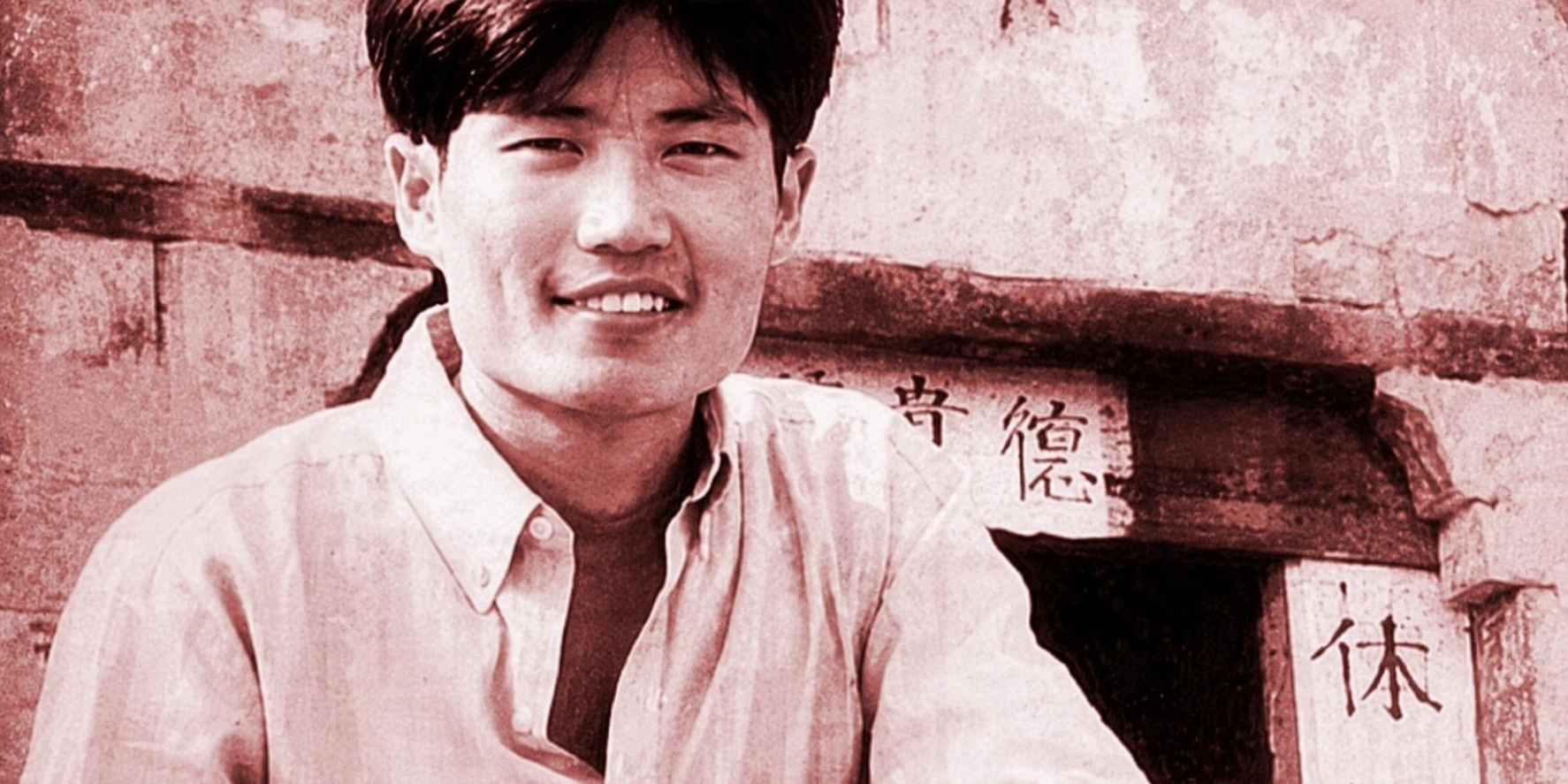
At ten o’clock on the evening of March 17, 2003, twenty-seven-year-old Sun Zhigang left the place where he was staying and set out for a nearby internet café. Sun was from Huanggang, Hubei. Two years earlier, he had graduated from Wuhan Institute of Science and Technology, now Wuhan Textile University. Less than a month before, on February 24, the Daqi Garment Company in Guangzhou had hired him. He moved from Wuhan to Guangzhou, shared a rented room with friends, and settled into the ordinary routine of a young office worker.
On his way to the internet café, police stopped Sun and asked to see identification. He had been in Guangzhou for only a little over twenty days and had not yet obtained a temporary-residence permit. He did have a national identity card, but happened not to be carrying it that evening. Because officers could not verify his identity on the spot, they took him to the nearby Huangcun Street Police Station. Roughly an hour later, Sun called the friend with whom he lived and asked him to bring the identity card and some money.
The friend arrived with another colleague close to midnight. They delivered the identification, but could not take Sun home. The next day, he was transferred to the Guangzhou Custody-and-Repatriation Transit Station. One day later, he was sent to a medical center for people held under the system. At noon on March 20, Sun died there under suspicious circumstances.
Less than three days passed between his arrival at the police station on March 17 and his death in custody on March 20. News organizations pursued the story and it soon reverberated across the country. It became known as the Sun Zhigang case. The case triggered an intense debate over whether an administrative regulation could violate the Constitution, and legal scholars jointly petitioned the Standing Committee of the National People’s Congress to begin constitutional review. Exactly three months after Sun’s death, the State Council promulgated a new regulation and announced that the custody-and-repatriation system, then twenty-one years old, would be abolished on August 1.
How could a criminal case arising from wrongful detention acquire such force? The answer begins on March 17, 2003, with the phone call Sun made to his friend.
Wrongful Detention and Death in the Medical Center
After Sun arrived at the Huangcun Street Police Station, staff recorded basic information about him. The registration form later made public classified him as a person with “three noes”: no fixed residence, no means of support, and no valid identification. A station supervisor signed the form and approved Sun for custody and repatriation.
The stated basis was the Guangdong Provincial Regulations on Custody and Repatriation. Under article 9, paragraph 6, a person who had “no lawful identification, no normal residence, and no legitimate means of support, and who was living on the streets” was subject to custody. Sun, however, had both an identity card and a stable place to live. His employer could prove that he had worked there as a graphic designer since February 24. He bore virtually no resemblance to the supposed category of a person with “three noes.” His only irregularity was the absence of a Guangzhou temporary-residence permit. As the Guangdong legislature’s legal-affairs body later explained, that omission alone was not enough to justify custody. Even before reaching the later constitutional controversy, the handling of Sun’s case was deeply problematic under Guangdong’s own rules at the time.
On March 18, Sun was taken to the Guangzhou Custody-and-Repatriation Transit Station. He called his friend from inside. The friend later remembered that Sun was “stammering a little, speaking very quickly, and seemed extremely frightened.” The friend contacted the owner of Sun’s company. A colleague first tried to secure Sun’s release but was told that the paperwork was incomplete. Once the documents were assembled, the owner went to the transit station himself. It was nearly closing time, however, and staff told him to return the following day.
When the friend called the transit station on March 19, he learned that Sun had already been transferred again. Nursing records disclosed later showed that Sun had been delivered to the Guangzhou Medical Center for Persons in Custody at about 11:30 p.m. the previous night. The “medical center” was in fact the Jiangcun inpatient unit of the Guangzhou Psychiatric Hospital. Under the ordinary custody-and-repatriation process, the transit station should have been followed by repatriation to Sun’s home in Huanggang, Hubei. For reasons outside the normal process, however, he was sent to the hospital before reaching that stage.
His friends and colleagues tried to see him, only to be refused once more. This time they were told that only a family member could visit him in the hospital. At noon on March 20, the friend called again. The hospital said that Sun was dead. Its first explanation was a sudden heart attack. The nursing record gave the time of death as 10:25 that morning, but the record itself raised questions. Sun had been conscious when admitted and no abnormality was recorded. For a long period afterward, the notes merely said that he was “sleeping.” Only at 10 a.m. on March 20 did a nurse find him pale, silent, motionless, breathing weakly, and with no measurable blood pressure. A doctor attempted resuscitation and stopped treatment at 10:25.
For Sun’s family back in Hubei, the news was devastating. They immediately traveled to Guangzhou. His parents could not accept the hospital’s “heart attack” explanation. Instead of allowing an immediate cremation, they demanded an autopsy. The Forensic Identification Center at Sun Yat-sen University examined Sun’s body on April 3. Its opinion, issued on April 18, concluded that extensive soft-tissue injuries had caused fatal traumatic shock.
The autopsy documented massive subcutaneous bleeding around the waist and back, while other vital organs showed no obvious disease. Sun had not died of a sudden heart attack. He had been beaten to death. What the hospital chart described as prolonged “sleep” may in fact have been the manifestation of traumatic shock.
The court later found that Sun was deeply angered by being taken to a police station without cause and then placed in custody and repatriation. After arriving at the hospital, he protested loudly and repeatedly, provoking staff member Qiao Yanqin. On the night of March 19, Qiao instructed other detainees to beat him. Sun was assaulted twice before dawn on March 20 and died from traumatic shock later that morning.
On April 25, one week after the autopsy result, Southern Metropolis Daily published a lengthy investigation titled “The Death of Detainee Sun Zhigang.” The Beijing Youth Daily, People’s Daily Online, Xinhua, and other outlets quickly republished or followed the story. Their reporting and commentary turned the case into a national public event.
The SARS epidemic then dominated national news. Even so, the Sun Zhigang case spread rapidly. Large numbers of people who had left their hometowns to study or work in cities recognized themselves in his experience. A university graduate only two years out of school, who met none of the conditions for custody, had been passed from one institution to the next and died in agony within three days. The incident had become more than an ordinary criminal case. Public anger increasingly focused on the custody-and-repatriation system itself.
How Relief Became Control
What kind of system was custody and repatriation?
Its origins in China dated to 1951. A product of the planned economy, it began as a welfare measure intended to assist people arriving in cities without shelter. After reform and opening, economic development brought much greater movement across regions and more people living on urban streets. In May 1982, the State Council issued the Measures for the Custody and Repatriation of Urban Vagrants and Beggars. From that point, relief was no longer the system’s only objective. Article 1 stated:
These Measures are formulated to provide relief, education, and placement for urban vagrants and beggars, and to preserve urban public order and social stability.
The phrase “preserve urban public order and social stability” reveals an emerging public-security function. As population mobility accelerated and officials confronted worsening public-order concerns without a better management tool, that function grew stronger. The system became more coercive as a result. Article 6 required people in custody to “submit to” custody and repatriation. Although the institution retained the language of welfare, its supposed beneficiaries had no right to decline the assistance. Relief and control were already in tension; more control necessarily meant less relief.
The 1982 Measures still applied only to “urban vagrants and beggars.” In 1991, however, the State Council issued an Opinion on Reforming Custody and Repatriation. It formally introduced the category of people with “three noes”—no lawful documents, no fixed residence, and no stable income—and expanded the system’s reach. Custody and repatriation became a device for removing migrants from cities, and its public-order purpose grew more explicit. By then, the original relief function had largely receded.
Some scholars describe this process as institutional “alienation”: a system that began as social welfare gradually changed function through the combined effects of the urban-rural divide, administrative power without adequate supervision, and poorly trained enforcement personnel.
The pattern was clear in local practice. The Guangdong Provincial Regulations on Custody and Repatriation, issued by the provincial legislature in 2002 and invoked in Sun’s detention, expressly made people with “three noes” a target of custody. Sun did not fit that description; his detention resulted from an error by frontline authorities. Yet public anger extended beyond a single enforcement mistake to the institution that had been transformed in this way.
By 2003, the system had operated for twenty-one years and dissatisfaction had accumulated for a long time. The most direct and severe criticism was that the system may have been constitutionally defective.
Statutory Reservation and Two Review Proposals
Consider the law then in force.
Article 37 of the 1982 Constitution provides that “the personal freedom of citizens of the People’s Republic of China shall not be violated” and that no citizen may be arrested except with the approval or decision of a people’s procuratorate or the decision of a people’s court, followed by execution by a public-security organ. Article 9 of the 1996 Administrative Penalties Law provided that an administrative penalty restricting personal liberty could be created only by a statute. Article 8 of the 2000 Legislation Law provided that coercive measures and punishments restricting personal liberty could be governed only by statutes.
“Statute” here meant a law enacted by the National People’s Congress or its Standing Committee. If custody and repatriation was treated as an administrative penalty, it directly confronted the reservation in the Administrative Penalties Law. Even without that classification, it remained a coercive measure restricting liberty and therefore fell within the Legislation Law’s statutory reservation. By 2003, the State Council’s 1982 Measures faced a serious conflict with the Constitution, the Administrative Penalties Law, and the Legislation Law.
On May 14, twenty days after the Southern Metropolis Daily investigation, three Peking University–educated doctors of law submitted a review proposal to the NPC Standing Committee. Citing articles 88 and 90 of the Legislation Law, they recommended review of the State Council’s 1982 Measures. Five other scholars filed a second proposal on May 23. Relying on article 71 of the Constitution, they asked the Standing Committee to establish a special inquiry into the Sun Zhigang case and the custody-and-repatriation system.
The State Council had issued the Measures on May 12, 1982, while the current Constitution was not promulgated until December 4 of that year. The present Constitution therefore did not yet exist when the Measures appeared. The legal environment changed profoundly afterward. The Administrative Penalties Law in 1996 and the Legislation Law in 2000 imposed stricter requirements on the legal source of authority to restrict personal liberty. The old Measures had become increasingly difficult to reconcile with the new framework.
From Custody and Repatriation to Social Assistance
By the time of the Sun Zhigang case, the system was clearly nearing its end. As national debate intensified, Wu Bangguo, then chair of the NPC Standing Committee, forwarded relevant materials to Premier Wen Jiabao on June 4 with a written work suggestion. He proposed that the responsible State Council departments study the matter and that the NPC Legislative Affairs Commission could participate. On June 18, the State Council executive meeting adopted the new Measures for Assisting Vagrants and Beggars with No Means of Support in Cities. Wen signed State Council Order No. 381 on June 20, promulgating the new Measures and setting August 1 as their effective date. The 1982 custody-and-repatriation rules were abolished on that same date. After more than two decades, custody and repatriation gave way to a new system of social assistance.
Article 11 of the new Measures provides:
An assistance station shall advise a recipient to return to the recipient’s residence or work unit and may not restrict the recipient from leaving the station. If an address has been ascertained, the station shall promptly notify the recipient’s relatives or work unit to take the recipient home. If the recipient is homeless, the people’s government of the place of household registration shall make proper arrangements.
The new regime abandoned coercive custody and returned to the gentler objective of social relief.
It also reassigned the role of the police. When officers encountered vagrants or beggars, their principal responsibility was to inform and guide them toward assistance stations. Government budgets would fund assistance. Stations could not charge recipients, relatives, or work units, nor could they organize recipients to perform productive labor. The Measures expressly prohibited staff from confining or covertly confining, beating, physically punishing, or abusing recipients.
The State Council thus ended a potentially unconstitutional system by repealing the old regulation and replacing it with a new one. Once the promulgating authority itself had terminated the system, further formal review was no longer practically necessary. The preceding episode discussed the end of American vagrancy law. In 1972, the U.S. Supreme Court used judicial review to invalidate Jacksonville’s vagrancy ordinance, affecting the entire tradition of old-style vagrancy law. That authority had developed over more than a century: in deciding a case, the Supreme Court could review the constitutionality of the legal provision before it. China addressed a related problem through a gentler path that more closely fit its own institutional setting.
Returning to the management of people living on the streets, China and the United States differ enormously in political institutions and legal tradition. Yet their governments face a similar underlying tension. Local authorities need some capacity to maintain public order, but that management can itself violate individual rights. The Sun Zhigang case was an extreme example. Institutional defects, insufficiently supervised administrative power, and poorly trained personnel converged during an era of rapid economic growth to produce an irreversible tragedy.
Criminal Trials and Accountability
On June 5, 2003, the Guangzhou Intermediate People’s Court publicly tried the case arising from Sun Zhigang’s fatal beating. Twelve defendants stood trial: four hospital orderlies and eight other people in custody. The court found that orderly Qiao Yanqin, angered by Sun’s loud pleas for help, arranged to move him to another ward and instructed Li Haiying and other detainees there to beat him. Li then organized and directed the assault. Another orderly, Lü Erpeng, not only participated in the planning but struck Sun with a plastic baton after Sun reported the first beating. Before dawn on March 20, Sun was assaulted twice and died from extensive soft-tissue injury and traumatic shock.
Why did the court convict the defendants of intentional injury rather than intentional homicide? Intentional homicide requires an intent to deprive another person of life. The court found that the defendants directly intended to beat and injure Sun, while death was the grave consequence of that assault. Under the Criminal Law, intentional injury causing death may likewise be punished by at least ten years’ imprisonment, life imprisonment, or death.
The court announced its first-instance judgment on June 9. Qiao Yanqin was sentenced to immediate execution and deprivation of political rights for life. Li Haiying received a death sentence with a two-year reprieve. The other defendants received terms ranging from three to fifteen years, or life imprisonment. All twelve appealed. On June 27, the Guangdong High People’s Court rejected the appeals and affirmed the judgments. Acting under authority delegated by the Supreme People’s Court, it approved Qiao’s death sentence. She was executed that day.
Six other responsible personnel were prosecuted separately for dereliction of duty. They included an officer from the Huangcun Street Police Station, the deputy director of the Jiangcun inpatient unit of the Guangzhou Psychiatric Hospital, and the head of the medical center. On June 9, the Tianhe and Baiyun district courts found that the six defendants’ failures had caused Sun’s wrongful custody and exposed him to the fatal abuse. Each received a sentence of two to three years. Five appealed. On June 27, the Guangzhou Intermediate People’s Court rejected the appeals and affirmed the judgments.
Beyond the criminal cases, twenty-three people received Party or administrative discipline. They ranged from responsible leaders in the Guangzhou public-security, health, and civil-affairs departments to personnel at the Tianhe Public Security Sub-bureau, Huangcun Street Police Station, transit station, and medical center. Two officers who processed Sun’s case were expelled from the Party and dismissed from public employment. The head and deputy head of the police station were removed from their positions. Other managers received warnings, demerits, major demerits, or removal.
Accountability therefore operated on three levels. Those who organized or carried out the beatings were convicted of intentional injury. Those whose serious failures in custody, medical care, and supervision enabled the death were convicted of dereliction of duty. Other people with managerial or leadership responsibility received Party or administrative discipline.
“Assistance Bridge,” “Reform Pavilion,” and a Family
Before the criminal trial, the special case team, acting on behalf of the responsible departments, signed a state-compensation agreement with Sun’s family. Most of the people who directly participated in the beatings had little money, making a damages award difficult to collect, so the family abandoned a civil claim attached to the criminal case. Their lawyer did not disclose the amount in the agreement. Sun’s father, Sun Lusong, later told an interviewer that the Guangzhou authorities paid a total of 500,000 yuan.
Sun Lusong attended the first-instance judgment in Guangzhou on June 9. He had spent more than eighty days there seeking the truth about his son’s death. After the judgment, he took Sun Zhigang home to Huanggang, Hubei, and buried him in Xingfu Village, Taodian Township, less than one hundred meters from the primary school Sun had attended.
The father designed the gravesite himself. A small “Assistance Bridge” stands before the grave and a “Reform Pavilion” behind it. On either side are two sweet-osmanthus trees that he transplanted from the old family home because his son had loved their blossoms. The gravestone records the entire path from wrongful custody and forensic identification to media reporting and repeal of the old system. Its final inscription reads: “Sun Zhigang—a man worth remembering, who advanced China’s rule of law at the cost of his life.”
For years after the case, migrant workers who had once been held under custody and repatriation found the family’s phone number and called Sun’s parents to express their sympathy. A decade later, Sun Lusong still told reporters that he hoped his son’s case would help preserve institutions that benefited ordinary people and abolish those that harmed them. The family gradually withdrew from public view and returned to daily life.
Recording and Review After Sun Zhigang
The broader effect of the Sun Zhigang case did not end with the repeal of custody and repatriation.
Amendments to the Legislation Law in 2015 and 2023 made the relevant procedures clearer. Article 11 of the current law still expressly reserves restrictions on personal liberty to statutes. Article 12 goes further: even when the National People’s Congress or its Standing Committee authorizes the State Council to legislate provisionally, the authorization may not extend to measures restricting personal liberty. The line of authority implicated by the Sun Zhigang case remains written into law.
The current Legislation Law also regulates constitutional and legality review in greater detail. In 2019, the NPC website opened an online portal for review proposals, removing the need to submit by fax as the three legal scholars had done. After receiving a proposal, an NPC Standing Committee working body conducts an initial examination. If a possible constitutional or legal defect appears, the matter can proceed to further review. The reviewing body may issue a written opinion to the promulgating authority, which has two months to say whether it will amend or repeal the rule. If it refuses to correct the problem, the reviewing institutions may submit a motion or recommendation for annulment to the Council of Chairpersons, which decides whether to place the matter before the NPC Standing Committee. Once review concludes, the citizen or organization that made the proposal is to receive feedback.
In practice, most issues are first discussed between the reviewing body and the promulgating authority, after which the latter amends or repeals the rule itself. Formal annulment remains the last resort. The pattern resembles the State Council’s self-correction in the Sun Zhigang case, but today’s process is more proceduralized and transparent than it was in 2003.
In 2025, the NPC Standing Committee received 6,705 review proposals from citizens and organizations: 1,420 by post and 5,285 online. One proposal challenged local rules requiring a person registering a motorized wheelchair to hold permanent household registration in that city. The Legislative Affairs Commission regarded the requirement as unnecessary differential treatment. It issued a review opinion to the authorities responsible for the local legislation and referred the related local-government rules to the bodies responsible for supervising them.
The example echoes the Sun Zhigang case in a subtle way. Both involved migration and household-registration controls. The difference is that citizens today need not wait for a death before bringing a problem into the recording-and-review process. A local rule that unreasonably restricts rights can be reexamined and changed because of a proposal submitted online.
Yet the story should not romanticize Sun’s death. He did not choose to sacrifice himself for legal reform. On the night of March 17, 2003, he simply wanted to use an internet café after work. The case ultimately received an institutional response, but Sun’s life still ended at twenty-seven.
Courts can punish perpetrators after a tragedy. Governments can abolish a defective system. The Legislation Law can continue to improve its procedures of supervision. The more important purpose of the rule of law, however, is to use clear limits on power and binding procedures to prevent such errors before they happen. That is the final lesson of the Sun Zhigang case: law must do its work before tragedy occurs.
Key Figures
- Sun Zhigang — A young man from Hubei, born in 1976, who had recently begun work in Guangzhou. Because he was not carrying his identity card and had not yet obtained a temporary-residence permit, he was wrongly placed in custody and died three days later. He was unrelated to the government official of the same name.
- Qiao Yanqin — An orderly at the Guangzhou Medical Center for Persons in Custody. The court found that, angered by Sun’s shouting, she instructed other detainees to beat him. She was sentenced to immediate execution, the judgment was affirmed and approved on appeal, and she was executed on June 27, 2003.
- Wu Bangguo — Then chair of the NPC Standing Committee. The work suggestion made public later shows that the Standing Committee’s leadership was monitoring the case internally and transmitting the matter to the State Council; it did not amount to a formal constitutional judgment by the Standing Committee.
- Wen Jiabao — Then premier of the State Council. He signed State Council Order No. 381 on June 20, 2003, promulgating the new Assistance Measures. The regulation was adopted by the State Council executive meeting and issued as a State Council order; the State Council, rather than the premier personally, was the lawmaking authority.
Key Concepts
- Statutory reservation — Matters including restrictions on personal liberty must be prescribed by statutes enacted by the National People’s Congress or its Standing Committee; an administrative regulation of the State Council cannot create them on its own. The principal provisions in 2003 were article 8, item 5, and article 9 of the Legislation Law then in force.
- Review requirement and review proposal — Article 90 of the 2000 Legislation Law called a formal submission by specified state bodies a “requirement” and a submission by other bodies, organizations, or citizens a “proposal.” The submission by the three legal scholars belonged to the latter category.
- Recording and review — The system through which competent authorities supervise administrative regulations, local legislation, and other norms for constitutional and legal defects.
- Administrative self-correction — The State Council, which had promulgated the old Measures, used a new administrative regulation to abolish them directly.
Key Laws and Legal Documents
- Measures for the Custody and Repatriation of Urban Vagrants and Beggars (State Council; issued May 12, 1982; repealed August 1, 2003) — Article 1 combined relief and public-order purposes, while article 6 required submission to custody and repatriation, directly expressing the coercive character of the old system.
- Article 37 of the Constitution of the People’s Republic of China — Protects citizens’ personal liberty and supplied the fundamental-rights basis cited in the three scholars’ proposal.
- Administrative Penalties Law of the People’s Republic of China (1996 text, articles 9 and 10) — Article 9 reserved the creation of administrative penalties restricting liberty to statutes, and article 10 barred administrative regulations from creating such penalties. This line of argument applies directly only if custody and repatriation is first classified as an administrative penalty.
- Legislation Law of the People’s Republic of China (2000 text, articles 8, 9, 88, and 90) — Governed statutory reservation for measures restricting liberty, prohibited provisional State Council legislation on those matters, granted the NPC Standing Committee annulment power, and established procedures for review requirements and proposals. The current article numbers have changed and should not be used to describe conduct in 2003.
- Measures for Assisting Vagrants and Beggars with No Means of Support in Cities (State Council Order No. 381; promulgated June 20, 2003; effective August 1) — Defined the new regime as temporary social assistance, guaranteed public funding, prohibited fees and productive labor, barred restrictions on departure, and repealed the old Measures in article 18.