This is the transcript of episode 16 of my podcast Reasoned Talk (议正言辞). Listen on Xiaoyuzhou or Apple Podcasts . The episode is in Chinese; this transcript has been translated into English.
Tokyo, January 31, 2007. About one hundred elderly people repatriated from China gathered outside Japan’s Ministry of Health, Labour and Welfare. Carrying placards and handing out leaflets, they fiercely condemned the Japanese government for evading its responsibility for the war. Most were already in their sixties. Although they had lived in Japan for ten or twenty years and obtained legal status there, many still spoke limited Japanese. Even so, they raised their voices, hoping to win the support of Japanese society.
These elderly people were Japanese war orphans who had grown up in China. When Japan was defeated in 1945, thousands of Japanese children failed to evacuate with other Japanese civilians. They remained in China and were raised by Chinese families. Many years later, some returned to Japan and reunited with relatives. Yet language barriers and difficulty finding work left most of them in poverty.
To hold the Japanese government responsible for the war and to secure their legal rights, more than two thousand repatriated orphans living in Japan sued the state for damages. The day before the gathering, on January 30, the Tokyo District Court had dismissed every claim brought by the first group of Tokyo plaintiffs. The “heartless” judgment ignited their anger. The next day, these elderly plaintiffs took to the streets and made their voices heard.
Among them was a woman in her sixties named Sumie Ikeda, the leader of the Tokyo plaintiffs. But “Sumie Ikeda” was not her only name. Over the course of a long and difficult life, she had three. Her experience came to embody that of Japan’s repatriated war orphans. To understand their years-long struggle for redress, we must begin with her story.
Three Names and a Fifty-Two-Year Search for Family
Sumie Ikeda was born in 1944 and was not yet one year old when Japan was defeated. The Soviet Red Army entered northeastern China and launched a full-scale offensive against Japan’s Kwantung Army. Ikeda’s biological father, a junior officer in the Japanese military, was captured. Her mother fled with the family’s five children. Exhausted and unable to produce enough milk, she entrusted the youngest, ten-month-old Ikeda, to a local Chinese family. Ikeda was separated from her biological parents and became a war orphan raised in China. Her foster father’s surname was Xu, so she was named Xu Ming—the first name of her life.
In public interviews, Xu remembered her childhood through the concrete details of life in a Chinese family. Her foster parents were merchants. When the family was prosperous, they bought her beautiful clothes. Whenever her foster mother took her out, she worried that the girl might fall or get lost. The family later lost its money and her foster father was imprisoned. Xu and her foster mother were left to depend on each other amid hunger and deprivation.
At first, Xu did not know that she was Japanese. When she was seven, her school showed the students an anti-Japanese film. Angered by the invading Japanese army’s atrocities on screen, some children turned that anger against her. One classmate pointed at her and called her a “little Japanese devil.” Furious and terrified, she hid beneath a seat and cried. A teacher came to her defense, pulled her out, and told the class that Xu Ming was only a child: the crimes of the Japanese army had nothing to do with her. It was the first time Xu understood her national identity. Inspired by the teacher, she resolved to help others in the same way.
As a young woman, Xu entered Mudanjiang Normal School. After graduation, she was assigned to teach at an elementary school run by a forestry bureau. She applied to join the Chinese Communist Party but was not admitted because she was Japanese. In 1972, Japanese prime minister Kakuei Tanaka visited China and relations between the two countries began to normalize. With support from both governments, Japanese orphans remaining in China began searching for relatives in Japan. Xu’s foster parents did not stand in her way; instead, they helped her ask around.
In 1980, an elderly man in Hokkaido contacted Xu and said that she might be his biological daughter. The following year, she traveled to Hokkaido with her three children to search for family. Further testing showed that the two were not father and daughter. Xu and her children were stranded in Japan without even enough money for flights back to China when the Chinese consulate in Hokkaido offered assistance. With help from several quarters, she reached Tokyo and supported herself through temporary work. In 1982, a family-court ruling enabled her to enter a Japanese family register. She borrowed the surname of an interpreter and took the character for “Ming” from Xu Ming to form the given name Akiko. She became Akiko Imamura, the second name of her life.
Through her own efforts, Imamura later found work at a law office. Her main responsibility was helping other repatriated war orphans obtain places in Japanese family registers. By 1994, she had almost abandoned hope of finding her own family. Then, at a public family-search event, she happened to meet her biological sisters. Seventeen months of identification work finally confirmed their relationship. She was already fifty-one and both biological parents had died. In the family register she found the name she had been given at birth: Sumie Ikeda, the third name of her life.
From Xu Ming to Sumie Ikeda, she spent fifty-two years and three names completing the long search for her family. More than 2,500 repatriated orphans in Japan lived through similar experiences. They grew up indebted to Chinese foster parents while also encountering varying degrees of discrimination and injustice. Yet when they chose to return to Japan—to a “homeland” they scarcely knew—the first half of their lives seemed to be erased once again. They had to learn Japanese from the beginning, find work, and struggle to adapt to an unfamiliar society. Inevitably, they asked: Who had caused their suffering? Who should answer for their shattered lives?
The Colonial Background of the War Orphans
Sumie Ikeda’s story can make the war orphans seem like victims of an accidental family separation. Pull back the frame, however, and it becomes clear that they were not created by a single chance event.
The Japanese government later called them “Japanese orphans left behind in China.” The usual administrative definition covered people who had been under thirteen in 1945, had been separated from their parents, had remained in China for many years, and did not know their true identities. Their actual experiences were far more complicated. Some grew up knowing nothing of their origins. Some knew they were Japanese but did not know their Japanese names. Others, like Ikeda, obtained Japanese nationality long before they found their biological families.
Why had they been in China at all? The answer begins with Japan’s colonial policy in northeastern China. After the Mukden Incident in 1931, Japan occupied the region and established the puppet state of Manchukuo. The Japanese government then began sending large numbers of civilians there to form state-sponsored Manchurian settler groups. Most of the migrants were unarmed civilians, but they were unmistakably part of Japan’s colonial system. To the people of northeastern China, the settlers themselves were invaders.
Near the end of the war, the main forces of the Kwantung Army were repeatedly transferred to other fronts. The Japanese government knew that the Soviet Union might enter the war, yet it neither gave settlers in northeastern China adequate warning nor organized a reliable evacuation in advance. In July 1945, the Kwantung Army carried out what was called a “root-and-branch mobilization,” conscripting large numbers of working-age men from the settler communities. Those left behind in the villages were mainly older people, women, and children.
Soviet forces entered northeastern China on August 9. The settler groups quickly fell into chaos. Some people died in combat; others succumbed to hunger, disease, or bitter cold while fleeing. Faced with the prospect that neither they nor their children would survive, some mothers entrusted their youngest children to nearby Chinese families. For the children, it was a forced separation. For the Chinese people who took them in, it meant assuming a burden of care that had never been theirs, even as they themselves endured invasion and poverty.
This history therefore requires us to hold two facts in view. Japanese children were victims of the war, but the Manchurian settler groups were not ordinary migrants detached from the history of aggression. From birth, these war orphans carried a complicated identity and history. The Japanese government of the time unquestionably set this tragedy in motion.
On one side, the Japanese government was the principal force behind colonial aggression in northeastern China. Without the Mukden Incident and the creation of Manchukuo, there would have been no Manchurian settler groups and nowhere near so many war orphans. On the other, even when defeat was plainly approaching, the government failed to take effective measures to evacuate its own nationals safely. Large numbers of families were separated and, even after some people returned to Japan, they remained without meaningful support for years.
The suffering of these Japanese orphans was caused by the government’s prewar policies and, on that account, should have been the government’s responsibility. Yet even decades after the war, Japan had provided no effective compensation. Worse, a succession of government policies deepened the difficulties confronting those who tried to return.
A Delayed Return and Policy Barriers
For many years after the war, Japan and China had no formal diplomatic relations. Without normal channels between the two governments, organizing family searches and repatriation on a large scale was genuinely difficult. That obstacle disappeared after diplomatic relations were normalized in 1972. Japanese organizations began publishing photographs and information about the orphans and searching for relatives through newspapers and television. In March 1981, the first group of forty-seven orphans traveled to Japan to look for family; twenty-four confirmed relationships. More orphans followed.
The process was not very effective. By 1999, 2,116 people had visited Japan to search for relatives, but only 673 had confirmed their identities—a success rate below 32 percent. Some were recognized on their first trip. Others returned repeatedly without finding anyone. Still others, like Sumie Ikeda, experienced a false identification and did not find their real families until they had lived in Japan for more than a decade.
Finding relatives did not mean that an orphan could immediately settle in Japan. Early repatriation policies often required a relative in Japan to file the application, guarantee the applicant’s identity, and bear the cost of the journey. Orphans who had found no family could scarcely meet those conditions. Even those who had located relatives remained outside the country if the relatives were unwilling to receive them.
Only after Japan and China exchanged documents in 1984 did Japan begin accepting the permanent return of orphans whose identities had not yet been confirmed. The route appeared open, but procedural barriers remained. Orphans who had established their identities but could not secure the cooperation of relatives were required to find a special guarantor outside the family who would agree to receive them.
The government explained that these people entered on Chinese passports, so their identities had to be verified and someone had to help them settle after arrival. Allowing large numbers of people who spoke no Japanese to enter in a short period, without relatives or guarantors to assist them, could create new problems.
From the orphans’ perspective, however, Japan had abandoned them in a foreign country at the end of the war and, decades later, demanded proof and guarantees before allowing them to return to their own homeland. Rather than healing the original injury, this policy inflicted a second one. To the government, requirements involving relatives and guarantors were arrangements for reception and resettlement. To the orphans, they were yet another barrier the state had placed in their path.
The obstacles to repatriation were only the beginning. Life after returning proved even more difficult.
Poverty and Gaps in Support After Repatriation
According to a 2007 Ministry of Health, Labour and Welfare statistic, Japanese nationals left behind in China were an average of 51.67 years old when they returned. For most people, that is an age when work and family life have begun to settle. For the repatriated orphans, it meant learning Japanese, searching for employment, and rebuilding daily life from the beginning. Qualifications and experience acquired in China were often difficult to use in Japan. People who had been teachers, technicians, or skilled workers found themselves limited to low-paid manual labor.
Mitsuo Hatsuta was one example. Born in 1943, he was two years old at Japan’s defeat and was raised by Chinese foster parents. During the Cultural Revolution, he was persecuted because of his Japanese ancestry. Hatsuta returned to Japan in 1987 at the age of forty-four. He spent years doing manual labor. When he retired at sixty, his Employees’ Pension paid only 50,000 yen a month. To supplement it, he collected aluminum cans on the street.
Japan’s pensions are tied to years of contributions. Returning late in life sharply limited the years the orphans could accumulate, while low wages and irregular employment restricted their participation in the Employees’ Pension Insurance system and their ability to build earnings-related benefits. A vicious cycle followed: without regular work, they received meager pensions; because their pensions were meager, they had to continue doing low-paid work merely to survive.
A 2003 survey found that only 38.4 percent of the repatriated orphans could conduct everyday conversations without difficulty. Just 13.9 percent were working, while 44.2 percent had never worked in Japan. Their hardship was therefore not principally the result of insufficient effort. The Japanese government had failed to provide an effective transition that gave them a realistic opportunity to adapt.
The government did take some measures. It established special settlement centers offering Japanese-language instruction and guidance in daily life, along with job placement, housing assistance, lump-sum resettlement payments, and basic livelihood support. The problem was that most programs were designed to move people into employment as quickly as possible. Several months of intensive instruction might help someone in their twenties. It could not repair the lost first half of life for a person in their fifties who spoke no Japanese and had both children and elderly relatives to support.
From Coordinated Litigation to the State Redress Act
Together, these conditions produced the repatriated orphans’ hardship. Beginning in 2002, their organizations filed state redress suits around Japan to protect their legal rights. This was not a single nationwide class action covering every plaintiff. It was a series of coordinated, multi-plaintiff cases filed and tried separately in different jurisdictions. A victory in one place therefore did not automatically benefit plaintiffs elsewhere. Each district court had to decide its own case on its own facts. That was the crucial difference from a class action.
According to the Ministry of Health, Labour and Welfare’s figures in May 2007, 2,233 returnees were litigating in thirteen district courts and five high courts across Japan. By that point, the overwhelming majority of the orphans who had returned were participating in the movement.
Their claims rested on article 1, paragraph 1 of Japan’s State Redress Act. Under that provision, when a public employee exercising public authority intentionally or negligently commits an unlawful act and causes loss or damage to another person, the state must compensate the injured person. The crucial word is “unlawful.” A disappointing government program does not necessarily create a claim for state redress. A court must identify a sufficiently specific legal duty, find that a public employee could have performed it but failed to do so, and determine that the unlawful conduct caused the plaintiff’s injury.
The plaintiffs asked the courts to order the Japanese government to pay each repatriated orphan 33 million yen. Their case rested principally on three contentions:
- The government had failed to investigate their identities and organize their return at an earlier date.
- It had imposed unreasonable policy conditions that unlawfully obstructed their repatriation.
- After they returned, it had failed to discharge adequate duties of settlement and support for self-sufficiency.
The same arguments under the same law nevertheless produced almost opposite answers in different courts.
Kobe: A Limited Recognition of State Responsibility
Begin with Kobe. On December 1, 2006, the Kobe District Court decided the state redress claims of sixty-five plaintiffs. Sixty-one won partial relief, and the court awarded a total of 468.6 million yen. It was the most important plaintiff victory in the nationwide litigation. Yet the word “victory” can mislead. The court did not accept all three claims, nor did it hold Japan responsible for every loss caused by its colonial war.
On the first claim—whether the government had a duty to enable each orphan to return sooner—the Kobe court remained cautious. It acknowledged that the Japanese government bore a grave political responsibility to rescue the orphans. State redress, however, required additional proof that if the government had taken a particular measure in a given year, an individual plaintiff would have returned at that time. The plaintiffs differed in the identity information available to them, their family circumstances, and their desire to return. The court concluded that precise timing and causation could not be established uniformly. It therefore declined to recognize a general “duty to realize early repatriation” owed to everyone.
The second claim—obstruction of repatriation—was what truly distinguished Kobe from the other courts. It examined one by one the requirements for guarantees from relatives, applications for travel expenses, and special sponsors. The government knew that these people were Japanese children separated from their relatives by war. Yet it still treated them like ordinary foreign nationals, requiring family cooperation or guarantees not expressly mandated by law. Such conditions might serve a resettlement purpose for ordinary entrants. Applied to the orphans, they turned the very thing they lacked into a precondition for coming home.
The court ultimately found that seventeen plaintiffs had been subjected to unlawful restrictions on repatriation and calculated nonpecuniary damages according to the months of delay. Some earlier injuries nevertheless fell outside the twenty-year exclusion period then applied under the Civil Code. Civil law commonly imposes an ultimate deadline on tort claims to preserve the stability of legal relationships and to avoid the evidentiary problems created by the passage of time. Once the deadline has expired, compensation may be unavailable even when the underlying injury is real.
The plaintiffs’ third claim concerned support for self-sufficiency after repatriation. The Kobe court reasoned that earlier policies and procedures had delayed their return for years. By the time they arrived, they had missed crucial periods for learning Japanese, building careers, and accumulating pension rights. In these exceptional circumstances, the state could not provide brief training and then demand immediate economic independence.
The judgment invoked the legal concept of jōri—general principles of reason and justice. Even if no statute specified the content of support word for word, the government’s own earlier conduct had created a special disadvantage. From that condition and basic principles of fairness, the court could derive a concrete duty.
To show the level of support that duty required, the court compared the treatment of Japanese citizens abducted by North Korea. After returning to Japan, they could receive livelihood protection, Japanese-language instruction, and employment support for five years. Their experiences were not identical to those of the repatriated orphans. The comparison nevertheless showed that the state was capable of designing a complete period of reconstruction for citizens who had lived abroad for many years. The orphans likewise should have been able to spend the first five years after repatriation learning the language and receiving vocational training without immediately struggling to survive.
The Kobe judgment therefore granted part of the plaintiffs’ claims within carefully limited boundaries. It recognized state responsibility for particular administrative barriers and deficiencies in support, but it did not attempt to price the entirety of war, separation, and a lifetime rebuilt after repatriation.
Tokyo: Total Defeat Under Judicial Restraint
Two months later, the Tokyo District Court reached the opposite conclusion in a nearly identical case. On January 30, 2007, it dismissed every claim brought by the first group of Tokyo plaintiffs. The court acknowledged a historical connection between migration to Manchuria, Japan’s defeat, and the creation of the orphans. It also accepted that the orphans faced language barriers, unemployment, and poverty after coming back. Those facts, however, were not enough to support state redress.
On prewar policy, the Tokyo court reasoned that neither the State Redress Act nor the current Constitution had yet taken effect. Evaluating prewar policy under postwar law raised profound difficulties. Compensation for losses caused by war was therefore not well suited to judicial resolution and was better left to the political process.
On repatriation procedures, Tokyo again differed from Kobe. It acknowledged that applications by relatives and guarantee requirements made return more difficult. Yet the government had to coordinate diplomacy, verify identities, and arrange settlement after arrival. These complex tasks required a broad sphere of administrative discretion. Because the procedures also served legitimate purposes of reception and resettlement, the court was unwilling to find them unlawful merely because they caused delay.
Finally came support for self-sufficiency. The Tokyo court listed the settlement centers, Japanese-language instruction, employment placement, housing assistance, and livelihood protection the government had already provided. Its conclusion was that these policies might be less than ideal, but without an express statutory command they could not yet be called unlawful. A court could decide only under existing law; it could not create a new social-security program in the legislature’s place.
The difference between Kobe and Tokyo was therefore not simply a matter of individual judicial preference. Both judgments reflected serious legal considerations.
By the end of May 2007, courts had decided eight of the cases. The government had prevailed in seven; only the Kobe plaintiffs had won. Most courts declined to recognize a general duty of early repatriation or to find manifest unlawfulness in the existing support programs. Had the litigation continued, the Supreme Court might eventually have reconciled those differences. The cases never reached that point. Before the judiciary produced a uniform answer, politics changed course.
From Divided Judgments to a Political Settlement
The Tokyo judgment had been issued the day before. On the day of the ruling, Prime Minister Shinzo Abe instructed the health minister to put aside the legal issues and the outcome in court and reconsider the support program in light of the repatriated orphans’ exceptional circumstances. The following day, Sumie Ikeda and other plaintiffs continued petitioning the prime minister’s office, the Diet, and the ministry. That afternoon, Abe met their representatives.
The shift cannot be credited entirely to the hundred or so people who demonstrated in Tokyo. The Kobe judgment had already been delivered. Lawsuits were pending across the country. Lawyers, researchers, support organizations, and legislators from multiple parties had worked for years. Still, the events of those two days placed legal and political responsibility side by side. The government could argue in court that it had not acted unlawfully. Politically, it had to acknowledge that its measures might nonetheless be inadequate.
The Ministry of Health, Labour and Welfare established an expert council, and the parties began negotiating a new solution. On November 28, 2007, the Diet enacted Amending Act No. 127. The new system took effect in April 2008.
The program first addressed pensions. For eligible first-generation returnees, the state made a special lump-sum payment covering contributions to the National Pension so that they could receive a full basic pension. If the pension and other household income still fell below a specified threshold, supplementary support benefits were available. Those benefits covered living expenses, housing, medical care, and nursing care. Local governments were also required to provide Japanese-language instruction, interpretation, and support for community life.
This was not the state redress demanded in the lawsuits, nor did the legislation recognize legal responsibility for the war. In essence, it remained a system of individual relief. For some plaintiffs, it resolved the immediate problem of subsistence. For others, it still left the central question unanswered.
Mitsuo Hatsuta refused to apply for the new support benefits. He did not refuse because he had no need for the money. He refused because he would not accept the reframing of state responsibility as individual welfare. In his view, “receiving relief because one’s income is inadequate” and “receiving compensation because the state caused an injury” were fundamentally different.
Even so, the new policy brought the orphans’ legal movement to an end. After the law was enacted, plaintiffs around the country gradually withdrew their cases, and the dispute never reached the Supreme Court. The Diet, rather than the courts, ultimately fashioned the political settlement for their economic security.
Two Homelands and an Old Age Still Unfolding
The story of the repatriated orphans did not end there. The day after the 2008 Wenchuan earthquake, Sumie Ikeda began contacting representatives of orphan groups across Japan to raise money for the disaster area. They collected 17.5 million yen, most of which helped build a Sino-Japanese friendship elementary school in Sichuan. For elderly people who still had little money of their own, the contribution was no small burden. They believed that they had survived the war only because Chinese families and communities had raised them. When disaster struck China, they felt obliged to do something concrete.
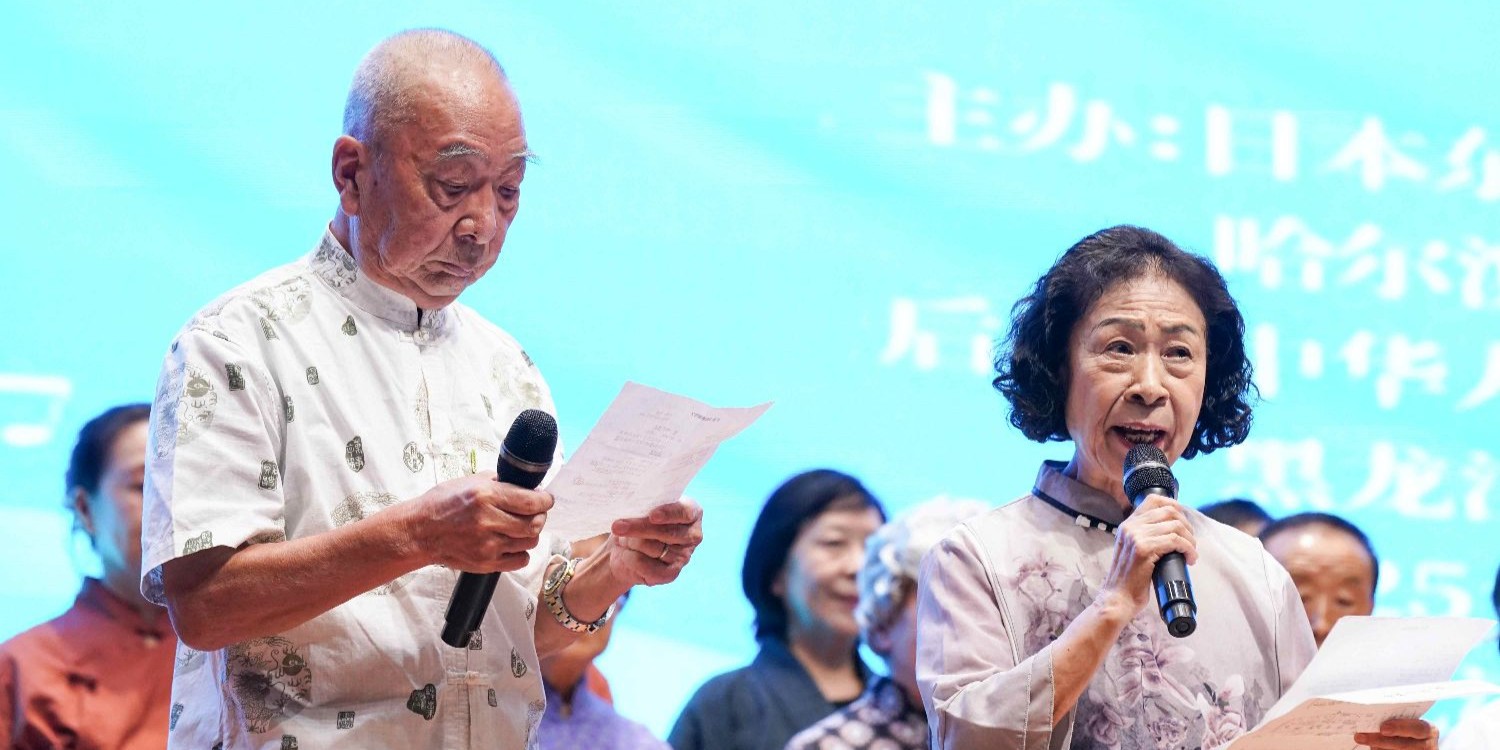
The networks formed during the coordinated litigation survived as well. In 2008, Ikeda and her companions founded the Association of Returnees from China and for Japan–China Friendship. It organized Japanese classes, tai chi, dance, and other activities, giving returnees scattered around the country a place to meet and talk. Members also formed “gratitude delegations” that traveled repeatedly to China to visit foster parents and tell the orphans’ stories. In September 2025, more than eighty association members and relatives traveled to Harbin once again. By then, even the youngest orphans were over eighty years old.
Their problems have gradually shifted from employment and pensions to medical care, nursing care, and loneliness in old age. Some use retirement and care facilities offering services in Chinese. Others still speak limited Japanese and need interpreters to accompany them to medical appointments. At Lunar New Year in 2026, Sumie Ikeda, then in her eighties, still attended the association’s celebration. She watched her companions perform dances and tai chi and finally joined them in singing the Japanese song “Furusato” (“Hometown”). In a recent interview, she said that they had at last reached a relatively peaceful old age.
Looking back, the coordinated lawsuits brought by the repatriated orphans lost far more judgments than they won, yet they materially improved the conditions of the plaintiffs’ lives. The courts never fully recognized the Japanese government’s entire responsibility. The litigation nevertheless forced Japanese society to acknowledge that the orphans’ hardship was not merely a collection of private misfortunes and could not be resolved through individual welfare alone.
Sumie Ikeda once had three names. Xu Ming connected her to the Chinese family that raised her; Sumie Ikeda connected her to the Japanese family into which she was born. In the end, she and the other orphans did not make an either-or choice between two homelands. Their lawsuits sought the right to live as Japanese citizens. Their donations after the Wenchuan earthquake and repeated journeys to China honored the debt they felt toward the other land that had raised them. Law answered only part of the question of how they would survive. Their lives continued to answer the longer question: Who am I?
Key Timeline
- After 1931 — Japan occupied northeastern China and established the puppet state of Manchukuo, then promoted settlement in the region as a matter of national policy. The Manchurian settler groups formed the colonial background of the orphan issue.
- August 9, 1945 — The Soviet Union entered the war against Japan and invaded northeastern China. Evacuation among the settler groups collapsed, and large numbers of children were separated from their families amid combat, hunger, and flight.
- September 1972 — Japan and China normalized diplomatic relations, and public family searches, identity investigations, and negotiations over repatriation gradually began.
- March 1981 — The first group of forty-seven Japanese orphans left behind in China traveled to Japan to search for relatives; twenty-four confirmed family relationships.
- 1984–1985 — After Japan and China exchanged documents, Japan began accepting the permanent return of orphans whose identities had not yet been confirmed and introduced a system of sponsors responsible for receiving them.
- December 20, 2002 — The first forty Tokyo plaintiffs filed their state redress action. Most repatriated orphans around the country later joined the broader litigation movement.
- December 1, 2006 — The Kobe District Court granted partial relief to sixty-one of sixty-five plaintiffs, the first judgment in this litigation to recognize state redress liability.
- January 30–31, 2007 — The Tokyo District Court dismissed all claims brought by the forty plaintiffs. The next day, they continued petitioning, and Prime Minister Shinzo Abe met representatives of the returnees.
- November 28, 2007–April 2008 — The Diet enacted Amending Act No. 127, and the new support system took effect. Plaintiffs around the country subsequently withdrew their cases.
- May 2008 — Sumie Ikeda organized repatriated orphans to raise funds after the Wenchuan earthquake, using most of the money to help build a Sino-Japanese friendship elementary school.
- October 2014 — A support program for certain spouses of first-generation returnees took effect.
- 2025–2026 — The repatriated orphans had generally reached their eighties. Support increasingly focused on medical care, nursing care, interpretation, and the prevention of social isolation.
Key Figures
- Sumie Ikeda (Xu Ming; Akiko Imamura) — Leader of the Tokyo plaintiffs. Born in northeastern China in 1944, she was entrusted to a Chinese foster family at Japan’s defeat. She traveled to Japan in 1981 to search for relatives and happened to meet her biological sisters in 1994. After seventeen months of identification work, she confirmed her origins at the age of fifty-two.
- Mitsuo Hatsuta — Leader of the Hyogo plaintiffs. Left in China at the age of two, he returned permanently to Japan at forty-four. His meager pension and need to collect aluminum cans in old age illustrated the connection among late repatriation, limited employment, and inadequate pension rights.
- Shinzo Abe — A Japanese politician who served as prime minister from 2006 to 2007 and again from 2012 to 2020. On the day the Tokyo District Court dismissed the plaintiffs’ claims, he instructed the health minister to set the legal questions and the court’s decision aside and reconsider support in light of the returnees’ exceptional circumstances. The ministry then heard from returnees and convened an expert council, and the Diet enacted the amending law later that year.
- Chinese foster parents — Chinese families who raised Japanese children amid war and poverty. Their circumstances and conduct varied, but their labor of care is indispensable to understanding the orphans’ identities and their later “gratitude visits” to China.
Key Concepts
- Japanese orphans left behind in China — In Japanese administration, the term generally referred to Japanese children who had been under thirteen in 1945, were separated from their parents in China, did not know their identities, and remained there for many years. Actual experiences did not fit a single pattern.
- Coordinated litigation — Often described in news reports as a “class action,” the movement actually consisted of state redress cases filed in different courts by local groups of plaintiffs working through coordinated legal teams and support organizations. A judgment in one jurisdiction did not automatically apply elsewhere.
- Unlawfulness under the State Redress Act — An inadequate policy or an unfair outcome does not automatically create liability. A court must identify a sufficiently specific legal duty breached by a public employee and determine whether the unlawful conduct caused the plaintiff’s injury.
- Jōri — The principles of reason and justice on which the Kobe District Court based the duty to support self-sufficiency. Even when no statute spelled out the content of support, the court could derive a concrete duty from fairness and the special disadvantage created by the state’s earlier conduct.
- Administrative discretion — The Tokyo and other courts reasoned that repatriation procedures and livelihood support required choices involving diplomacy, immigration, public finance, and social-security design. Administrative bodies therefore enjoyed a broad sphere of judgment unless policy clearly exceeded lawful bounds.
- Twenty-year exclusion period — The Kobe judgment applied the then-prevailing interpretation of the final clause of article 724 of Japan’s Civil Code and denied relief for some older injuries. That was the legal position at the time and does not represent every aspect of how the same provision is understood under current Japanese law.
Key Cases
- Kobe District Court Japanese Orphans Left Behind in China State Redress Case (Japan, Heisei 16 (Wa) No. 835 et al., December 1, 2006) — Sixty-one of sixty-five plaintiffs won partial relief totaling 468.6 million yen. The court found some restrictions on repatriation unlawful and recognized a duty to provide five years of support for self-sufficiency after return.
- Tokyo District Court Japanese Orphans Left Behind in China State Redress Case (Japan, January 30, 2007) — The court dismissed every claim brought by the first forty Tokyo plaintiffs, emphasizing the political character of postwar compensation and administrative discretion in repatriation and resettlement policy.
Key Laws and Legal Documents
- Article 1(1) of Japan’s State Redress Act (effective 1947) — When a public employee exercising public authority intentionally or negligently causes loss or damage through unlawful conduct, the state or public entity assumes responsibility to compensate. This was the principal legal basis of the orphans’ claims.
- Final clause of former article 724 of Japan’s Civil Code — At the time, courts understood this clause to extinguish a tort claim twenty years after the tortious act under an exclusion period. The Kobe judgment used it to deny some claims.
- Act on Measures on Expediting of Smooth Return of Remaining Japanese in China and for Assistance in Self-Support after Permanent Return to Japan, and Amending Act No. 127 of 2007 — Through special National Pension rules, support benefits, and local assistance, the legislation improved pensions, housing, medical care, and nursing care for first-generation returnees. Support for certain spouses was added beginning in 2014.
Related Episodes
- 04 How Did the Japanese Come to Terms with Defeat? A 32-Year Fight Against the Government — Another story of victims using litigation, public opinion, and legislation to pursue a political solution when courts could not directly recognize the full responsibility for war.