This is the transcript of episode 17 of my podcast Reasoned Talk (议正言辞). Listen on Xiaoyuzhou or Apple Podcasts . The episode is in Chinese; this transcript has been translated into English.
On the morning of October 28, 1977, more than two thousand Hong Kong police officers and members of their families gathered at Police Headquarters in Wan Chai to demonstrate. They submitted a petition signed by over 11,000 officers, demanding that the Commissioner of Police press the government to halt the Independent Commission Against Corruption’s investigations into corruption within the force.
By noon, more than one hundred officers had arrived at the headquarters of the ICAC Operations Department in Hutchison House, Admiralty. They smashed the glass doors of the ICAC offices, forced their way inside, and assaulted ICAC staff. Someone called the police, but the officers involved had dispersed before investigators arrived. Five ICAC officers were injured and left bleeding, while the incident sent shock waves and fear through Hong Kong society.
This was the famous “Police–ICAC Confrontation” in Hong Kong history. The police and the ICAC were both government law-enforcement bodies that ordinarily should have cooperated with and checked each other. A direct clash as intense as the one in 1977 was exceedingly rare.
What caused this confrontation? What institutional problems lay behind it? In this episode, we will take a close look at those questions.
“Tea Money” and the Failure of Internal Police Anti-Corruption
To understand the real cause of the Police–ICAC Confrontation, we need to go back more than a decade, to Hong Kong in the 1960s. Hong Kong was then a British colony governed by the colonial administration. For various historical reasons, large numbers of people from mainland China had moved into the city, placing public resources under acute strain. In this setting, public officials who controlled scarce resources began extracting rents on a broad scale, and serious corruption took hold throughout the government.
At the time, ordinary people could be asked for bribes when applying for public housing, seeking a place at school, going to a hospital, or even calling the fire brigade. These payments were known as “tea money.” Ambulance workers might demand tea money before taking a patient to hospital; firefighters might demand it before turning on their hoses. For ordinary Hong Kong residents, these public services were already funded by taxes. Now they had to pay extra simply to receive them. Over time, public resentment inevitably mounted.
Among government bodies, corruption was most severe in the Hong Kong Police Force. On the one hand, the force maintained public order for the colonial government and had been granted the title “Royal” by the British monarch. On the other, its powers were often used to exploit residents, and some officers even protected vice, gambling, and drug operations. Certain police officials amassed enormous fortunes through corruption and lived in extreme luxury. Much of the disorder portrayed in Hong Kong films was inspired by this period.
The colonial government had in fact enacted the Prevention of Corruption Ordinance as early as 1948. Yet the body responsible for enforcing it was the police force’s own Anti-Corruption Office. Corruption within the force was so entrenched that a sufficiently thorough investigation of one officer might implicate the investigator as well. Internal police anti-corruption efforts therefore had very limited effect. For various reasons, many officers accommodated themselves to the corrupt system and joined in giving and taking bribes.
This was a principal reason corruption became so serious within the police. When it came to corruption, the force was both player and referee. There was no independent outside body to supervise it.
Godber’s Escape and the Collapse of Institutional Trust
In 1971, seeking to intensify its fight against corruption, the Hong Kong government secured passage of the Prevention of Bribery Ordinance in the Legislative Council. That same year, the police Anti-Corruption Office received a tip from Canada about a suspicious remittance of C$12,000 from Hong Kong. The recipient was Peter Godber, then a chief superintendent of police.
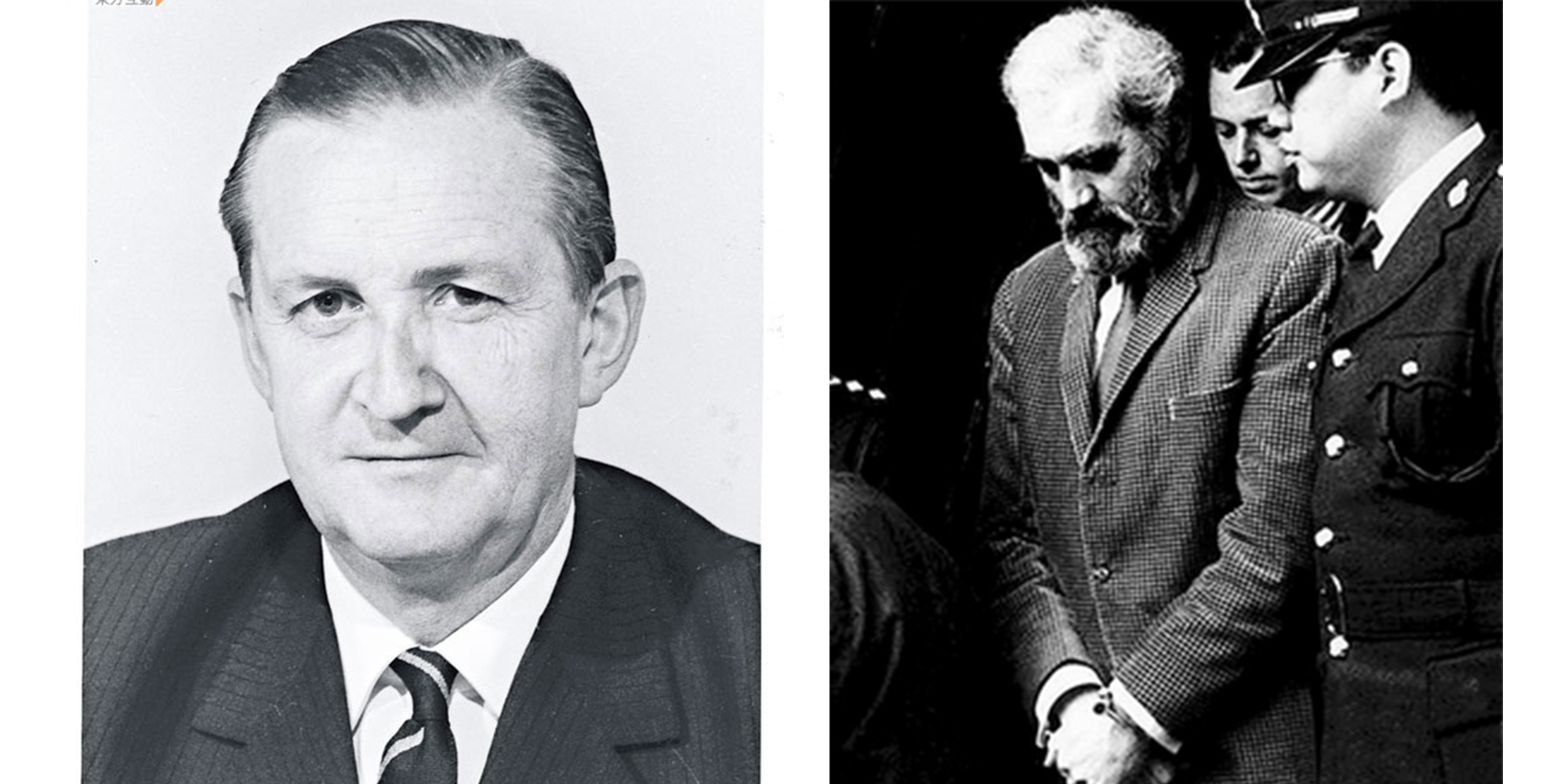
Godber was British. He had served in the Royal Navy during the Second World War and came to Hong Kong in 1952 as a probationary police officer. He performed well, received repeated commendations, and rose through the ranks to chief superintendent. Over many years, he used his position to accumulate a large fortune through corruption, yet he kept a low profile and cultivated an outwardly frugal image. He opened a Canadian bank account under an assumed name and even invented a diplomatic identity for himself.
After receiving the tip, the Anti-Corruption Office began investigating Godber under the codename “Havana.” The inquiry stalled for lack of further leads. As noted above, however, an investigation conducted within the police could not be kept entirely secret from a chief superintendent. Godber soon learned that he was under investigation. In January 1972, he applied for early retirement on the ground that he and his wife were in poor health. Remarkably, the police approved the application.
In April 1973, less than three months before Godber was due to retire, the Commissioner of Police received another tip alleging that Godber was transferring large sums overseas. With the assistance of prosecutors from the Legal Department, the Anti-Corruption Office spent days making inquiries at all 480 licensed banks in Hong Kong. It eventually found that Godber had sent about HK$650,000 abroad over the preceding five years—nearly the whole of the salary he had earned during more than two decades in the force.
Although the police did not yet have enough evidence to prove that Godber had accepted bribes, his retirement and departure from Hong Kong were drawing near. The police and the Legal Department decided to act first. In June 1973, the Attorney General signed warrants to search Godber’s home and car. The searches uncovered a large collection of documents detailing bribes he had received from criminal organizations. According to those records, he held unexplained deposits in several countries worth as much as HK$4.37 million—six times his total earnings from the police.
At the same time, the police invoked section 10 of the Prevention of Bribery Ordinance for the first time, requiring Godber to account within seven days for the source of his assets and explain why they were “disproportionate to his official emoluments.” Before the ordinance was enacted, convicting an official with vast unexplained wealth required the prosecution not only to prove that the person possessed assets disproportionate to their income, but also to connect those assets to specific acts of corruption. The evidential burden lay entirely with the prosecution. Section 10 changed that position. Once the prosecution established the necessary foundational facts, the accused official had to provide a satisfactory explanation for the lawful source of the assets or could still be convicted. In this way, part of the burden that had previously fallen on the prosecution shifted to the defense, strengthening the law against corruption.
The police planned to arrest Godber formally when the seven-day period expired and alerted airport control points to watch for him. Yet there was still a gap between completing the investigation and taking action. On June 8, 1973, Godber used an airport security pass issued to police officers to flee through Singapore to Britain.
All Hong Kong now witnessed the irony: a chief superintendent under investigation had used privileges available inside the police to escape the city. Students and residents began gathering in Victoria Park with a single slogan: “Fight Corruption, Arrest Godber.” In the public’s eyes, years of relying on the police to investigate themselves had produced nothing. Even if the government enacted a new law, the old institution was still responsible for enforcing it. Nothing fundamental had changed.
Godber’s escape brought this longstanding institutional failure to the center of public attention. The government finally realized that as long as the anti-corruption body remained inside the police force, the public would no longer believe that it was serious about fighting corruption.
The Creation of the ICAC and Godber’s Return
Under mounting public pressure, Governor Murray MacLehose formally proposed to the Legislative Council in October 1973 that Hong Kong establish an independent anti-corruption body. It would report directly to the governor and specialize in investigating corruption. In February 1974, the Legislative Council enacted the Independent Commission Against Corruption Ordinance. The ordinance took effect two days later, formally establishing the ICAC, and the work and files of the police Anti-Corruption Office began to be transferred. The Commissioner of the ICAC was appointed by and answerable to the governor. The Commission had independent investigative powers but no power to prosecute; decisions on prosecution remained with the Attorney General, acting on the evidence and the law.
Under the ordinance then in force, ICAC investigators could arrest a suspect without a warrant when they had reasonable grounds for suspicion, but could not detain the suspect at the ICAC for longer than forty-eight hours. Together with powers under the Prevention of Bribery Ordinance and other laws, investigators could conduct searches, seize evidence, and obtain government records.
Once the ICAC was established, its first priority was to bring Godber back to face justice and demonstrate the government’s resolve to fight corruption. Britain, however, had no offense equivalent to Hong Kong’s law on assets disproportionate to official emoluments, and at first the Hong Kong government could not secure Godber’s extradition. The British government then indicated that it could cooperate if a witness was prepared to testify that Godber had taken bribes in Hong Kong.
Before long, Ernest Hunt, a former expatriate police superintendent then serving a prison sentence for corruption, told the ICAC that he was willing to provide evidence against Godber. On the basis of his testimony, the ICAC established that in March 1971 Godber had accepted a HK$25,000 bribe from a subordinate superintendent in exchange for helping him obtain the post of divisional superintendent in Wan Chai. Armed with that testimony, the ICAC formally requested Godber’s extradition. British police arrested him in April 1974. After months of hearings and appeals, he was finally extradited to Hong Kong in January 1975.
On February 25, 1975, a Hong Kong court convicted Godber of one count of conspiracy and one count of accepting a bribe, sentencing him to four years’ imprisonment. The sentence was limited to four years because the evidence then available could establish only the HK$25,000 bribe. Even so, bringing a man who had fled to Britain back to face justice represented a major advance for Hong Kong at the time.
After judgment was delivered, Godber was placed in a prison van and taken away to serve his sentence. Large crowds gathered along the route, requiring additional police to maintain order. This was the first major case solved after the ICAC’s creation and a milestone in Hong Kong’s anti-corruption history. From then on, the Commission gradually built authority and public trust. In its first ten months alone, it received more than 5,900 reports of corruption.
The Yau Ma Tei Fruit Market Case and Syndicated Corruption
The ICAC had made its name, but catching a single retired expatriate senior officer was not enough to transform Hong Kong’s culture of corruption. It therefore turned its attention to the syndicated corruption that had long existed within the police. The case that ultimately triggered the Police–ICAC Confrontation was the sensational Yau Ma Tei Fruit Market Case.
Beginning in March 1975, a drug syndicate operated around the Yau Ma Tei Fruit Market. To evade police searches, its members concealed drugs at scattered locations and gave buyers coded instructions for collecting them. The transactions appeared highly discreet. Yet no operation could survive for long in such a busy district unless the police responsible for enforcing the law agreed to look the other way.
The syndicate therefore bribed local officers regularly. These payments were known as “squeezes.” Some officers collected the money themselves, others received it through intermediaries, and some even introduced their replacements to the traffickers before being transferred. In this way, the protective arrangement survived changes in personnel, and the two sides gradually formed a stable network of shared interests.
In August 1976, the police Narcotics Bureau raided twenty-three locations in Kowloon and the New Territories and arrested the leaders and principal members of the drug syndicate. During the searches, officers also found several ledgers recording more than 2,600 illicit payments totaling over HK$700,000. Measured against prices at the time, the syndicate was paying an average of about HK$10,000 a day to bribe law-enforcement officers.
The drug trial concluded in May 1977. Three participants in the trafficking operation agreed to become accomplice witnesses and identify the officers who had taken illicit payments. For several months, ICAC investigators went to the prison and recorded more than four hundred pages of statements. They then used the dates, amounts, and nicknames in the ledgers to identify the corresponding officers one by one. They arranged photographic identifications and cross-checked what different witnesses said against bank records and the ledgers.
This was the crucial difference between syndicated corruption and an ordinary bribery case. An ordinary case usually seeks to prove that a particular person took money on a particular occasion. In the Fruit Market Case, the ICAC had to prove the existence of an entire protection network that operated continuously. One person collected payments, another passed on warnings, and another let the traffickers through during patrols. They might not have dealt with one another directly, but together they sustained the same illegal network.
After months of investigation, more than one hundred ICAC investigators assembled at the Operations Department before dawn on September 19, 1977. Divided into more than fifty teams, they simultaneously made arrests at police stations and police quarters. The ICAC conducted a second operation two days later. Across the two operations, it arrested 87 police officers suspected of accepting bribes. By October, the Commission had identified 262 serving or former civil servants, of whom 119 had been arrested and 84 interviewed.
It is important to note that these people were subjects of investigation; that does not mean they were all ultimately convicted in court. For the police force, however, the scale of the inquiry was already deeply unsettling. The ICAC was no longer pursuing one fugitive chief superintendent. It had begun dismantling a far-reaching corruption network that remained embedded inside the force.
The Police–ICAC Confrontation and the Partial Amnesty
The mass arrests quickly provoked a fierce backlash inside the police. Many officers believed that the ICAC’s investigative methods were too aggressive and that testimony from convicted prisoners was unreliable. Still more alarming was the fact that the Commission was investigating not just a handful of officers, but informal practices that had taken root in the force decades earlier. If the inquiry continued, no one knew how far it would reach.
Some officers drafted a petition demanding that the Commissioner of Police press the government to end the ICAC investigation of the force. Hong Kong had about 17,000 police officers at the time, and more than 11,000 of them signed. In other words, over 60 percent of the force—whether or not they were implicated in corruption—expressed opposition to the ICAC’s approach.
On October 28, 1977, the Police–ICAC Confrontation reached its climax in the incident described at the beginning of this episode. For the colonial government, ending the investigation then would have destroyed the ICAC’s independence and credibility. But if it made no concession, growing antagonism within the police might jeopardize Hong Kong’s most basic public order.
In the days after the confrontation, the colonial government held a series of emergency meetings. On November 5, it finally announced a policy that became known as the “partial amnesty”: as a rule, the ICAC would no longer investigate corrupt conduct that had occurred before January 1, 1977.
The word “amnesty” did not mean that every officer’s past conduct was wiped clean. Legally, the measure was closer to an administrative directive from the governor ordering the ICAC to narrow the scope of its investigations into old cases. The Commission could continue investigating people who had already been interviewed and clearly confronted with suspected offenses, people for whom arrest warrants had been issued, and people who were outside Hong Kong on November 5. If a case was exceptionally serious, the ICAC could also proceed after obtaining the governor’s approval.
Even so, the partial amnesty had an immediate effect. The ICAC terminated 83 active investigations, and 55 subjects in the Yau Ma Tei Fruit Market Case were no longer pursued. Their cases never entered the judicial process, so it cannot be said either that they were guilty or that they were innocent. What can be said is that, through an administrative decision, the government drew a line under a substantial number of historical cases.
From an anti-corruption perspective, this was unquestionably a retreat. Some suspected corrupt acts would now never be prosecuted. From the government’s perspective, however, it was also an exercise in political damage control: by abandoning part of the historical caseload, it allowed the police to resume normal operations while preserving the ICAC itself. The old accounts could be set aside for the moment, but from that point forward, new corruption would not receive the same tolerance.
Accountability and Oversight After the Amnesty
Morale within the ICAC initially sank after the partial amnesty was announced. Investigators had spent months organizing ledgers and taking statements, then risked a complete rupture with the police by carrying out the arrests. Now they had to watch as the government halted some of their cases. Yet many members of the public also called or wrote to the Commission, urging it to continue investigating corruption. For an organization still in its infancy, this outside support mattered enormously.
Nor did the partial amnesty bring the Fruit Market Case to a complete end. The ICAC continued gathering evidence against people who had already entered the investigative process and were therefore outside the amnesty. In 1978, the Legal Department charged twenty-four serving or former police officers and two officers from the Commerce and Industry Department with conspiracy to pervert the course of public justice. Ultimately, eighteen were convicted and received prison terms ranging from nineteen months to five years, although one was later released on appeal. Files on another 162 people were sent to the civil service authorities to determine whether disciplinary or other administrative action was warranted. This point is important: criminal prosecution is not the only anti-corruption tool. A government can also respond through internal discipline.
At the same time, the ICAC began adjusting its relationship with the police. When the Commission was first established, most senior investigators in its Operations Department came from law-enforcement agencies outside Hong Kong, while local investigators were few. After the confrontation, the ICAC gradually recruited more local investigators, and Hong Kong began improving complaint and oversight mechanisms for the Commission itself so that anti-corruption powers would not go unchecked.
From Settling Old Accounts to Building Institutions
After the partial amnesty, Hong Kong’s anti-corruption work gradually shifted from settling old accounts to the day-to-day work of institution building. Today, the ICAC is not simply an agency that arrests people. It follows a “three-pronged approach”: the Operations Department investigates cases; the Corruption Prevention Department examines procedures within government departments and public bodies and advises private organizations on preventing corruption; and the Community Relations Department handles public education and outreach. In other words, the Commission responds to corruption that has already occurred, identifies institutional vulnerabilities, and teaches residents what they can do when someone solicits a bribe.
Recent figures also illustrate this change in role. In 2025, the ICAC received 1,780 non-election corruption complaints, 14 percent fewer than the year before. In recent years, about two-thirds of complaints have concerned the private sector rather than government departments. The Commission also completed 67 corruption-prevention review reports for government departments and public bodies. Its work has expanded far beyond the “tea money” and protection payments once found within the police to cover commercial transactions, building management, public works, elections, and other fields. In the ICAC’s 2024 annual survey, 98.7 percent of respondents said that they had not personally encountered corruption in the preceding year, while 93.1 percent believed the Commission deserved their support. At the very least, these figures show that Hong Kong society remains willing to use and support its anti-corruption system.
The ICAC did not build that system alone. Higher civil-service pay, improved government procedures, scrutiny by the courts and the prosecuting authorities, and changing public attitudes all played a part. The Commission’s real institutional legacy is the combination of independent investigation, corruption prevention, and public education, while leaving prosecution decisions to the Legal Department and subjecting the ICAC itself to oversight by several committees. Remove any one of these mechanisms, and anti-corruption powers may lose public credibility.
The Police–ICAC Confrontation of 1977 therefore forced Hong Kong to answer an enduring question: when unlawful conduct has become routine within an organization, who investigates it, and who in turn restrains the investigators? Half a century later, corruption has not disappeared, but society’s default expectations have changed. When Godber escaped, people saw how an institution could allow one man to get away. The ICAC’s deeper influence today is that most people receiving a public service or conducting a business transaction no longer have to ask: Will I need to pay “tea money” this time?
Perhaps the greatest success of an anti-corruption agency comes not when it arrests the largest number of people, but when bribery is no longer treated as an ordinary fact of life.
Key Timeline
- 1948: The Prevention of Corruption Ordinance is enacted, with anti-corruption work entrusted to an office within the police force.
- May 14, 1971: The Prevention of Bribery Ordinance takes effect. Section 10 requires public servants to explain assets that are manifestly disproportionate to their income.
- June 8, 1973: Police Chief Superintendent Peter Godber escapes through Singapore to Britain, prompting mass public protests.
- October 1973: Governor Murray MacLehose proposes an independent anti-corruption body in the Legislative Council.
- February 15, 1974: The ICAC is formally established, and the work and files of the police Anti-Corruption Office begin to be transferred.
- January 1975: Godber is extradited to Hong Kong. The following month, he is convicted of conspiracy and accepting a bribe and sentenced to four years’ imprisonment.
- September 19 and 21, 1977: The ICAC conducts mass arrest operations in connection with the Yau Ma Tei Fruit Market Case, detaining 87 police officers.
- October 28, 1977: More than two thousand officers and family members petition at Police Headquarters. Some officers then go to Hutchison House, where a confrontation with ICAC staff takes place.
- November 1977: MacLehose issues the partial amnesty, generally halting new investigations into corrupt conduct committed before 1977 while preserving several exceptions.
- 1978: Proceedings connected with the Fruit Market Case are heard in three trials. Twenty-six people are charged with conspiracy to pervert the course of public justice; eighteen are convicted, although one is later released on appeal.
Key Figures
- Peter Godber: A chief superintendent in the Hong Kong Police Force who fled to Britain while under investigation for possessing vast unexplained wealth. After being extradited to Hong Kong, he was sentenced to four years’ imprisonment for conspiracy and accepting a bribe.
- Murray MacLehose: Governor of Hong Kong during the 1970s. He drove the creation of the ICAC and later made the political decision to issue a partial amnesty after the Police–ICAC Confrontation.
- Sir Alastair Blair-Kerr: Head of the commission of inquiry into the Godber case. His report concluded that it would be difficult to restore public trust as long as the anti-corruption body remained inside the police force.
- Louis Cheung Wah-pong and Tony Lui Shu-tung: ICAC investigators in the Yau Ma Tei Fruit Market Case who helped take witness statements, analyze ledgers, and organize photographic identifications.
Key Laws and Concepts
- Section 10 of the Prevention of Bribery Ordinance: When a public servant’s standard of living or assets are manifestly disproportionate to their official income, the law requires a satisfactory explanation of the source. The prosecution must still first prove foundational facts, including the defendant’s status, control of the assets, and the manifest disproportion between those assets and official income.
- Independent Commission Against Corruption Ordinance: The 1974 ordinance that established the ICAC and conferred functions relating to investigation, arrest, search, and corruption prevention. The Commission investigates; the prosecuting authorities decide whether charges should be brought.
- Accomplice witness: A person who participated in or was implicated in an offense and later gives evidence for the prosecution. Cooperation does not automatically make such testimony reliable; it ordinarily still requires corroboration from ledgers, bank records, or other independent evidence.
- Syndicated corruption: A system in which multiple people receive illicit payments according to rank and function, collectively maintaining an unlawful network by providing protection, allowing activities to proceed, or passing on warnings.
- Partial amnesty: The governor’s 1977 administrative directive that, as a rule, ended ICAC investigations of corrupt conduct committed before 1977. It was neither a judicial acquittal nor a blanket amnesty for every old case.