This is the transcript of episode 18 of my podcast Reasoned Talk (议正言辞). Listen on Xiaoyuzhou or Apple Podcasts . The episode is in Chinese; this transcript has been translated into English.
On July 1, 1997, the day Hong Kong returned to Chinese sovereignty, two girls born in mainland China boarded a bus in Shatoujiao, Shenzhen, bound for Hong Kong. They entered without passing through an immigration control point. Three days later, they went to the Immigration Department, identified themselves as the children of a Hong Kong permanent resident, and asked to exercise their right of abode in Hong Kong.
The sisters were Ng Ka Ling and Ng Tan Tan, born in 1987 and 1989 respectively. Their father had arrived in Hong Kong in 1976 and had lived there continuously for more than seven years. Under the Hong Kong Basic Law, which had come into force just days earlier, children in their position should have qualified as permanent residents.
The Immigration Department, however, refused to recognize their right of abode because they had not entered through the prescribed legal procedures and did not hold a mainland-issued Permit for Proceeding to Hong Kong and Macao, commonly known as a “one-way permit.” The department arrested the sisters and subsequently released them on bail.
This was the beginning of the famous Ng Ka Ling case. What started as a question about two children’s status grew into a dispute over the interpretation of the Basic Law and prompted government fears of large-scale immigration. Eventually, at the Hong Kong government’s request, the Standing Committee of the National People’s Congress—the NPCSC—intervened with an interpretation intended to settle the controversy.
In this episode, we begin with the Ng sisters and consider how, after the handover, two legal systems met within the constitutional framework of a single country.
The Right of Abode and Approval to Enter: Two Provisions Intersect
To understand the sisters’ position, we need to return to 1984, when China and Britain signed the Sino-British Joint Declaration. In it, the Chinese government set out its basic policies regarding Hong Kong and undertook to incorporate them into the Basic Law. The National People’s Congress subsequently enacted the Basic Law of the Hong Kong Special Administrative Region under Article 31 of the Constitution, establishing Hong Kong’s constitutional foundation after the handover.
Section XIV of Annex I to the Joint Declaration provided that Chinese nationals born in Hong Kong, Chinese nationals who had ordinarily resided there continuously for at least seven years, and the children of Chinese nationality born outside Hong Kong to people in those two categories would be Hong Kong permanent residents.
This provision became the basis for Article 24(2) of the Basic Law. That paragraph lists six categories of permanent residents. This episode concerns the first three:
- Chinese citizens born in Hong Kong;
- Chinese citizens who have ordinarily resided in Hong Kong continuously for at least seven years;
- Children of Chinese nationality born outside Hong Kong to residents in the first two categories.
The Ng sisters claimed eligibility under the third category.
It is useful here to explain the “right of abode” in Hong Kong law. Inherited from the British legal tradition, it is not quite the same as what we usually mean by “permanent residence.” A US green card or permanent residence for a foreign national in China is an immigration status obtained through government approval. Hong Kong’s right of abode places greater emphasis on an existing legal entitlement: its holders may enter Hong Kong and remain without limits on the length or conditions of their stay. In other words, if someone is already a Hong Kong permanent resident under Article 24(2), the relevant documents should, in principle, provide evidence of that status rather than create the right itself. This distinction would become central to the dispute.
But the Basic Law contains another relevant provision. Article 22(4) states:
People from other parts of China must apply for approval to enter the Hong Kong Special Administrative Region. The number entering for settlement is to be determined by the competent central government authorities after consulting the Hong Kong government.
Under this provision, mainland residents wishing to settle in Hong Kong must apply to the mainland public security authorities for a one-way permit before they can lawfully enter Hong Kong.
That raises a question. Which provision applies to people like the Ng sisters, who live on the mainland but claim that they are already Hong Kong permanent residents? Should their right of abode under Article 24(2) be recognized first, or must they first comply with the approval requirements in Article 22(4)?
To give these arrangements more detailed effect, Hong Kong enacted two immigration amendment ordinances shortly after the handover. The No. 2 Ordinance, passed on July 1, 1997, required at least one parent to have held the right of abode at the time of a child’s birth for a child of Chinese nationality born outside Hong Kong to qualify under the third category. The No. 3 Ordinance, passed on July 10, introduced a “certificate of entitlement” requirement. This certificate was a document issued by the Immigration Department to establish the holder’s status. Under the rules then in force, a mainland applicant’s certificate had to be affixed to a one-way permit. Hong Kong’s verification of status was thus tied to the mainland’s system of approval for departure.
In the Immigration Department’s view, the Ng sisters could not exercise the right of abode in Hong Kong without both a one-way permit and a certificate of entitlement. The sisters argued that local legislation could not use additional documentary requirements to turn a right already conferred by the Basic Law into a benefit requiring government approval.
Many other mainland applicants faced similar difficulties. Some, like the sisters, had entered without approval. Others had arrived on valid documents and then overstayed. In still other cases, a parent had completed seven years of residence only after the child was born. These applicants brought proceedings against the Immigration Department and eventually appealed to Hong Kong’s Court of Final Appeal.
Ng Ka Ling and Chan Kam Nga: The Court of Final Appeal’s Judgments
On January 29, 1999, the Court of Final Appeal delivered its judgment in Ng Ka Ling. All five judges agreed, and Chief Justice Andrew Li delivered the judgment. The court decided another important case, Chan Kam Nga, that same day. The two cases are often discussed together in accounts of the right-of-abode controversy, but their central issues were not identical.
Let us begin with Ng Ka Ling. The Court of Final Appeal principally addressed two questions.
The first was: Do Hong Kong’s courts have authority to interpret the Basic Law? The judgment held that their judicial authority derived from the Basic Law. Under Article 158, the NPCSC authorizes Hong Kong’s courts to interpret provisions within the limits of the Region’s autonomy when adjudicating cases. Where a case requires the interpretation of provisions concerning affairs administered by the central government or the relationship between the central authorities and the Region, and that interpretation will affect the judgment, the Court of Final Appeal must seek an NPCSC interpretation before delivering a final judgment that cannot be appealed.
This created a procedural difficulty. Article 24 concerned the status of Hong Kong residents, a matter within the Region’s autonomy that Hong Kong’s courts could interpret themselves without a referral. Article 22, however, appeared in the chapter on relations between the central authorities and the Region. If the conditions in Article 158 were met, a referral to the NPCSC would be required. With both provisions involved, should the court seek an interpretation?
The Court of Final Appeal held that the answer depended on which provision the case predominantly required it to interpret. In its view, these cases were fundamentally about the right of abode protected by Article 24, rather than the entry procedures prescribed by Article 22. Hong Kong’s courts could therefore interpret the provisions themselves without referring the matter to the NPCSC. This conclusion later became a major point of contention.
The second question was: What method should Hong Kong’s courts use to interpret Article 24? The judgment adopted a “purposive approach”: understanding a provision’s meaning by reference to its intended legislative purpose. Since Article 24 was principally intended to protect the fundamental rights of Hong Kong residents, it should receive a generous interpretation that afforded those rights the fullest protection.
Following this reasoning, the court held that the right of abode included the right to enter. A person who was already a Hong Kong permanent resident could not also be classified as someone “from other parts of China” under Article 22 and subjected to approval requirements when entering Hong Kong. Local legislation making a one-way permit a prerequisite for exercising the right of abode therefore contravened Article 24.
The court did not, however, deny the Immigration Department’s authority to verify a person’s status. The government could investigate claims to the right of abode and require claimants to obtain certificates of entitlement. It simply could not make a mainland one-way permit a prerequisite for recognizing that right. The court thus distinguished Hong Kong’s checks on entry from the mainland’s administration of departure.
The central logic of Ng Ka Ling was now clear. The Court of Final Appeal considered the department’s insistence that the sisters produce one-way permits inconsistent with the purpose of Article 24(2). As permanent residents in the third category, the sisters’ entry into Hong Kong should not be restricted by those entry formalities.
Now consider Chan Kam Nga. This case raised a different question. What if a parent had not acquired the right of abode when the child was born, but completed seven years of continuous residence afterward? Could the child still qualify as a permanent resident under the third category?
The Court of Final Appeal answered yes. It held that Article 24 did not impose a requirement concerning when a third-category child must have been born. Nor was it consistent with the purpose of maintaining family unity to protect only children born after their parents acquired the necessary status while excluding those born earlier. The additional restriction tied to the time of birth was therefore declared invalid.
To put the distinction simply, Ng Ka Ling addressed whether third-category children needed one-way permits; Chan Kam Nga addressed the significance of when they were born.
The Dispute over Review Powers and the Clarification Judgment
There was, however, a more fundamental issue. Both cases concerned immigration amendment ordinances enacted by the Provisional Legislative Council shortly after the handover. The establishment of that body rested on a series of decisions by the National People’s Congress, its Standing Committee, and the Hong Kong Preparatory Committee operating under them. To rule on whether these ordinances contravened the Basic Law, the court also had to examine the legality of the Provisional Legislative Council itself. This brought it to a more sensitive question: If that council owed its existence to decisions made by the central authorities, could Hong Kong’s courts review acts of the NPC and its Standing Committee?
The Court of Final Appeal held that Hong Kong’s courts could examine whether acts of the NPC and its Standing Committee were consistent with the Basic Law and declare them invalid if they were not. Such an interpretation might make sense within a common-law context. In China, however, the NPC and its Standing Committee occupy the highest level of state power. Viewed through that hierarchy, the idea of a regional court in Hong Kong reviewing decisions of the central authorities was quite extraordinary. This became the spark that ignited the wider controversy.
It is important to recognize that the court ultimately upheld the legality of the Provisional Legislative Council in these cases. It did not actually invalidate any decision of the NPC or its Standing Committee. What provoked the strong reaction was the judgment’s broad declaration of judicial authority.
After the judgment appeared, some mainland participants in the drafting of the Basic Law and legal scholars publicly criticized it, arguing that it effectively placed Hong Kong’s courts above the NPC. Others in Hong Kong supported the judgment as a serious attempt to discharge the courts’ responsibility to uphold the Basic Law. A dispute about a passage in a judgment quickly became a dispute about the entire constitutional order.
On February 24, 1999, the Director of Immigration applied to the Court of Final Appeal for clarification of the passages concerning the NPC and its Standing Committee. Courts do not ordinarily return to explain a judgment once it is final. The Court of Final Appeal itself acknowledged that entertaining this application was exceptional.
On February 26, the court issued a short clarification judgment. It reiterated that Hong Kong’s judicial authority came from the Basic Law and that final authority to interpret that law belonged to the NPCSC. The courts could not question the Standing Committee’s authority to issue interpretations under Article 158, nor could they question the authority of the NPC and its Standing Committee to act in accordance with the Basic Law.
The clarification nevertheless left the original outcome unchanged and did not withdraw the earlier discussion of review powers. For the Hong Kong government, the judgments also posed a more immediate question: how many people would now qualify to come to Hong Kong?
1.67 Million People and the Government’s Four Options
The Court of Final Appeal’s judgments greatly expanded the scope of the third category of permanent residents. If one parent was a Hong Kong permanent resident, a child would automatically become a permanent resident regardless of when the child was born or whether a mainland one-way permit had been obtained. This raised the prospect that immigration previously constrained by entry policy could surge almost overnight.
In April 1999, the Hong Kong government presented survey findings to the Legislative Council. Applying the court’s interpretation, the potential number of eligible third-category permanent residents over the following decade or more could reach 1.67 million. Hong Kong’s entire population at the time was only a little over six million. For a city that had just experienced the Asian financial crisis, the figure was alarming: it suggested pressure on employment, education, housing, health care, and much else.
On May 18, 1999, the government submitted a paper to the Legislative Council entitled Right of Abode: The Solution. It set out four possible responses.
The first was to admit everyone who qualified. But, as discussed above, Hong Kong’s social resources could not bear immigration on that scale.
The second was to wait for the Court of Final Appeal to reverse its position in a future case. There was no guarantee, however, that a suitable case would arise soon, or that the court would change its mind even if one did. More fundamentally, the common-law commitment to stability in precedent meant that merely identifying problems with an earlier judgment was not sufficient reason to overturn it. If the court reversed itself within months under pressure from circumstances, its authority could suffer instead.
The third was to amend Article 24. That presented several difficulties. The power to amend the Basic Law belonged to the NPC, whose next annual session would not take place until the following March. Large numbers of migrants would inevitably seek to enter before then. Article 24 also originated in the annex to the Sino-British Joint Declaration, so amending it could create diplomatic problems. And casually changing a constitutional document that had been in force for less than two years would hardly promote stability and unity in the Region.
The fourth option was to ask the NPCSC to interpret the Basic Law. The Hong Kong government described this as the most decisive, rapid, and comprehensive solution available. Interpretation, it argued, was not amendment: it merely clarified the original legislative intent. The power to interpret the Basic Law already belonged to the Standing Committee.
The paper also acknowledged the risks: an NPCSC interpretation might be viewed by some countries and individuals as undermining the rule of law in Hong Kong, depriving the courts of final adjudication, interfering with judicial independence, and weakening the Region’s autonomy. The government recognized that perception but argued that the Court of Final Appeal had already accepted, in its February 26 clarification, that the Standing Committee’s interpretive authority could not be questioned. Seeking an interpretation was therefore part of the existing constitutional structure.
On May 20, the Hong Kong government formally asked the State Council to seek an interpretation. The State Council subsequently submitted a motion to the NPCSC. On June 26, at its tenth meeting, the Standing Committee of the Ninth NPC adopted an interpretation of Articles 22(4) and 24(2)(3). This was its first interpretation of Hong Kong’s Basic Law.
The First NPCSC Interpretation: Procedure, Eligibility, and Effect
The interpretation began by stating that the Basic Law provisions relied on in the Court of Final Appeal’s judgments concerned affairs administered by the central authorities and relations between the central authorities and the Region. The court should therefore have sought an interpretation under Article 158(3) before judgment, and its own interpretation did not conform to the original legislative intent. After consulting the Basic Law Committee, the Standing Committee issued its interpretation under Article 67(4) of the Constitution and Article 158(1) of the Basic Law.
Its substantive content had three main elements.
First, “people from other parts of China” in Article 22(4) meant people from the provinces, autonomous regions, and municipalities directly under the central government. This included children of Chinese nationality born on the mainland to Hong Kong permanent residents. They had to obtain approval from the relevant authorities in accordance with the law and hold valid documents to enter Hong Kong. Simply claiming to meet the conditions for permanent residence did not exempt them from that process.
Second, the relevant parental qualification for third-category permanent residence had to exist when the child was born. More precisely, at least one parent had to meet the conditions in Article 24(2)(1) or (2) at that time. Acquiring the right of abode after the birth did not enable a parent to pass that eligibility on to the child.
Finally, the interpretation addressed its legal effect. Hong Kong’s courts were to follow it when applying the relevant provisions in the future. But the right of abode already acquired by the parties to the cases decided on January 29, 1999, would remain unaffected. The Ng sisters’ victory was preserved, while the original judgments’ interpretations of the one-way permit requirement and the time-of-birth condition could no longer serve as a basis for others to obtain the same result.
Lau Kong Yung: Applying the NPCSC Interpretation
What, then, of people who had arrived before the interpretation and were already asserting rights on the basis of the Court of Final Appeal’s judgments? That question soon arose in Lau Kong Yung.
Lau Kong Yung and sixteen other mainland residents were children within the Basic Law’s third category of permanent residents. None held a one-way permit or certificate of entitlement, but all had arrived before January 29, 1999, the date of the court’s judgments. Five had at least one parent who was already a permanent resident when they were born. The parents of the other twelve acquired the relevant status only afterward.
In February 1999, the Immigration Department issued removal orders against them. They sought judicial review and eventually appealed to the Court of Final Appeal. While the proceedings were underway, the NPCSC issued its June 26 interpretation.
The court delivered judgment on December 3. It unanimously confirmed that the NPCSC had authority to interpret the Basic Law, that this authority did not depend on a referral by the Court of Final Appeal, and that its interpretations bound Hong Kong’s courts.
As to its effect over time, the court held that the interpretation explained what the relevant provisions had meant since the Basic Law came into force. In other words, those provisions were to be understood in accordance with the NPCSC interpretation from July 1, 1997, onward. The applicants could not be exempted merely because they had arrived before the interpretation was issued.
The judgment did not, however, mean that all seventeen people were immediately removed. The Immigration Department had undertaken to the court that it was reconsidering whether to rescind their removal orders, and that it would refrain from detaining or removing the relevant individuals pending their commencement of further proceedings within the specified period. The court expressly preserved the effect of those undertakings.
The case therefore established the interpretation’s binding force and its temporal effect without ordering the indiscriminate, immediate removal of everyone who failed to qualify for the right of abode. Further litigation followed over who counted as a protected party and what promises the government had previously made.
How Final Adjudication and Final Interpretive Authority Coexist
We can now return to the fundamental question. On one side stands Hong Kong’s Court of “Final” Appeal; on the other, the NPCSC holds “final” interpretive authority. How can the two coexist?
The constitutional provisions do distinguish between final adjudication and interpretation. Final adjudication determines where a case ends. Under the Basic Law, a case ends at Hong Kong’s Court of Final Appeal, with no further appeal to a mainland court. Nor does the NPCSC act as a higher court rehearing the evidence and facts of an individual case. Interpretive authority, by contrast, determines which reading of the Basic Law ultimately binds Hong Kong’s courts when its meaning is disputed.
Hong Kong’s courts also retain authority to interpret provisions within the Region’s autonomy when deciding cases. They do not have to obtain the NPCSC’s views every time. The Court of Final Appeal is required to seek an interpretation only when specified conditions are met.
But distinctions on paper cannot remove every practical tension. A judgment determines the immediate parties’ success or failure, yet it also provides a basis on which others organize their lives and assess their rights. If the executive can initiate a separate interpretive process after losing a case, and that interpretation applies to earlier events, reliance on judicial precedent may be affected even if the original litigants keep their victory. Supporters see this as precisely the allocation of powers established in advance by the Basic Law. Critics worry that the timing and procedures for initiating an interpretation may unsettle judicial decision-making and public expectations. The dispute is therefore about more than whether interpretive authority exists; it is also about how that authority should be exercised.
Later practice showed that this relationship would require continued adjustment. In 2011, in a case involving the state immunity of the Democratic Republic of the Congo, the Court of Final Appeal decided to seek an interpretation under Article 158(3). The NPCSC issued an interpretation that August, after which Hong Kong’s courts continued the adjudication of the case. This was the first time the Court of Final Appeal had itself sought an NPCSC interpretation.
The 1999 interpretation did not create an interpretive power out of thin air. It brought a mechanism already provided for in the Basic Law into a concrete and acute conflict, making the scope of that power, the ways it could be initiated, and its effect over time unavoidable questions for the future.
Families on Either Side of the Border
Finally, let us return to the Ng sisters. They were among the small number of people specifically protected by the June 26, 1999, interpretation. They could remain lawfully in Hong Kong and live with their father.
Others in similar circumstances did not obtain the outcome they wanted. After the interpretation, their prospects became more complicated. Some met the revised understanding of the eligibility rules but still had to wait for approval. Others no longer qualified under the third category because their parents had acquired the relevant status too late, and had to look for other lawful routes to Hong Kong. Still others continued litigation over existing judgments and government undertakings.
People waiting for the same thing—family reunion—ended up on different paths because of when they were born, how long their parents had lived in Hong Kong, or even when they entered litigation. Countless families between Hong Kong and the mainland have lived this way: one parent goes to Hong Kong first, the children remain on the mainland, and family life is divided by a border crossing. For them, “one country, two systems” is a daily reality. Who has authority to interpret the law may sound like an abstract question of constitutional theory. For a particular family, it can determine when children are finally able to live with their parents.
ShowNotes
Key Timeline
- 1990-04-04: The NPC adopts the Hong Kong Basic Law, to take effect at the handover on July 1, 1997. On the same day, it decides to establish the Basic Law Committee, which is to be consulted before the NPCSC interprets the Basic Law under Article 158(4).
- 1993: The Sino-British Joint Liaison Group reaches an understanding on Article 24(2)(3): at least one parent must have held the right of abode at the time of the child’s birth. This becomes an important piece of background material in the 1999 dispute over original legislative intent.
- 1996-08-10: At its fourth plenary meeting, the Preparatory Committee for the Hong Kong Special Administrative Region adopts its Opinions on the Implementation of Article 24(2) of the Basic Law, retaining the understanding tied to the time of birth. The 1999 interpretation identifies these opinions as an expression of the original legislative intent.
- 1997-07-01 and 07-10: The Provisional Legislative Council passes the Immigration (Amendment) (No. 2) Ordinance and Immigration (Amendment) (No. 3) Ordinance, introducing the parental-status-at-birth requirement and the certificate of entitlement scheme for third-category children. The No. 3 Ordinance takes effect retrospectively from July 1.
- 1997-07-04: Ng Ka Ling and Ng Tan Tan’s claims to the right of abode are rejected by the Immigration Department. They are arrested and released on bail. Other mainland-born applicants are also refused around this time.
- 1999-01-29: The Court of Final Appeal delivers its judgments (FACV 14, 15, and 16/1998), declaring restrictions in local legislation—including the time-of-birth requirement, exclusion of children born outside marriage, one-way permit prerequisite, and retrospective provisions—unconstitutional. The judgment also asserts that Hong Kong’s courts can, in principle, review acts of the NPC and its Standing Committee.
- 1999-02-24 and 02-26: Following the Director of Immigration’s application, the court issues a clarification judgment (FACV 14A/1998), accepting that it cannot question the NPCSC’s authority to interpret under Article 158.
- 1999-04-28: The government reports Census and Statistics Department survey findings to the Legislative Council. Under the judgments’ interpretation, the potentially eligible population over the following decade or more could reach 1.67 million.
- 1999-05-18 to 05-20: The government submits Right of Abode: The Solution, setting out four options. The Legislative Council passes a supporting motion by a substantial majority, and the government formally asks the State Council to seek an interpretation.
- 1999-06-26: The Standing Committee of the Ninth NPC, at its tenth meeting, adopts an interpretation of Articles 22(4) and 24(2)(3)—its first interpretation of the Basic Law.
- 1999-07-16: The Legislative Council passes a resolution amending Schedule 1 to the Immigration Ordinance. The resumption of certificate of entitlement application procedures is subsequently gazetted.
- 1999-12-03: In Lau Kong Yung and the related appeal involving seventeen applicants (FACV 10 and 11/1999), the Court of Final Appeal holds that the interpretation is constitutional, binding on Hong Kong’s courts, and effective from July 1, 1997, and upholds the removal orders.
- 2011-08-26: Following a referral by the Court of Final Appeal in the Congo case, the NPCSC interprets Articles 13(1) and 19. This is the first use of the judicial referral procedure under Article 158(3).
Key People
- Ng Ka Ling and Ng Tan Tan — The principal litigants: sisters born on the mainland in 1987 and 1989, whose father settled in Hong Kong in 1976. They arrived on July 1, 1997, and their claims to the right of abode were refused. The 1999 interpretation expressly preserved the right of abode they had acquired. They belonged to the category of parties to the relevant judgments; that protection did not automatically extend to everyone who had claimed the right of abode.
- Chan Kam Nga — A litigant in the case bearing that name, decided by the Court of Final Appeal on January 29, 1999, alongside Ng Ka Ling. The central question was whether a child could qualify under the third category of permanent residents when a parent acquired the right of abode only after the child’s birth. The court answered yes, but the subsequent NPCSC interpretation required the relevant parental status to exist at birth.
- Lau Kong Yung — One of seventeen mainland applicants in the case bearing that name. All had arrived before the January 29, 1999, judgments without one-way permits or certificates of entitlement and later challenged their removal orders. On December 3, 1999, their case led the Court of Final Appeal to confirm the NPCSC interpretation’s binding force and temporal effect, while preserving the Immigration Department’s earlier undertakings to the court.
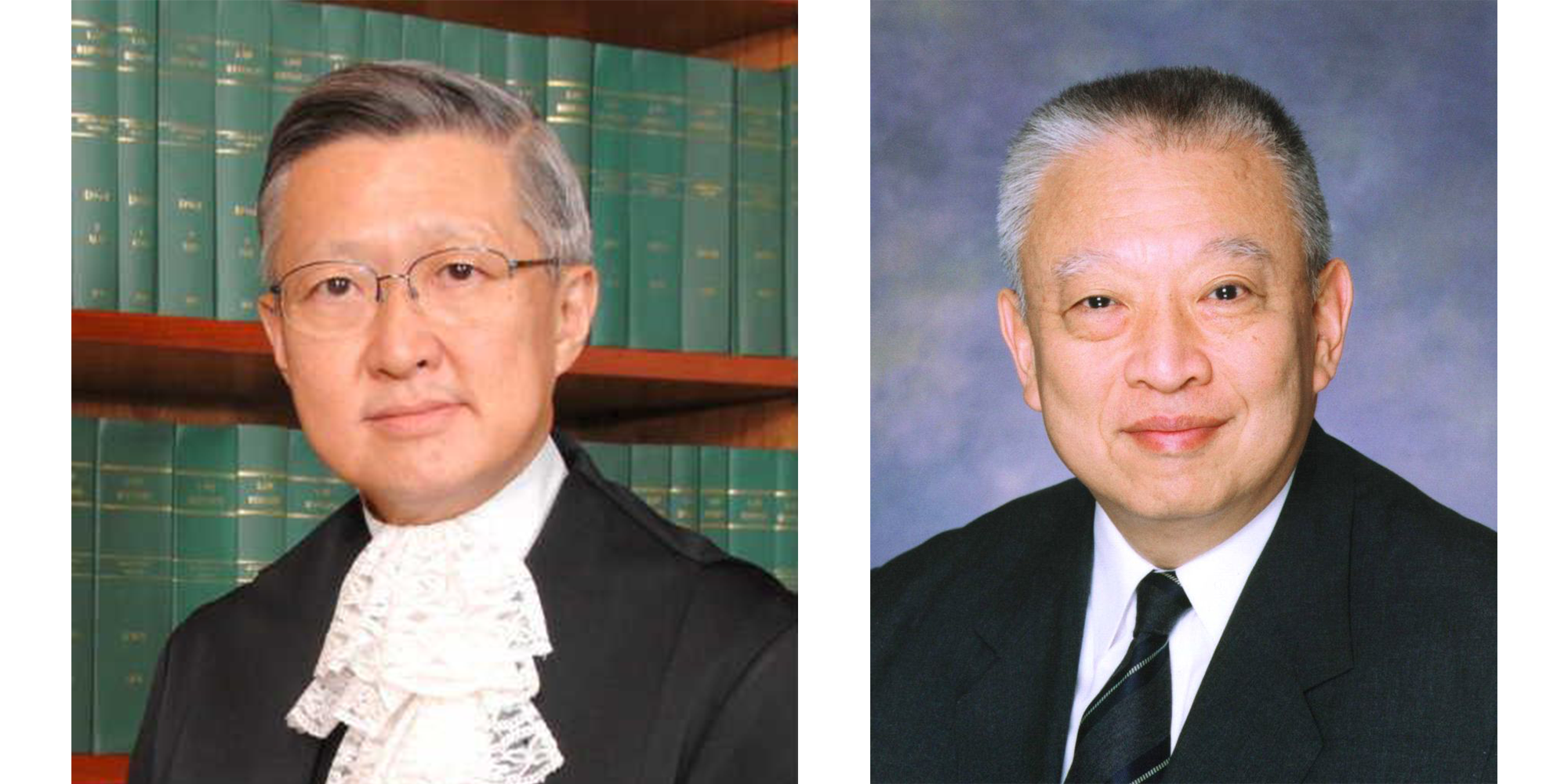
- Andrew Li — Hong Kong’s first Chief Justice of the Court of Final Appeal after the handover. He wrote both the January 29 judgment and the February 26 clarification, with all five judges agreeing.
- Tung Chee-hwa — The Chief Executive at the time. In May 1999, he decided to seek assistance from the central authorities and submitted a report under Articles 43 and 48(2), leading the State Council to request an interpretation.
- Regina Ip — The Secretary for Security at the time. On July 16, 1999, she moved the amendment to Schedule 1 to the Immigration Ordinance in the Legislative Council and explained the Immigration Department’s approach following the interpretation.
Key Concepts
- Right of abode — A permanent resident’s right to enter Hong Kong, remain without conditions of stay, and be free from removal. The Court of Final Appeal described it as a core right of permanent residents, inherently including entry.
- The third category of permanent residents — Article 24(2)(3): children of Chinese nationality born outside Hong Kong to residents in categories (1) and (2). The central disputes concerned whether the parent had to hold the necessary status when the child was born and whether exercising the right of abode depended on mainland approval.
- One-way permit and certificate of entitlement — A one-way permit is issued by the mainland public security authorities to authorize departure for settlement in Hong Kong. A certificate of entitlement is issued by Hong Kong’s Director of Immigration to verify permanent resident status acquired by descent and must be affixed to a one-way permit or another relevant travel document.
- Original legislative intent — The interpretive basis advanced by the NPCSC and the Hong Kong government: a provision’s meaning was established when it was enacted, as reflected in its drafting background—the Joint Declaration, Joint Liaison Group understanding, and Preparatory Committee opinions. Interpretation merely clarifies that original meaning. In 1999, this approach came into direct conflict with the common-law tradition of textual interpretation.
- Final adjudication and final interpretive authority — Article 158(1) vests the power to interpret the Basic Law as a whole in the NPCSC. Paragraphs (2) and (3) authorize Hong Kong’s courts to interpret it in adjudication and require referrals in specified circumstances. The division established after these cases was that adjudication ends in Hong Kong, while final interpretation of the Basic Law rests with the NPCSC.
- Parties to the relevant proceedings — Those whose acquired rights were preserved by the 1999 interpretation: the parties to the January 29 judgments. The boundaries of this category generated further litigation.
Key Cases
- Ng Ka Ling and Ng Tan Tan (represented by their father as next friend) v Director of Immigration (Court of Final Appeal, FACV 14/1998, heard together with FACV 15 and 16/1998, January 29, 1999) — The Court of Final Appeal interprets the Basic Law for the first time, declares relevant restrictions in the local immigration amendment legislation unconstitutional, and explains Hong Kong’s judicial power to review local legislation for consistency with the Basic Law. Note: the two applicants’ Chinese names appear in the official Chinese-language case compilation. The Chinese names of the other applicants were not found in the official Chinese materials checked when preparing the original text and were therefore omitted from its narrative.
- Ng Ka Ling and Others v Director of Immigration (No. 2) (Court of Final Appeal, FACV 14A/1998, February 26, 1999) — An exceptional clarification after judgment, accepting that the court cannot question the NPCSC’s authority to interpret under Article 158. It leaves the substantive outcome of the January 29 judgment unchanged.
- Lau Kong Yung and Others v Director of Immigration (Court of Final Appeal, FACV 10 and 11/1999, December 3, 1999) — The court first confirms that the June 26 interpretation is constitutional, binds Hong Kong’s courts, and applies from the Basic Law’s commencement. Removal orders against seventeen applicants who arrived before the January 29 judgments—five of whom had a parent with permanent resident status at birth—are upheld because they lacked one-way permits and certificates of entitlement.
Key Provisions and Legal Documents
- Article 24(2)(3) of the Hong Kong Basic Law (adopted April 4, 1990; effective July 1, 1997) — Defines the third category of permanent residents, at the center of the litigation and interpretation.
- Article 22(4) of the Hong Kong Basic Law — Requires people from other parts of China to obtain approval to enter Hong Kong, with settlement numbers determined by the competent central authorities after consulting the Hong Kong government. The 1999 interpretation confirms that this includes mainland-born children of permanent residents.
- Article 158 of the Hong Kong Basic Law — Allocates interpretive authority: paragraph (1) vests it in the NPCSC; paragraph (2) authorizes the courts to interpret provisions within the Region’s autonomy; paragraph (3) requires referrals by the Court of Final Appeal for provisions concerning central affairs or central–regional relations in the specified circumstances, while preserving judgments previously rendered; paragraph (4) requires prior consultation with the Basic Law Committee.
- Article 67(4) of the Constitution — Gives the NPCSC authority to interpret laws. Together with Article 158(1), it provides the legal basis for the 1999 interpretation.
- The NPCSC Interpretation of Articles 22(4) and 24(2)(3) of the Basic Law (June 26, 1999) — The first NPCSC interpretation: confirms that mainland-born children must obtain approval to enter and limits third-category eligibility to children with at least one parent meeting category (1) or (2) at birth. It preserves the right of abode acquired by the parties to the January 29 judgments.
- Immigration (Amendment) (No. 2) Ordinance and Immigration (Amendment) (No. 3) Ordinance (Provisional Legislative Council, 1997) — Tie third-category eligibility to parental status at birth and establish the certificate of entitlement scheme. Several provisions are declared unconstitutional on January 29, 1999. The system is restored following the Legislative Council’s July 1999 resolution amending Schedule 1 to the Immigration Ordinance.
- Opinions on the Implementation of Article 24(2) of the Basic Law (fourth plenary meeting of the Preparatory Committee for the Hong Kong Special Administrative Region, August 10, 1996) — The text identified in the 1999 interpretation as embodying the original legislative intent.
Related Episodes
- 13 China’s “First Constitutional Case”: Qi Yuling’s Stolen Right to Education — Continues the discussion of how constitutional rights can be realized through adjudication. Qi Yuling concerned whether mainland courts could apply the Constitution directly. This episode asks how Hong Kong’s constitutional review powers coexist with the NPCSC’s final interpretive authority. The two paths share a structural difficulty.
- 08 A Supreme Court Caught in the Middle: The Birth of Judicial Review in America — An institutional comparison: in Marbury, the US Supreme Court asserted the power of constitutional review through an individual case. Hong Kong’s Court of Final Appeal derives its review authority from express authorization in the Basic Law, while final authority to interpret that law belongs separately to the NPCSC.