This is the transcript of episode 22 of my podcast Reasoned Talk (议正言辞). Listen on Xiaoyuzhou or Apple Podcasts . The episode is in Chinese; this transcript has been translated into English.
On the morning of September 19, 2026, CNN reporter Betsy Klein arrived at the White House for work as usual. A senior correspondent, she had covered the White House for eight years. Her press pass still had almost a year to run: it would not expire until August 31, 2027. At the gate, however, Secret Service personnel told her that it had been deactivated. They took the credential from her and directed her to the White House Press Office for an explanation. Reporters from MS NOW and Politico encountered much the same thing around the same time.
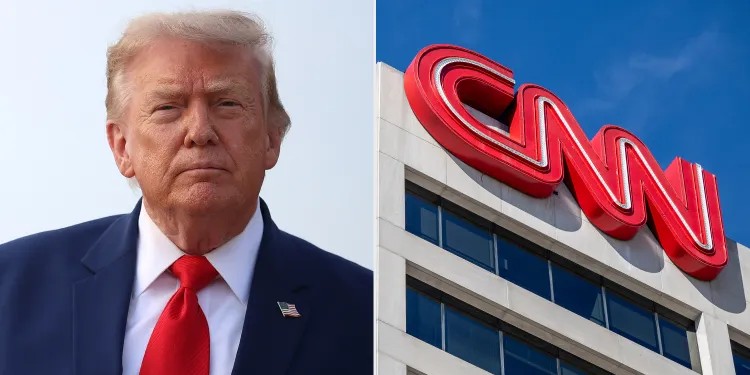
It had begun the previous afternoon, September 18, when Trump posted on Truth Social announcing that CNN, MS NOW, and Politico were banned from the White House because they “constantly” reported “fake news.” Seventy-eight journalists across the three organizations held permanent White House press credentials. All were barred at once. They would lose access to the entire White House complex, including the briefing room, press workspaces, and North Lawn, as well as reporting assignments accompanying the president on his travels.
On September 21, the three organizations and three reporters who had been denied entry sued in federal court in the District of Columbia. The defendants included Trump himself, the White House communications director, the chief of staff, and the director of the Secret Service. The plaintiffs argued that the exclusion constituted viewpoint discrimination and retaliation prohibited by the First Amendment, and violated the Fifth Amendment’s guarantee of due process. They sought a declaration that the White House had acted unlawfully and an injunction.
On September 24, the court issued a temporary restraining order urgently restoring their White House press credentials. On the evening of October 13, it granted the plaintiffs’ motion for a preliminary injunction, finding a strong likelihood of success on their three constitutional claims and requiring their access to be maintained while the case continued. The Justice Department appealed the preliminary injunction on October 14.
The case remains pending. The injunction is interim relief, and there has been no final judgment. This episode examines the history of litigation over White House press credentials.
White House Press Credentials and the Press Pool
Originally, the White House had no dedicated press workspace. Reporters gathered news outside its doors. Beginning around 1895, William Price of the Washington Evening Star waited at the entrance every day, asking people coming and going for information. In 1902, the White House expanded its West Wing offices and provided a dedicated press room. Reporters now had a permanent indoor workspace: the beginning of today’s White House press area.
A dedicated workspace brought a need to manage access, and White House press passes followed. These come in temporary and permanent forms. Permanent credentials, known as “hard passes,” are issued to journalists based in Washington who hold congressional or Supreme Court press accreditation, generally following a Secret Service background check. They allow holders to use a faster security process and work in the press area without continuous escort. These were the credentials deactivated for the three organizations.
Whether temporary or permanent, a press credential principally establishes eligibility to enter the White House grounds and press area. Attendance at particular events or entry into particular spaces requires separate arrangements. A credential alone does not entitle every holder to enter the Oval Office or Air Force One. That is where the press pool comes in. A small group of journalists rotates among news organizations, enters those spaces or travels with the president, and shares its video, photographs, and written reports with other outlets. Television coverage has primary and secondary positions. The primary position rotates among Fox, CNN, NBC, ABC, and CBS. As one of those five, CNN supplies 20 percent of the staffing and costs. Its footage is distributed to more than a thousand local television stations. Deactivating CNN’s hard passes therefore also prevented its reporters from doing their pool assignments.
Since the White House issues these credentials, can it simply decide who receives one and who does not?
Sherrill: Standards and Procedures for Denying a Press Pass
In 1966, Robert Sherrill, The Nation’s Washington correspondent, was denied a White House press pass. The Secret Service initially refused to explain why. Only in 1972, through a freedom-of-information process, did he learn that the refusal rested on security concerns arising from his record of assault. At the time, there were no publicly stated standards for White House credentials, and rejected applicants had no opportunity for a hearing or rebuttal. Sherrill and another applicant sued.
In December 1977, the U.S. Court of Appeals for the D.C. Circuit ruled. The court reasoned that the White House had no obligation to open its doors to everyone. Once it voluntarily established press facilities, however, journalists’ access was protected by the First Amendment’s guarantee of a free press. Depriving a journalist of that access therefore required the due process guaranteed by the Fifth Amendment. The absence of specific security standards and procedural safeguards violated the First and Fifth Amendments, and the plaintiffs prevailed.
The court did not order the White House to issue Sherrill a pass immediately. It required his application to be reconsidered under constitutionally adequate standards and procedures, including notice of the reasons, an opportunity to respond, and a written decision. This preserved room for government security assessments. The government could screen applicants for security risks, but it needed specific standards; a vague invocation of “security” would not suffice.
After the decision, the Secret Service adopted standards and procedures for security clearance in connection with White House press-pass applications in 1978. They were incorporated into the Code of Federal Regulations and remain in effect. Under these rules, the security-clearance inquiry turns on whether an applicant presents a serious threat to the physical safety of the president or the president’s family. Political views, the slant of reporting, and criticism of the president cannot serve as security criteria. Formal procedures provide initial notice, a written response, an opportunity to appear in person, and representation by counsel. These regulations principally address security screening when a journalist applies, however; they do not specifically set standards and procedures for subsequent revocation or suspension.
Decades later, the same reasoning would be applied to those situations.
Acosta and Karem: From Denial to Revocation and Suspension
In November 2018, CNN reporter Jim Acosta clashed with Trump at a White House press conference. The White House then suspended his hard pass. CNN and Acosta sued. On November 16, the judge ordered it restored because the White House had provided neither advance notice nor an opportunity to respond, violating the Fifth Amendment. The plaintiffs dismissed their suit on November 19, so the case never reached a final judgment.
A similar dispute arose the following year. On July 11, 2019, Trump held a social media summit at the White House. After his remarks, Playboy reporter Brian Karem got into an argument with a former Trump adviser. On August 16, the White House suspended Karem’s credential for thirty days, citing a breach of “professional journalistic norms.” Karem sued in federal district court on August 20. On September 3, the court issued a preliminary injunction restoring his credential.
On June 5, 2020, the court of appeals affirmed the injunction. Karem had not been told in advance that an argument in the Rose Garden could result in suspension of his press credential, and the sanction caused him serious harm. The government could not announce a standard after an incident and then apply it to earlier conduct. The court did not deny the White House’s authority to maintain order. It could establish rules of conduct for reporters and sanction violations. The essential point was that the rules had to exist beforehand and be clearly communicated.
Does that mean the same rules apply to every reporting activity inside the White House? Two cases from 2025 distinguished between different spaces and activities.
Ateba: Neutral, Reasonable Eligibility Requirements
Simon Ateba, the White House correspondent for Today News Africa, obtained his hard pass in February 2021. On May 5, 2023, the White House announced a policy change: all hard passes would expire at the end of July, and reporters would have to reapply. The new policy tightened eligibility by requiring prior accreditation from one of the Senate, House of Representatives, or Supreme Court press galleries. About five hundred reporters lost their hard passes following the change, including Ateba. He had not obtained Senate press-gallery accreditation, did not meet the new prerequisite, and was denied a hard pass.
On August 10, 2023, Ateba sued in federal district court. Unlike the earlier cases, this one ended in a decision favoring the White House. On April 8, 2025, the court of appeals held that the White House press area was a “nonpublic forum.” It was not open to everyone, and entrants could be required to meet eligibility criteria. Those conditions were permissible so long as they were neutral and reasonable. The hard-pass prerequisites were neither viewpoint discriminatory nor otherwise unreasonable, and were therefore lawful.
The court also distinguished Sherrill and Karem. Those cases concerned the denial or suspension of credentials that left the journalists unable to enter the White House. Ateba, by contrast, could still apply for a day pass, although daily applications and the lack of expedited entry made it less convenient. He had also brought no due-process claim. The issue before the court was principally one under the First Amendment.
The Associated Press: Access to Highly Restricted Spaces
The other case arose in 2025 and involved the Associated Press. On January 20, Trump signed an executive order directing that the Gulf of Mexico be renamed the “Gulf of America.” The AP decided to retain the internationally established geographic name in its reporting. The administration was deeply displeased. On February 11, the White House began barring AP reporters from the Oval Office and Air Force One.
One distinction matters here: the White House did not deactivate the AP’s press credentials. It excluded AP journalists from particular spaces. But the AP was also part of the White House press pool, supplying photographs and written reports. Being unable to enter the Oval Office or Air Force One meant it could not perform those pool duties, a substantial restriction.
The AP sued on February 21, seeking immediate restoration of access. On April 8, the district court ruled in its favor. The White House could limit the number of reporters admitted to the Oval Office, but could not exclude an organization because of its viewpoint. Doing so constituted viewpoint discrimination and retaliation prohibited by the First Amendment. The court issued a preliminary injunction against that differential treatment.
The White House appealed, and the case took a different turn. On June 6, a divided court of appeals voted 2–1 to stay part of the district court’s preliminary injunction. The majority treated the Oval Office and Air Force One as highly restricted presidential workspaces, rather than public forums under the First Amendment. The president could choose which reporters to invite to these special events, much as he could choose which outlet to grant an exclusive interview. Neutrality could not simply be required in these settings. The appeals court did not, however, stay the injunction as it applied to the East Room, which was open to a larger group of reporters.
The dissent drew a distinction between choosing an interviewer and excluding a news organization from an established pool because of its reporting. The government had no duty to provide every outlet with special access, but it could not withdraw such opportunities to punish an organization for exercising its freedom of speech.
This was not a final decision on the merits. The case leaves a question: the government may choose which organizations receive access to special spaces, but when its choice rests on their views, is it managing access or retaliating against speech?
Returning to the Three Organizations’ Constitutional Claims
The cases discussed so far can be summarized as follows:
- Sherrill required clear standards and procedures for issuing press credentials.
- Karem extended those protections from issuance to revocation and suspension.
- Ateba continued Sherrill’s approach while permitting neutral, reasonable eligibility conditions.
- The AP case has not reached a final judgment. The interim ruling distinguishes ordinary White House areas from special spaces and allows selection for the latter on terms that need not be viewpoint neutral.
With that background, the issues in the 2026 case become clearer.
As noted at the beginning, the three news organizations advance three principal claims. The first is retaliation prohibited by the First Amendment. That amendment protects press freedom and bars government retaliation against media organizations for their speech. Asked about the ban, Trump said it was not about one particular story but about the cumulative effect of reporting over the previous two years. The plaintiffs point to that statement as evidence of retaliation for speech.
Their second claim is viewpoint discrimination, also prohibited by the First Amendment. Relying on Ateba, they argue that the government must select journalists under neutral criteria, rather than treating them differently because of their views. In their account, this ban was plainly based on the organizations’ positions and reporting perspectives.
Their third claim invokes Fifth Amendment due process. Relying on Sherrill and Karem, they argue that hard passes receive procedural protection. The Fifth Amendment requires due process before the government deprives a person of protected interests. Here, the White House deactivated the credentials without clear preexisting standards, notice, or an opportunity to respond.
The defendants, for their part, maintain that Sherrill and Karem were wrongly decided. They preserve the right to seek their reversal on appeal, while acknowledging that the district court must follow those appellate precedents. They also argue that White House access is a privilege rather than a right: the public has no constitutional right to enter the White House, and journalists have no greater entitlement than ordinary members of the public. In addition, the government offered further justifications for excluding the organizations, including alleged threats to national security and disclosure of classified information, and submitted material in support.
There has been no final judgment. At the preliminary-relief stage, however, the court has assessed the plaintiffs’ likelihood of success. On September 24, it issued a temporary restraining order requiring their access to be restored urgently for fourteen days.
Citing Sherrill, the court held that a qualified journalist’s interest in obtaining White House credentials was undoubtedly a liberty interest protected by Fifth Amendment due process. It then relied on Karem for the proposition that a duly issued hard pass could not be suspended without due process. The government did not dispute that the affected reporters had received neither notice nor an opportunity to respond before losing their passes. The record also contained no preexisting revocation standards. Nor had the government supplied sufficient support for its national-security and classified-information justifications.
The court concluded that even a temporary loss of constitutional freedoms constituted irreparable harm. It ordered the defendants other than Trump himself, together with those implementing their decisions, to return and restore the three organizations’ hard passes immediately. It also refused the government’s request to stay the order.
The Preliminary Injunction and Continuing Disputes
Implementation of the temporary restraining order did not proceed smoothly. That morning, reporters from the three organizations arrived for work and were again stopped at the gate. Four had their passes confiscated. The plaintiffs notified the court that the White House was not complying, and the court required a response. The White House began returning credentials around noon, roughly eleven hours after the order had been issued.
Restoration of hard passes did not resolve the disputes over particular reporting assignments. On September 23, CNN applied for credentials to cover the state dinner during the Chinese leader’s visit the following day. An hour before the leader arrived, the White House told CNN it could send only one camera operator and one audio technician, leaving it without an editorial team on site. On the evening of September 25, CNN learned that it could not travel on Air Force One in its pool role to cover the president’s trip. With no replacement designated, that trip had no primary television pool outlet.
The parties continued to contest the motion for a preliminary injunction. On the evening of October 13, the court granted it. The reasoning went beyond due process: the court found that the ban likely violated the First Amendment through viewpoint discrimination, and rejected the Justice Department’s subsequently offered national-security rationale.
That brings us through the latest developments and the earlier precedents. In my view, Trump is likely to lose this case. The ban on the three organizations appears to have been improvised, leaving the government poorly prepared and on the defensive in court. On the surface, this is another episode in the endless exchange of accusations between the American right and left. Judicial intervention has at least made that exchange more exacting. Before speaking, the parties still have to consider the judge—and how much evidence and legal authority they actually possess.
If there is a significant development, I will return to the case in another episode. If it simply fades away, there will be no sequel.
ShowNotes
Key Timeline
- Around 1895: William Price of the Washington Evening Star begins waiting outside the White House daily to gather news from people entering and leaving.
- 1902: Expansion of the West Wing includes a dedicated press room, giving White House reporters a permanent indoor workspace.
- 1966: The Nation correspondent Robert Sherrill is denied a White House press pass without a specific explanation.
- 1972: Through a freedom-of-information process, Sherrill learns that security concerns lay behind the refusal.
- December 1977: The D.C. Circuit decides Sherrill v. Knight, requiring public standards and due process for denying credentials.
- June 22, 1978: The Secret Service publishes security-clearance standards and procedures for White House press-pass applications, incorporated into the Code of Federal Regulations (43 FR 26718).
- November 2018: CNN reporter Jim Acosta loses his hard pass after clashing with Trump at a press conference. A judge orders it restored on November 16; the plaintiffs dismiss the suit on November 19.
- July 11, 2019: Playboy reporter Brian Karem gets into an argument after the White House social media summit. The White House suspends his hard pass for thirty days on August 16. He sues on August 20; a preliminary injunction restores his credential on September 3.
- June 5, 2020: The court of appeals affirms the Karem injunction because he lacked fair notice of the sanction.
- February 2021: Simon Ateba obtains a White House hard pass.
- May 5, 2023: The White House announces new hard-pass requirements, requiring reapplication by the end of July and prior press-gallery accreditation. Approximately five hundred reporters lose their hard passes.
- August 10, 2023: Ateba sues over the eligibility requirements.
- January 20, 2025: Trump signs an executive order directing that the Gulf of Mexico be renamed the “Gulf of America”; the AP retains the original name in its reporting.
- February 11, 2025: The White House bars AP reporters from the Oval Office and Air Force One without deactivating their press credentials.
- February 21, 2025: The AP sues.
- April 8, 2025: The D.C. Circuit rules for the White House in Ateba, identifying the press area as a nonpublic forum. The district court issues a preliminary injunction in the AP case the same day.
- June 6, 2025: A divided D.C. Circuit panel partially stays the AP injunction by a 2–1 vote. The stay covers highly restricted spaces such as the Oval Office, but leaves the East Room portion in place.
- September 18, 2026: Trump announces on Truth Social that CNN, MS NOW, and Politico are banned from the White House. The hard passes held by seventy-eight reporters are deactivated that evening.
- September 19, 2026: Reporters from the three organizations are denied entry and have credentials confiscated. Klein’s pass is valid through August 31, 2027.
- September 21, 2026: The organizations and three reporters file suit in the U.S. District Court for the District of Columbia, No. 1:26-cv-03287-TJK.
- September 22, 2026: The government opposes a temporary restraining order. The White House Press Office separately writes to each organization, setting a September 25 deadline for a written response.
- September 23, 2026: CNN requests credentials for the following day’s state dinner during the Chinese leader’s visit. An hour before the leader arrives, the White House permits only a camera operator and an audio technician to attend.
- September 24, 2026: Judge Kelly issues a temporary restraining order restoring credentials. Implementation is obstructed that morning, and four reporters’ passes are confiscated. Credentials begin to be returned around noon, roughly eleven hours after the order.
- September 25, 2026: CNN learns that it cannot travel on Air Force One in its pool role; the trip has no primary television pool outlet. The organizations’ counsel writes to Justice Department counsel, reserving further rights.
- September 28, October 2, and October 5, 2026: The plaintiffs seek a preliminary injunction, the government opposes, and the plaintiffs reply.
- October 8, 2026: The court holds a hearing and extends the temporary restraining order through October 13.
- October 10, 2026: A Justice Department spokesperson confirms that the Antitrust Division is investigating whether five television networks’ suspension of television pool coverage violated antitrust law.
- Evening of October 13, 2026: Judge Kelly grants the preliminary injunction, finding likely violations of due process and the First Amendment through viewpoint discrimination, and rejecting the subsequently offered national-security rationale. The injunction remains in effect pending final judgment unless overturned on appeal.
- October 14, 2026: The Justice Department appeals the preliminary injunction to the D.C. Circuit.
Key People
- Betsy Klein: Senior CNN White House correspondent who has covered the beat for eight years. Her hard pass, valid through August 31, 2027, was confiscated on September 19, 2026.
- Akayla Gardner: MS NOW White House correspondent and an individual plaintiff.
- Cheyenne Haslett: Politico White House correspondent and an individual plaintiff.
- Jim Acosta: CNN reporter whose hard pass was revoked after a confrontation with Trump in 2018; a court restored it on procedural grounds.
- Timothy J. Kelly: U.S. district judge for the District of Columbia who heard both Acosta’s 2018 case and the present 2026 case.
- Robert Sherrill: The Nation’s Washington correspondent, denied a White House credential in 1966 and the plaintiff in the 1977 decision.
- Brian Karem: Playboy reporter whose credential was suspended for thirty days in 2019; he obtained preliminary relief upheld in 2020.
- Simon Ateba: Today News Africa White House correspondent who challenged hard-pass eligibility requirements in 2023 and lost on appeal in 2025.
- Stephanie Grisham: White House press secretary in 2019, responsible for the decision to suspend Karem’s credential for thirty days.
Key Concepts
- Hard pass: A permanent credential for Washington-based journalists with congressional or Supreme Court press-gallery accreditation, subject to Secret Service screening. It enables expedited entry and unescorted work in the press area.
- Day pass: A credential for a particular visit or short period, with separate application and escort arrangements.
- Press pool: A small rotating group of reporters covering presidential activities in spaces with limited capacity and sharing text, video, and photographs with other organizations.
- Nonpublic forum: Government property opened to particular users. Ateba classified the White House press area this way. Its management must be reasonable and viewpoint neutral, without unbridled discretion over access.
- Retaliation: Adverse government action taken because of a media organization’s speech, prohibited by the First Amendment. The plaintiffs argue that a ban based on the cumulative effect of two years’ reporting constitutes retaliation.
- Viewpoint discrimination: Differential treatment based on an organization’s views, prohibited by the First Amendment. The preliminary injunction found that the ban likely constituted such discrimination.
- Fair notice: Rules underlying a sanction must exist beforehand and be communicated clearly. Standards announced afterward cannot be used to punish earlier conduct. Karem applied this requirement.
- The two-step due-process inquiry: First determine whether the claimed interest receives constitutional protection; then assess whether the procedures used to deprive the person of it were sufficient.
- Irreparable harm: Even a brief loss of constitutional freedoms can constitute irreparable harm for purposes of preliminary relief.
- Temporary restraining order, preliminary injunction, and final relief: Remedies at different stages of litigation. A TRO is short-lived and based on the record then available. A preliminary injunction involves fuller review and can be appealed. Final relief follows adjudication of the case.
- “A privilege, not a right”: The defendants argue that White House access is a privilege, and reporters have no greater constitutional entitlement to enter than the general public. The court did not accept this argument as a basis for denying interim relief.
Key Cases
- Sherrill v. Knight, 569 F.2d 124 (D.C. Cir. 1977): Denial of a White House press credential requires publicly stated standards, reasons, an opportunity to respond, and a written decision. The court preserves discretion over security judgments.
- Cable News Network, Inc. v. Trump (D.D.C. 2018, the Acosta case): After the White House revoked Acosta’s hard pass, the court restored it on November 16 for lack of notice and an opportunity to respond under the Fifth Amendment. The plaintiffs dismissed their suit on November 19; there was no final judgment.
- Karem v. Trump, 960 F.3d 656 (D.C. Cir. 2020): A duly issued hard pass cannot be suspended without due process. Before a sanction, a reporter must have notice of the conduct that may lead to punishment and the potential severity of the sanction.
- Ateba v. Leavitt, 133 F.4th 114 (D.C. Cir. 2025): Upholds hard-pass eligibility requirements, identifies the press area as a nonpublic forum, and rejects unbridled discretion over admission. The case did not include a due-process claim.
- Associated Press v. Budowich, No. 25-5109 (D.C. Cir., June 6, 2025 order): A 2–1 panel partially stays a district-court preliminary injunction for highly restricted spaces such as the Oval Office, leaving the East Room portion in place. This is an interim ruling pending appeal, rather than a final judgment.
- Cable News Network, Inc. v. Trump, No. 1:26-cv-03287-TJK (D.D.C. 2026, the principal case): The TRO rested on Fifth Amendment due process. The October 13 preliminary injunction additionally found likely First Amendment violations through viewpoint discrimination and rejected the government’s subsequently offered national-security justification. The Justice Department appealed on October 14.
Statutes and Legal Documents
- First Amendment to the U.S. Constitution, ratified in 1791: Protects freedom of speech and of the press; supports the retaliation and viewpoint-discrimination claims here.
- Fifth Amendment to the U.S. Constitution, ratified in 1791: Its federal due-process guarantee provides the procedural basis for the credential claims. Because the defendants are federal officials, the relevant amendment is the Fifth, rather than the Fourteenth.
- 31 CFR §§ 409.1–409.2, published June 22, 1978, at 43 FR 26718: Secret Service standards and procedures for security clearance in connection with White House press-pass applications, including written notice, thirty days to respond in writing, an opportunity to appear personally, and a written decision. These rules govern security clearance, rather than every aspect of press-credential policy.
- Federal Rule of Civil Procedure 65: Governs temporary restraining orders and preliminary injunctions, including conditions for issuance, security, and the persons bound by an order.
Related Episodes
- 12 Is Burning the Flag a Crime? The Constitutional Battle over the First Amendment : Another examination of First Amendment boundaries through litigation; the present episode concerns reporting access as well as speech.
- 14 Can Being a Vagrant Be a Crime? A Constitutional Moment for American Vagrancy Laws : Uses individual cases to examine constitutional constraints on enforcement and administrative discretion.
- 6 U.S. Birthright Citizenship: Complete Victory or a Temporary Truce? : Constitutional litigation during the same administration, offering a comparison for interim relief and subsequent proceedings.
Main Sources and Verification Notes
- Court filings: Cable News Network, Inc. v. Trump, No. 1:26-cv-03287-TJK (D.D.C.): complaint (ECF 1, September 21, 2026); government opposition to the TRO and three White House Press Office letters dated September 22 (ECF 16 and 16-1 through 16-3); Judge Kelly’s TRO (ECF 24, September 24); plaintiffs’ preliminary-injunction memorandum (ECF 32-1, September 28); government opposition (ECF 43, October 2); plaintiffs’ reply (ECF 44, October 5); Boutrous’s September 25 letter to Velchik (ECF 32-11); Judge Kelly’s October 13 preliminary-injunction ruling granting the three organizations’ request; and the Justice Department’s October 14 notice of appeal.
- Cases: Sherrill v. Knight, 569 F.2d 124 (D.C. Cir. 1977); Cable News Network, Inc. v. Trump (D.D.C. 2018, Acosta litigation, without final judgment); Karem v. Trump, 960 F.3d 656 (D.C. Cir. 2020); Ateba v. Leavitt, 133 F.4th 114 (D.C. Cir. 2025); Associated Press v. Budowich, No. 25-5109 (D.C. Cir., June 6, 2025 order).
- Rules and regulations: 31 CFR Part 409 (43 FR 26718, June 22, 1978); Federal Rule of Civil Procedure 65.
- Historical research: Martha Joynt Kumar, Origins of the White House Beat, White House Transition Project, 2017, particularly the discussion of William Price and the West Wing press facilities in 1902; James A. Jacobs, The President, the Press, and Proximity, White House Historical Association, 2015.
- Reporting: AP coverage of restored access on September 24, 2026; CBS coverage of the October 8 hearing, at which plaintiffs’ counsel stated that seventy-eight credentialed journalists were affected; AP coverage of the October 10 antitrust investigation; JURIST’s report on the October 9 extension of the TRO; and AP, Reuters, and USA Today coverage of the October 13 preliminary injunction.
- Verification notes: The materials above were checked through October 15, 2026. Judge Kelly granted a preliminary injunction on October 13 based on due process and First Amendment viewpoint discrimination. The Justice Department appealed on October 14; further appellate orders should be monitored. Complaints, briefs, and White House letters establish what the parties alleged, rather than that their allegations were proven. Claims in the letters of inaccurate reporting or disclosure of classified information have not been established by the court. The account of obstructed implementation on September 24 comes from witness materials submitted by the plaintiffs in support of their injunction motion and represents their account. The Justice Department’s antitrust investigation remains preliminary and does not establish unlawful conduct.