
At the gate
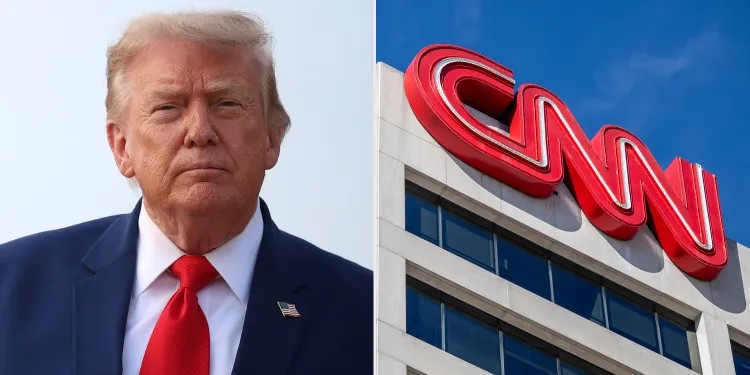
On the morning of September nineteenth, 2026, CNN reporter Betsy Klein showed up for work at the White House. She’d been covering it for eight years, and her press pass was good until the following August. According to the court filing, a Secret Service officer stopped her at the gate. Her pass had been disabled, he told her. He took it and told her to ask the press office why.
The day before, President Trump had posted on Truth Social. He was banning CNN, MS NOW, and Politico from the White House, he said, because they kept reporting “fake news.” Seventy-eight journalists held long-term passes across the three outlets. By Monday, the outlets had sued, along with Klein and two other reporters who’d been turned away.
Can the White House take away a press pass over stories a reporter has already published?
What the pass gets you
In the 1890s, a reporter named William Price used to wait outside the White House. When visitors came out, he’d ask them what they’d heard. Then, in 1902, Theodore Roosevelt moved into new offices in what we now call the West Wing. There was a small room for reporters inside. Someone had to decide who could use it.
Today, with a day pass, you put in a request for each day you need to be there. At the gate you wait for someone to walk you in. Regular correspondents can apply for what’s called a hard pass. That gets you through a faster security line and lets you walk into the press area on your own. Once you’re inside, the two passes give you the same privileges. But suppose a White House official gives reporters ten minutes’ notice of an announcement. If you’re still waiting for an escort, you could miss it entirely.
Decades before Klein lost her pass, another reporter went to court over what happened when he tried to get one.
Six years for an explanation
Robert Sherrill was the Washington correspondent for The Nation. In 1966, he applied for a White House press pass. He already had congressional press credentials, but the Secret Service recommended denying him a pass. Nobody told him why.
Six years later, Sherrill’s lawyers asked for the records under the Freedom of Information Act. The agency withheld them. His lawyers appealed, and in the letter turning them down, a Treasury official mentioned an arrest and a fine for assault in Florida. It was the first clue to what the Secret Service had held against him. But no one had asked Sherrill for his side of the story. So he sued.
In 1977, the federal appeals court in Washington looked at why those rooms were there. The White House had opened them so correspondents could gather news. Once it did that, the judges said, shutting out a reporter who otherwise qualified, without a good reason, would interfere with a freedom the First Amendment protects.
The Fifth Amendment also entitled Sherrill to due process. The court told the government to publish the security standard it used to judge applications. If the Secret Service was going to turn a reporter down, it had to explain why and let the reporter respond. The final decision had to give reasons in writing so a judge could review it if the reporter sued. The Secret Service still had to make the call about the risk.
The next year, the Secret Service issued a rule for that part of the application. The question was whether the applicant posed a serious physical danger to the president or the president’s family. Under that rule, a reporter facing a denial could answer the agency in writing within thirty days. The reporter could also ask to make the case in person and bring a lawyer. The rule dealt with security clearance for a new pass. What if the White House had already given you one?
A month without a pass
At a news conference in 2018, CNN’s Jim Acosta kept hold of the microphone as he tried to ask Trump more questions. The White House press secretary revoked his hard pass that day. A federal judge named Timothy Kelly found that Acosta was likely to win his due process claim and ordered the White House to give the pass back. CNN and Acosta dropped the suit after the pass was restored. The White House issued rules for future news conferences, down to when reporters could ask a follow-up and when they had to hand back the microphone.
The following summer, after a social media summit at the White House, a Playboy reporter named Brian Karem got into an argument with a former Trump adviser in the Rose Garden. The White House called his conduct unprofessional and suspended his pass for thirty days. After the Acosta case, it had warned reporters they could lose a pass if they broke the new rules for news conferences. In places like the Rose Garden, it had said it would rely on reporters’ usual standards of conduct. Karem went to court.
In 2020, the appeals court upheld the order restoring Karem’s pass. Reporters needed fair warning of what would get them into trouble and how severe the penalty might be. The judges pointed to earlier incidents involving similar behavior that had gone unpunished. Karem had little reason to expect a month away from his beat.
A rule the White House could use
In 2023, the White House told every hard-pass holder that their credentials would expire at the end of July. Anyone who wanted a new pass had to apply under a revised policy. Around five hundred reporters lost their hard passes, including Simon Ateba, a correspondent for Today News Africa.
To get a new pass, Ateba needed credentials from one of the press galleries at Congress or from the one at the Supreme Court. He applied to the Senate gallery and went back to using day passes while he waited. When he sued, he argued that the White House was giving those galleries too much say over who got a hard pass.
In 2025, the appeals court upheld the requirement. The press area was what the judges called a nonpublic forum. The White House could reserve the space for people who were there to cover the administration. Checking whether another press gallery had accredited a reporter was a reasonable way to do that. The White House still had to use criteria that treated reporters the same regardless of their views.
The orders to restore the passes
The day after Klein and the other plaintiffs sued, the White House press office wrote to each outlet. The letters listed stories the White House objected to and gave the outlets until Friday to respond. Their reporters were already locked out.
The case went to Timothy Kelly, the same judge who’d ordered Acosta’s pass returned eight years earlier. The government argued that the appeals court had gotten Sherrill and Karem wrong. Kelly had to follow those decisions. On September twenty-fourth, he issued a temporary restraining order to get the passes back right away. The reporters should have had a chance to respond before the White House cut off their access. If they had to wait months for a ruling, they’d miss briefings and events they could only cover as they happened.
The outlets say their reporters showed up for work that morning and were still turned away. Officers took more passes at the gate. The White House began restoring them around noon, roughly eleven hours after Kelly signed the order.
When Kelly ruled again on October thirteenth, he looked at what the reporters knew before those stories ran. He found nothing that would have warned them they could lose access for publishing the articles. In fact, the White House had renewed two reporters’ passes after they’d written stories the press office later complained about. One of those stories was about plans to rebuild a bunker beneath the White House East Wing.
Kelly also looked at what Trump had said. Asked why he’d banned the outlets, Trump pointed to two years of coverage he regarded as deliberately negative. Kelly took that as evidence of retaliation. The White House had likely taken away the passes to punish the outlets for doing work the First Amendment protects.
Those remarks also told Kelly something about how the White House had decided who could use the press area. In Ateba’s case, that decision turned on whether a reporter had been accredited by another press gallery. Here, Kelly found that it likely turned on how the outlets covered the administration. The legal term for that is viewpoint discrimination.
The government said it would have revoked the passes anyway for national security reasons. It pointed to stories it said contained sensitive or classified information. Kelly took that concern seriously, but Trump hadn’t mentioned national security when he announced the ban. And the evidence the government brought to court didn’t show that officials would have made the same decision on security grounds alone.
Kelly found the outlets likely to succeed on all three claims. He issued a preliminary injunction, which kept the hard passes in place while the court considered the case. The government appealed the next day.
Who gets on the plane?
Kelly’s injunction kept the door to the press area open. The Oval Office and Air Force One have room for only a handful of reporters. A small group called the press pool covers events there, then shares video, photos, and written reports with the rest of the press corps.
Five networks take turns sending the main television crew. CNN pays a fifth of the shared costs. When its turn comes, the crew gathers video and sound for the other networks to use. CNN says it also sends that feed to more than a thousand local stations.
The fight over pool access had already reached court in 2025. That January, Trump directed federal agencies to use the name Gulf of America. The Associated Press kept Gulf of Mexico in its coverage, while acknowledging the name the U.S. government had adopted. The White House kept AP reporters out of events in the Oval Office and aboard Air Force One. Their ordinary credentials were still valid.
The AP sued, and a trial judge granted a preliminary injunction. Two of the three judges on the appeals panel voted to put most of it on hold while the appeal went ahead. They saw the Oval Office and the president’s plane as working spaces where access is tightly controlled. To them, deciding which reporters to let in was much like deciding who the president would sit down with for an interview. The order still applied to the East Room, where larger groups of reporters could attend.
Judge Cornelia Pillard dissented. A pool event would go ahead whoever was there to cover it. In her view, using the guest list to punish the AP for a choice it made in the newsroom raised a First Amendment question.
Back in September 2026, the White House held a state dinner for China’s president on the day Kelly ordered the passes restored. CNN had asked to cover his arrival. According to the complaint, the White House told CNN it could send a photojournalist and an audio technician. Other networks could bring reporters and producers. CNN’s had to stay outside.
A month later, the president was due to fly to Mississippi. It was CNN’s turn to send the television crew, and Politico had a seat for a print reporter. Both outlets say the White House kept them off the plane. Two days later, on October twenty-eighth, the outlets added the pool dispute to their lawsuit. They argue that if they’re scheduled to cover a trip, they ought to get a chance to challenge the decision to leave them behind.
All three outlets want their places in the rotation back. CNN would resume sending the main television crew on its assigned days. MS NOW would take its turns in the second TV slot, and Politico would take its turns in the print pool.
The court’s order got Betsy Klein back through the gate. What the rest of us see when the president travels also depends on who gets a seat on the plane.
ShowNotes
Key dates
- 1902: Theodore Roosevelt moves into the new West Wing offices, where reporters are given an indoor workspace.
- 1966–1978: Robert Sherrill applies for a White House press pass in 1966 and learns a reason for the denial through a records request six years later. The appeals court rules on the required standards and procedures in 1977; the Secret Service publishes its security-clearance rule in 1978.
- 2018: A federal judge orders Jim Acosta’s hard pass restored on due process grounds. CNN and Acosta later drop the suit.
- 2019–2020: The White House suspends Brian Karem’s hard pass for thirty days after a Rose Garden confrontation. In 2020, the appeals court upholds interim relief restoring it because he lacked fair notice of that penalty.
- 2023–2025: A revised hard-pass policy requires reporters to reapply. Simon Ateba challenges its press-gallery accreditation requirement; the appeals court upholds the requirement in 2025.
- April 8 and June 6, 2025: The Associated Press obtains a preliminary injunction against viewpoint-based exclusions. The appeals court later stays most of it, leaving the East Room portion in effect.
- September 18–24, 2026: Trump announces a ban on CNN, MS NOW, and Politico. Reporters are refused entry, and the outlets sue. On September 24, Judge Timothy Kelly orders their hard passes restored.
- October 13–14, 2026: Kelly grants a preliminary injunction, finding the outlets likely to succeed on their due process, retaliation, and viewpoint-discrimination claims. The government appeals the next day.
- October 28, 2026: The outlets amend their complaint to challenge exclusions from the press pool and seek restoration of their places in the rotation.
Terms and names
- Hard pass; day pass — A hard pass permits expedited entry and unescorted access to the White House press area. A day pass requires a daily request and an escort from the gate. Once inside the press area, holders have the same privileges.
- Press pool — A small group that covers events in restricted spaces and shares its reporting with other outlets. A hard pass alone does not guarantee a place in the Oval Office or aboard Air Force One.
- Procedural due process — The Fifth Amendment protection at issue when the government denies or removes press access without adequate procedures. In Sherrill, these included notice of the reasons, an opportunity to respond, and a reasoned written decision.
- Fair notice — Advance warning of conduct that may lead to a penalty and how severe that penalty may be. Karem’s case concerned whether he could reasonably have anticipated a thirty-day suspension.
- First Amendment retaliation — Government action taken to punish protected expression. In the 2026 case, Kelly found the outlets likely to show that their passes had been revoked in retaliation for their reporting.
- Viewpoint discrimination; nonpublic forum — A nonpublic forum is government-controlled space reserved for particular purposes. Ateba treated the press area this way, allowing reasonable, viewpoint-neutral access rules. The AP appeal raised a separate dispute over whether restricted presidential workspaces were forums at all.
- Temporary restraining order; preliminary injunction; stay — The first two provide interim relief while litigation continues. A stay pauses an order’s operation. None of these procedural steps should be mistaken for a final judgment on the underlying claims.
- Robert Sherrill — The Nation correspondent whose unexplained rejection led to the 1977 decision on White House press-pass standards and procedures.
- Jim Acosta; Brian Karem; Simon Ateba — Reporters whose cases tested revocation, suspension, and eligibility rules, respectively. Their disputes concerned different grounds for restricting access.
- Betsy Klein; Timothy Kelly — The CNN correspondent stopped at the gate in September 2026 and the district judge who ordered the three outlets’ hard passes restored. Kelly also issued the 2018 Acosta order.
- Cornelia Pillard — The appeals judge who dissented from the partial stay in the AP case, arguing that excluding the AP from pool events over an editorial choice raised a First Amendment problem.
Sources and reading
The episode follows the case record through November 4, 2026. The October 13 injunction concerns hard passes. The October 28 amended complaint adds a pool-access challenge; its account of exclusions is an allegation, and the relief it requests is not a court order.
- The beginnings of the White House press beat: James A. Jacobs, “The President, the Press, and Proximity” . Historical background on William Price’s reporting outside the White House and the indoor workspace provided in 1902.
- Standards and procedures for denying a pass: Sherrill v. Knight, 569 F.2d 124, 128–31 (D.C. Cir. 1977) . The decision explains the First Amendment interest in newsgathering and the Fifth Amendment procedural protections. It required published standards and a fair process, rather than ordering that Sherrill be given a pass.
- The Secret Service’s security-clearance rule: 31 C.F.R. §§ 409.1–409.2 , published in 1978 and reproduced here in the 2025 edition. It addresses serious physical danger to the president or the president’s family, notice of a proposed denial, thirty days to respond in writing, and an opportunity for a personal appearance with counsel. Its subject is security clearance connected with an application.
- Acosta, Karem, and fair notice: Karem v. Trump, 960 F.3d 656 (D.C. Cir. 2020) , pp. 5–8 on Acosta and the rules that followed, and pp. 12–17 on fair notice. Karem’s appeal concerned an injunction against a thirty-day suspension. The 2018 Acosta order granted temporary relief; that suit ended without a final ruling on the merits.
- Eligibility and the press area: Ateba v. Leavitt, 133 F.4th 114 (D.C. Cir. 2025) . The court upheld the press-gallery credential requirement as reasonable and viewpoint neutral, treating the White House press area as a nonpublic forum. It decided a First Amendment challenge, not a due process claim.
- The AP’s editorial choice and pool-access case: AP style guidance, January 23, 2025 ; district court injunction opinion, April 8, 2025 ; D.C. Circuit partial stay, June 6, 2025 . Judge Rao’s reasoning, joined by Judge Katsas, and Judge Pillard’s dissent explain the disagreement over restricted presidential spaces. The stay preserved the East Room portion of the injunction and did not finally resolve the appeal.
- The 2026 hard-pass orders and appeal: Cable News Network, Inc. v. Trump, No. 1:26-cv-03287-TJK (D.D.C.), September 24 temporary restraining order (ECF 24) and October 13 preliminary injunction opinion (ECF 50). The latter addresses due process, retaliation, viewpoint discrimination, and the government’s national-security argument. The appeal docket, No. 26-5356 , records the October 14 appeal; this public docket is not a complete, continuously updated account of later proceedings.
- The added challenge to pool exclusions: October 28 amended complaint (ECF 54). The plaintiffs describe the TV pool in ¶¶ 36–38, Klein at the gate in ¶ 67, the delay in restoring passes and the state dinner in ¶¶ 79–80, and the Mississippi trip in ¶ 91. The new due process claim appears in ¶¶ 110–115, with the requested relief in ¶¶ 134–136. These passages establish what the outlets allege and seek, rather than judicial findings on the pool dispute.