
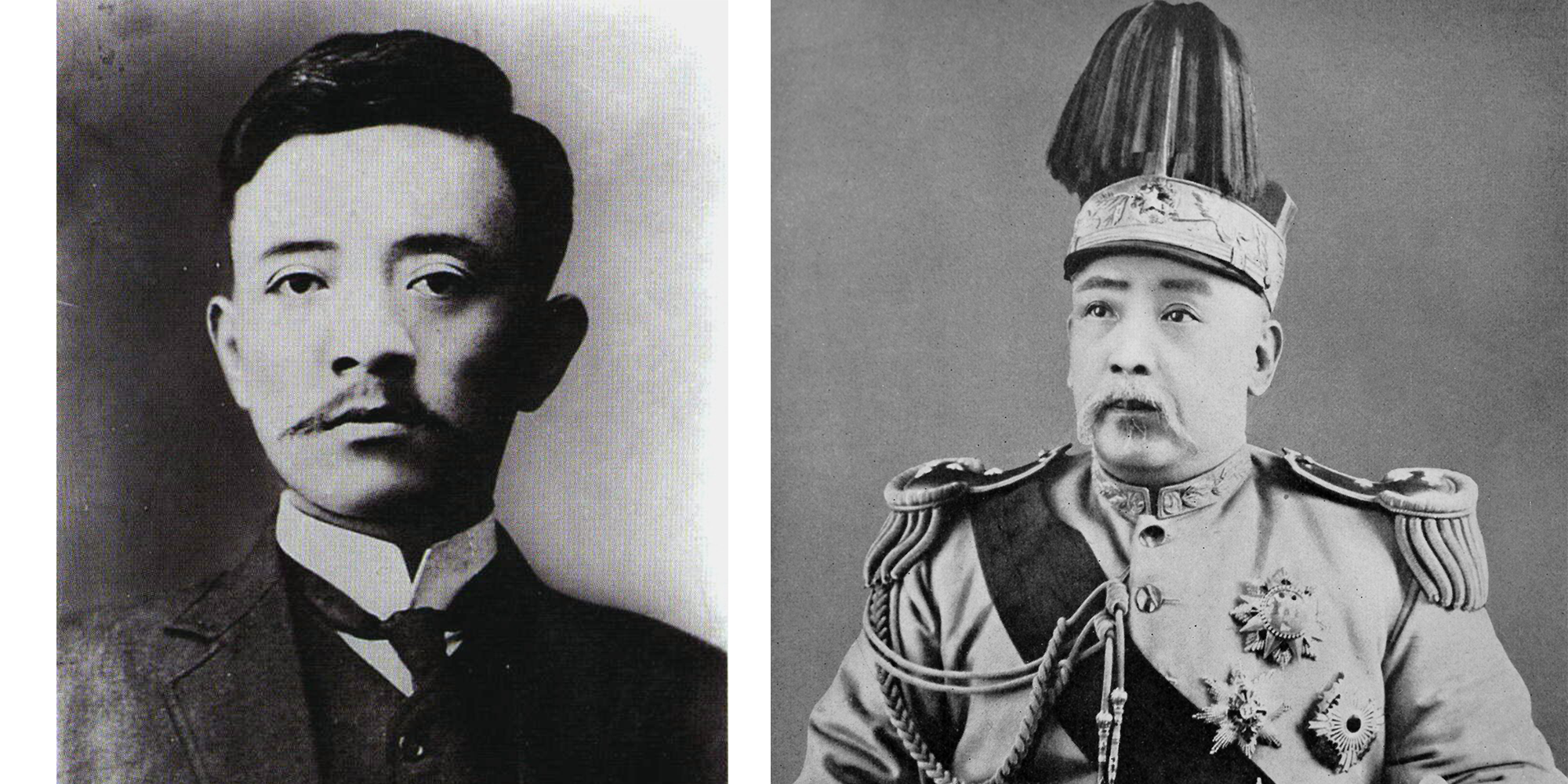
This is the transcript of episode 25 of my podcast Reasoned Talk (议正言辞). Listen on Xiaoyuzhou or Apple Podcasts . The episode is in Chinese; this transcript has been translated into English.
November 12, 2026, marks the 160th anniversary of Sun Yat-sen’s birth. Of all the documents he signed, I think one of the most important was the 1912 Provisional Constitution of the Republic of China. It was China’s first constitution enacted in the name of the people, and it spanned the turbulent years from the Qing emperor’s abdication to the Northern Expedition. It embodied a brief democratic moment. As strongmen and populist currents came and went, its provisions were repeatedly overridden, and the document itself was set aside. Warlords and revolutionaries alike invoked it when it served their purposes. This episode looks back at what happened to that constitution.
The North–South Settlement and the Provisional Constitution
On October 10, 1911, the Wuchang Uprising broke out. Over the next two months, more than a dozen southern provinces declared independence in succession. In late December, provincial delegates met in Nanjing to form a provisional government. Meanwhile, Yuan Shikai, who commanded the Beiyang Army, used the crisis to sideline the Qing court and take effective control of its government in Beijing. The revolutionaries’ provisional government in Nanjing and Yuan’s Qing government in Beijing now faced each other across a north–south divide.
On January 1, 1912, Sun Yat-sen took office in Nanjing as provisional president. On January 28, his government established a provisional Senate to exercise legislative power. The Nanjing government had no means of unifying the country on its own, so it had to work with Yuan. The two sides eventually struck a bargain. Yuan would secure the Qing emperor’s abdication, convene a parliament, establish a republic, and abide by the forthcoming Provisional Constitution. In exchange, the revolutionaries would accept him as provisional president and agree to a series of concessions for the Qing imperial household.
The Qing emperor abdicated on February 12. The next day, Sun tendered his resignation to the Senate and recommended Yuan as his successor. Drafting the Provisional Constitution now became urgent for the Senate in Nanjing. Until then, the Nanjing government had used a presidential system resembling that of the United States, with a president and a legislature that were independent of each other and could check each other’s power. The arrangement was tolerable with Sun as president. He was the revolutionaries’ spiritual leader. With Yuan about to take office, the calculation changed. The revolutionaries distrusted him and feared that too much presidential power would endanger the republic. They replaced the presidential system with a responsible cabinet, whose approval would constrain the president’s exercise of executive power.
This was an open political strategy. The southerners wanted to check Yuan through legislation, and the Provisional Constitution grew out of that effort.
On March 8, 1912, the provisional Senate in Nanjing passed the Provisional Constitution on its third reading. Yuan was sworn in as provisional president in Beijing on March 10. Sun promulgated the document the following day. Why a Provisional Constitution, rather than simply the Constitution of the Republic of China? The legislature that drafted it had never been elected by the people. Its work could only be transitional. A formal constitution would have to wait for an elected legislature.
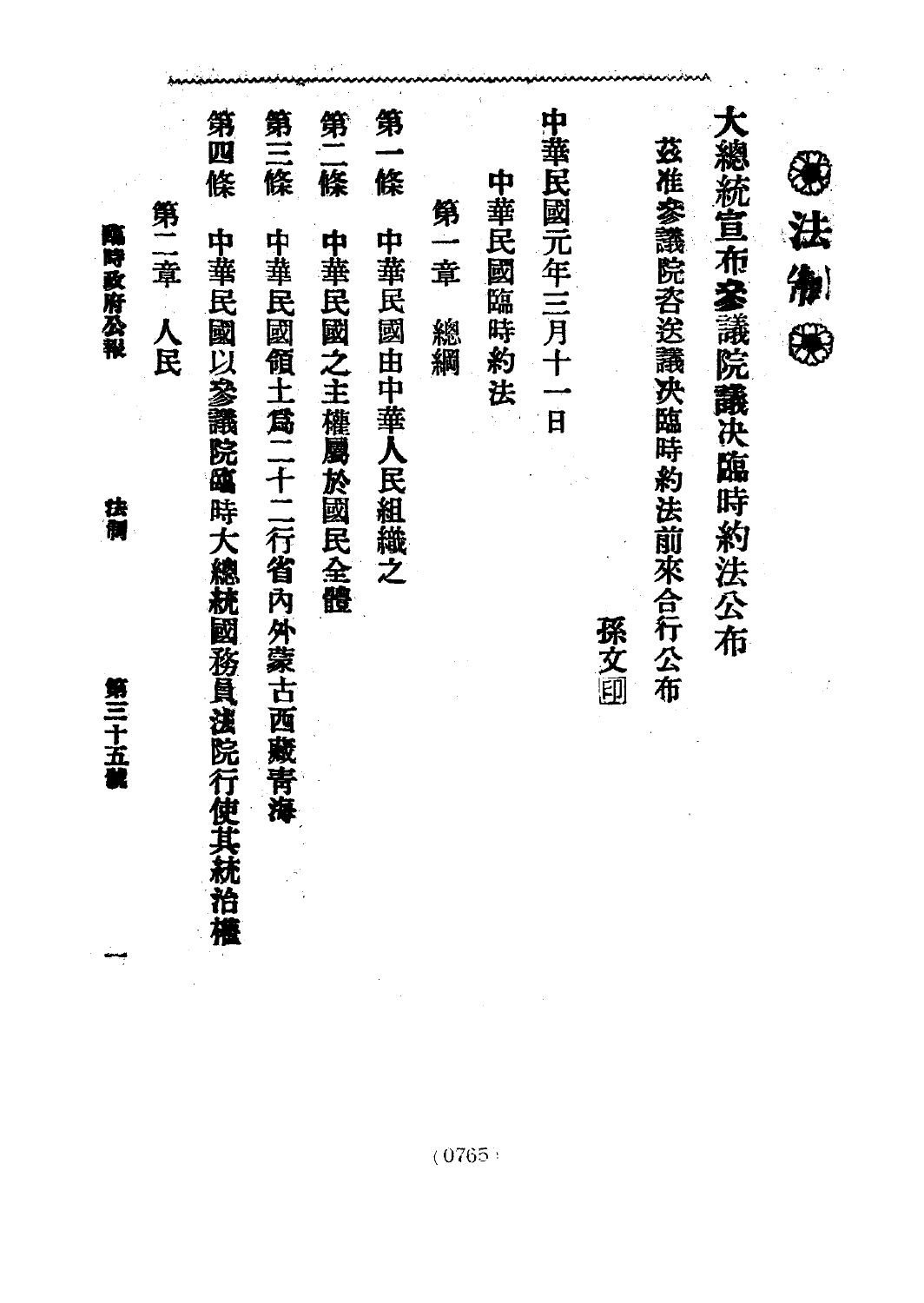
Article 2 of the Provisional Constitution declared that sovereignty in the Republic of China belonged to the whole people. That provision defined the nature of the new state from the outset. It marked a fundamental departure from the Outline of the Imperial Constitution, drawn up during the late Qing reforms, which declared the imperial line of the Great Qing immutable for all generations. Under that document, the state remained imperial. Under the Provisional Constitution, sovereignty belonged to the people, at least on paper.
Article 4 provided that the republic exercised its governing power through the Senate, the provisional president, the ministers of state, and the courts. The ministers of state comprised the premier and the heads of the ministries. Together they formed the cabinet. Under Article 34, the president needed the Senate’s consent to appoint ministers of state, ambassadors, and envoys. Article 45 required a minister of state to countersign bills the president introduced, laws he promulgated, and orders he issued. A presidential order thus needed a cabinet signature to take effect, and the president needed the Senate’s consent to appoint the people who could give him that signature.
The Provisional Constitution combined elements of the American presidential system with European parliamentary practice. It gave the president real executive power while allowing the legislature to check that power through the cabinet’s countersignature. The aim was to restrain the president, but the arrangement also made deadlock easy. If the president and the legislature could not agree, in principle he could no longer exercise his powers as usual. That difficulty helps explain the constitutional crises that followed.
Wang Zhixiang’s Reassignment and the Fall of Two Cabinets
Tang Shaoyi was the first premier under the Provisional Constitution. He had worked under Yuan before. After the Wuchang Uprising, Yuan became premier of the Qing government and Tang served as his minister of posts and communications. Tang led the northern delegation in the peace talks with the South. Perhaps because of his American education, he was sympathetic to democratic republicanism and inclined toward the revolutionaries during the talks. He helped bring about the emperor’s abdication and the unification of North and South. At one point Yuan withdrew his authority as negotiator. That experience made Tang acceptable to both camps. He was appointed the republic’s first premier on March 13, 1912.
Tang was well suited to a job that required the confidence of both sides. Yet even he could not keep the tensions between Yuan and the Revolutionary Alliance from bringing down the first cabinet.
The dispute began with the proposed appointment of Wang Zhixiang as military governor of Zhili. Wang came from Tongzhou, then part of Zhili province. He started his career as a Qing official and was serving as provincial treasurer of Guangxi when the Wuchang Uprising broke out. He backed Guangxi’s declaration of independence, and the revolutionaries chose him as deputy military governor. He then went to Nanjing and joined the southern revolutionary government. His roots in Zhili and his military experience made him the Revolutionary Alliance’s choice for military governor of Zhili. On March 20, 1912, Sun even sent Yuan a telegram urging him to appoint Wang.
Zhili had long been Yuan’s base, and he would not accept Wang as its military governor. Yuan first cited opposition from the military in Zhili, then proposed sending Wang to Nanjing to disband troops there. Under the Provisional Constitution, a presidential commission required a cabinet countersignature to take effect. Tang refused to sign Wang’s new commission. According to Liang Shiyi, then secretary-general of the presidential office, Yuan handed the unsigned commission directly to Wang. The historian Yan Quan found no record in that year’s Government Gazette of the reassignment being formally announced. Under the Provisional Constitution, an appointment without a countersignature had no legal effect. Tang resigned in mid-June after the dispute, and the republic’s first cabinet fell.
Yuan nominated Lu Zhengxiang to succeed Tang. Lu was a career diplomat with no party affiliation, and his reputation for staying above the dispute made him acceptable to both sides. But they could not agree on the other members of his cabinet. On July 18, the Senate rejected his proposed slate of ministers. Yuan at one point used soldiers and police to pressure legislators. The move provoked a backlash, and the Senate went so far as to propose Lu’s impeachment. Under pressure, he resigned. The second cabinet lasted less than three months.
The fall of two successive cabinets exposed differences that the North and South could not reconcile. In that political climate, any cabinet that tried to stay above the conflict between the president and the Senate was unlikely to survive. The struggle over appointments foreshadowed a sharper confrontation.
The Parliamentary Election and the Assassination of Song Jiaoren
Yuan controlled the Beiyang Army. When he openly breached the Provisional Constitution, the Revolutionary Alliance had no way to enforce it against him. Its leaders turned instead to building a party and winning parliamentary elections. On August 25, 1912, Song Jiaoren brought the alliance and several other revolutionary parties together to form the Nationalist Party, the Kuomintang.
Song had been a revolutionary from a young age. He helped Huang Xing and others found the China Revival Society in 1904 and later took part in forming the Revolutionary Alliance. On January 1, 1912, he took office as head of the Legislative Bureau in the Nanjing provisional government. On April 27, he became minister of agriculture and forestry in Tang Shaoyi’s cabinet. After that cabinet fell, Song formed the Kuomintang and ran its affairs as acting chairman.
The republic held its first parliamentary election from December 1912 to February 1913. Song traveled across the country to organize the campaign. When the results were announced in March, the Kuomintang held 392 of the 870 seats in the two houses, making it the largest party in parliament. Song hoped to use that position to form a responsible cabinet led by the Kuomintang. His party did not command an army, but through lawful parliamentary procedures it could gradually gain control of the central government’s executive branch.
Then came the assassination that shocked the country. On March 20, 1913, Song was at the Shanghai–Nanjing Railway station in Shanghai, about to catch a train to Beijing. As he queued to have his ticket checked, a gunman shot him from behind. Song died of his wounds two days later, on March 22. Before he died, he asked Huang Xing to draft a telegram to Yuan, urging him to “act with sincerity and fairness, do all you can to protect the people’s rights, and enable parliament to establish a constitution that will endure. If you do that, even in death I shall be as though still alive.”
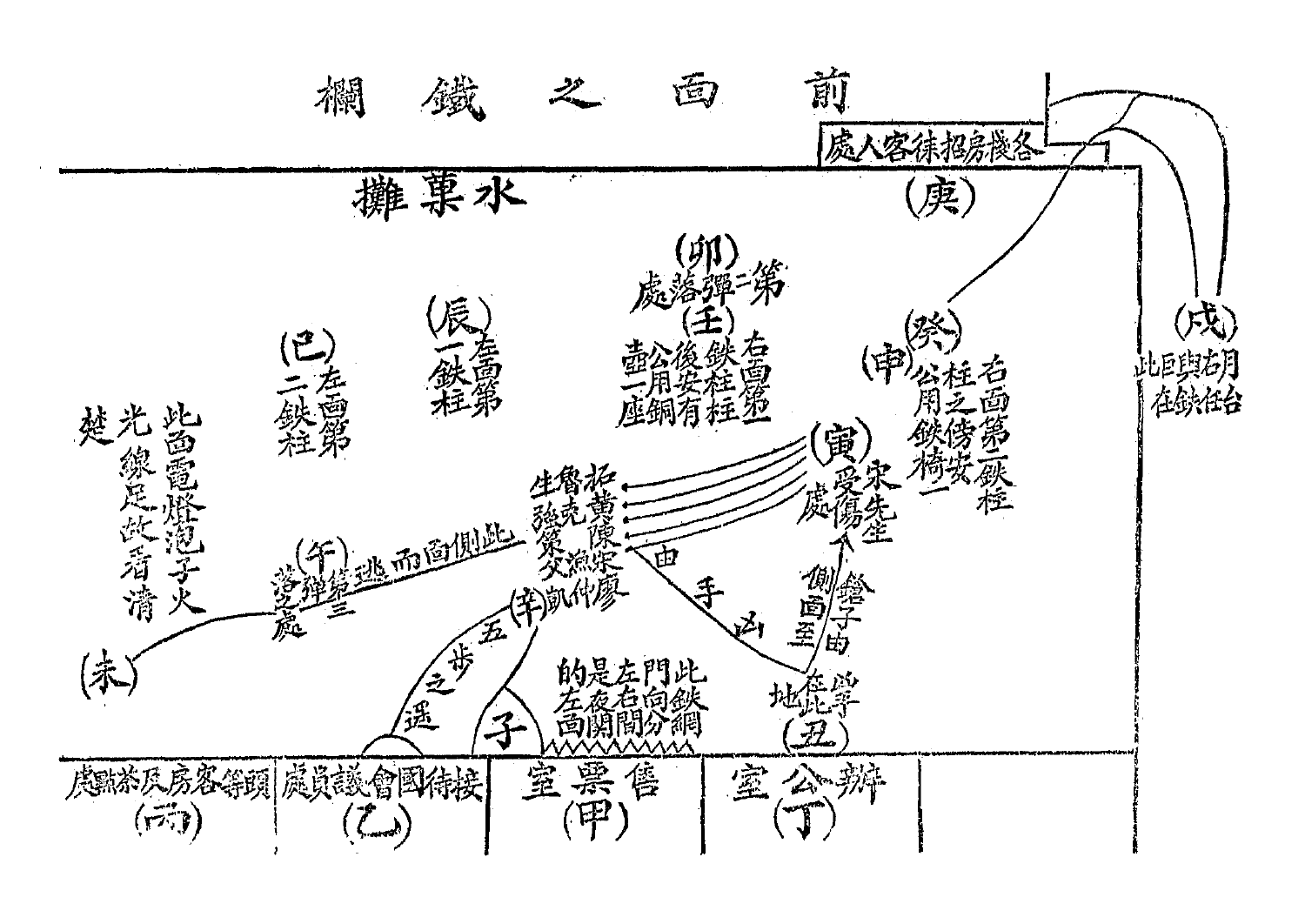
Events took a different course. After Song’s death, outrage spread through Shanghai, and the police quickly identified the killer. A Green Gang member named Ying Guixin had helped plan the assassination. Ying had acted at the urging of Hong Shuzu, a secretary in the Ministry of the Interior, and had connections to Premier Zhao Bingjun. Zhao and Hong were both Yuan’s men, so the Kuomintang quickly blamed Yuan. Who ultimately ordered the assassination remains unresolved. The evidence leads as far as Hong, with too little to establish the responsibility of Zhao or Yuan. It is unclear whether Hong acted on his own or on instructions from Zhao or even Yuan.
The assassination intensified the north–south conflict. Within the Kuomintang, the prevailing view was that Yuan had ordered it. The party divided over how to respond. Sun and his supporters believed that ordinary political means could no longer restrain Yuan. They called for a Second Revolution to overthrow the Beijing government by force. Huang and his supporters opposed taking up arms and wanted to pursue the case through the courts and parliament first.
The judicial proceedings moved slowly. On May 1, a little over a month after the shooting, Zhao offered his resignation. He was granted leave, and Duan Qirui took over as acting premier. Zhao refused to answer questions from the judicial authorities. Hong fled to Qingdao, then under German control, where extradition proved difficult. He was arrested in Shanghai four years later, in 1917. After proceedings in several courts, Hong was sentenced to death in March 1919.
The case showed how little the courts and parliament could do to resolve the conflicts facing China at the time. The dispute over the Reorganization Loan and the removal of three provincial military governors soon brought the republic, barely a year old, to the brink of civil war.
The Reorganization Loan and the Second Revolution
The first parliament opened on April 8, 1913. On April 26, Yuan’s government bypassed parliament and signed a £25 million loan agreement with a banking consortium from five countries. This became known as the Reorganization Loan. Article 19, paragraph 4, of the Provisional Constitution gave the legislature authority over public borrowing and contracts that imposed a burden on the treasury. Yuan had no authority to decide the matter on his own. By raising the loan without parliamentary approval, he openly breached the Provisional Constitution again.
Opposition to the loan came from Kuomintang legislators and from three provincial military governors who also helped plan resistance to Yuan. They were Li Liejun in Jiangxi, Hu Hanmin in Guangdong, and Bai Wenwei in Anhui. Yuan was acutely sensitive to any move involving provincial troops. He sent forces south and issued presidential orders removing all three men. Article 34 of the Provisional Constitution gave the president authority to appoint and remove civil and military officials. The removal of provincial military governors did not require parliamentary consent. By then the north–south conflict was out in the open, and the dismissals helped set off the civil war.
The ensuing civil war, which the Kuomintang called the Second Revolution, grew out of that escalation. Both sides were already mobilizing, so it is hard to say that either side alone started the fighting. Once war broke out, the constitutional order built around the Provisional Constitution quickly fell apart.
The two sides were unevenly matched. The fighting lasted just over two months, from early July to mid-September, and ended in the Kuomintang’s defeat. Sun, Huang, and others fled to Japan. On paper, the Provisional Constitution remained in force. The first parliament was still functioning and drafting the republic’s first formal constitution. Some Kuomintang legislators had opposed taking up arms against Yuan. After the war, however, Yuan was no longer prepared to tolerate an opposition party.
The Temple of Heaven Draft and Yuan’s Constitution
Under the Provisional Constitution, Yuan was still provisional president. To become president in his own right, he needed to be elected by parliament. The election took place in Beijing on October 6, 1913. Yuan sent several thousand people to surround the venue. Calling themselves a “Citizens’ Corps,” they told legislators they could not leave until they elected him. Under that pressure, parliament elected Yuan as the first regular president after three rounds of voting. By then the Provisional Constitution had little practical force, and parliament had become a rubber stamp.
Parliament’s constitutional drafting committee then completed the third reading of a draft Constitution of the Republic of China, building on the Provisional Constitution. The committee met in the Hall of Prayer for Good Harvests at the Temple of Heaven, giving the text its familiar name, the Temple of Heaven Draft. It largely retained the responsible cabinet and went further in defining the powers of parliament and the cabinet. Four days after the third reading, Yuan ordered the Kuomintang dissolved. He said the Beijing security authorities had uncovered secret telegrams exchanged during the civil war between Kuomintang legislators and “rebels” such as Li Liejun and Huang Xing.
More than 430 legislators were stripped of their seats after the party’s dissolution. Parliament could no longer muster a quorum. It remained legally in existence for a time, but it could no longer perform its duties or even serve as a rubber stamp. On January 10, 1914, Yuan formally dissolved parliament. The Provisional Constitution gave him no such power. At that point, the restriction counted for little.
On May 1, 1914, a constitutional conference organized by Yuan adopted a new Constitutional Compact of the Republic of China. It overturned the previous system. Article 14 made the president head of state and vested all governing power in him. Article 39 made the president head of the executive and provided for a secretary of state to assist him. The secretary answered to the president, had no responsibility to parliament, and held no countersignature power with which to restrain the president. Yuan controlled the entire process, which is why the document is often called Yuan’s Constitutional Compact.
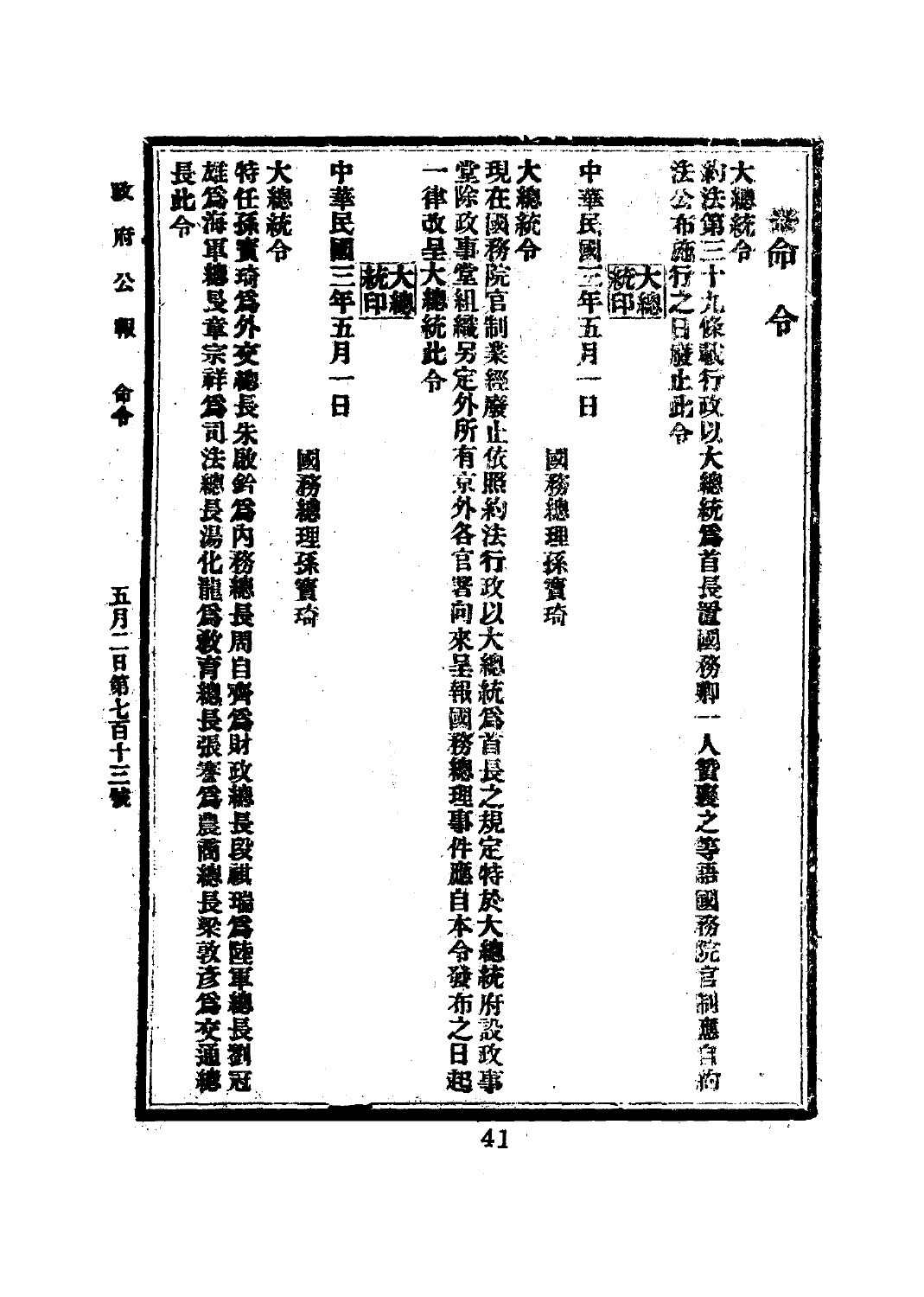
Yuan’s compact did not follow the constitution-making procedure set out in the Provisional Constitution. That procedure called for an elected parliament to draw up a formal constitution. The Temple of Heaven Draft was prepared through that process, but it never became a formal constitution. Parliament’s inability to convene gave Yuan no lawful authority to appoint a different body to draw up a constitutional document. By then, legality itself carried little weight.
From Defending the Constitution to Political Tutelage
The constitutional struggles continued after Yuan’s compact was promulgated. Yuan died in 1916 after his failed attempt to restore the monarchy, and China descended into warlord rule. Li Yuanhong’s government briefly restored the Provisional Constitution and recalled the original parliament. More crises followed, including the struggle between the president and the cabinet, Zhang Xun’s restoration of the Qing, and the Constitutional Protection Movement. By then the Provisional Constitution served chiefly as a means for rival groups to claim legitimacy.
Even the Kuomintang eventually abandoned the Provisional Constitution and the constitutional approach it represented. After the second Constitutional Protection Movement failed in 1922, Sun moved away from trying to restore the old charter. He once said publicly, “So long as these men remain, the constitution will have no effect. It might as well be waste paper. What good does that do for the people’s rights?” In his view, he had tried repeatedly to build a republic through a constitution and a parliament. Those methods could achieve little while the warlords still commanded the troops.
In 1924, Sun reorganized the Kuomintang in Guangzhou. Drawing on the Soviet Russian model of party organization, he emphasized party discipline, political mobilization, and military organization. On April 12 he issued the Fundamentals of National Reconstruction, setting out three stages: military rule, political tutelage, and constitutional government. Sun died in 1925. The subsequent Organic Law of the National Government formally established the Kuomintang’s authority to guide the government. In 1928, the party completed the Northern Expedition, nominally reunified the country, and adopted the Outline of Political Tutelage, which strengthened party leadership over the government. The Kuomintang had now left the constitutional model of 1912 behind.
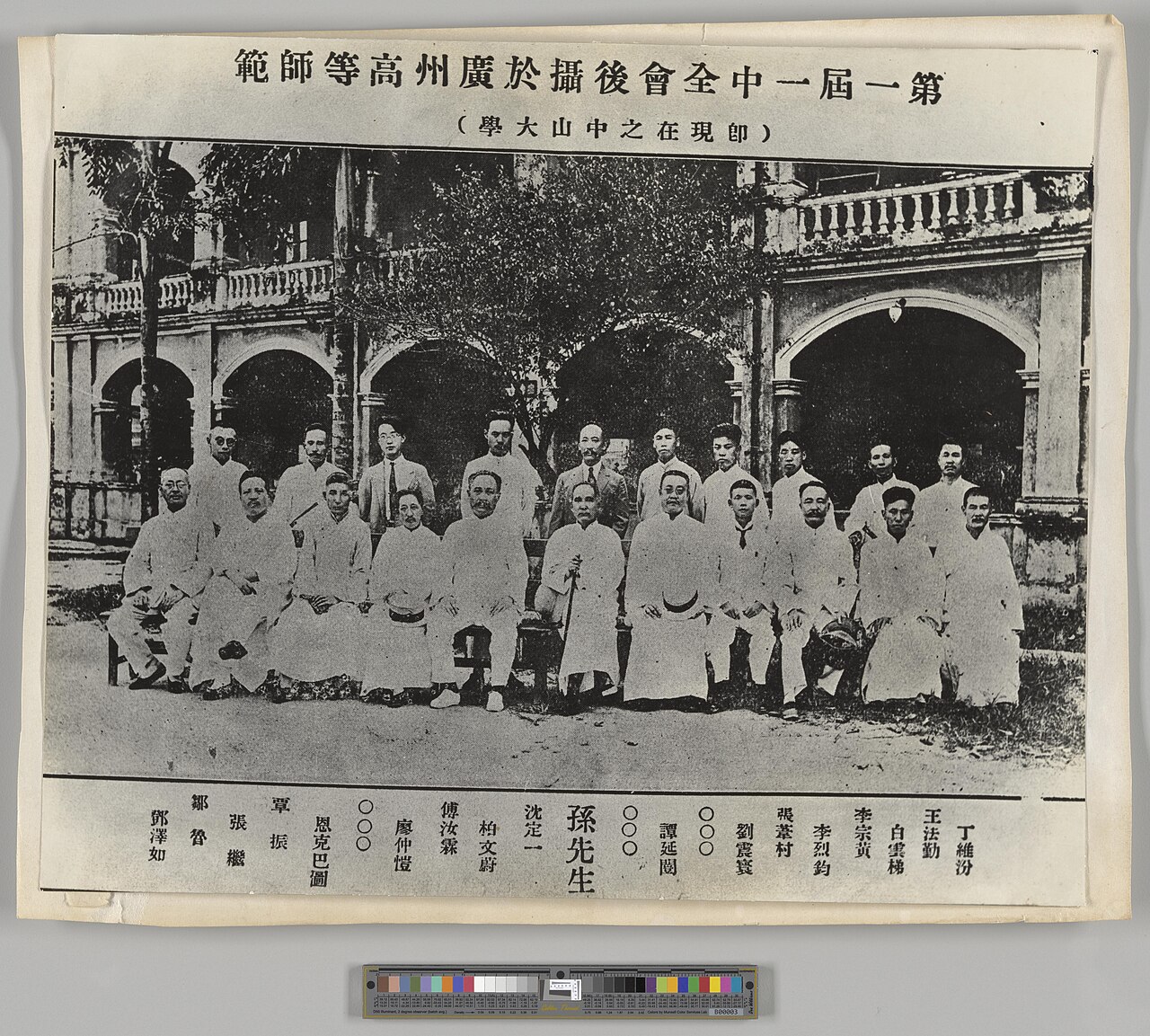

We have followed the Provisional Constitution from its hopeful beginnings through its hollowing out and eventual abandonment. The history that follows has little to do with the document. You may come away thinking, as Sun did, that peaceful political work is futile against overwhelming military force. But “political power grows out of the barrel of a gun” describes a historical reality. It should never become a permanent rule for society. The people who drafted the Provisional Constitution, and people such as Song Jiaoren who died at gunpoint, hoped for a society that took law and reason seriously, one that could do without the gun. Their efforts failed, but that is no reason to dismiss them. Across the long course of history, some people will keep trying, and some will succeed.
ShowNotes
Timeline
- October 1911 to March 1912 — From the Wuchang Uprising to the north–south settlement. The Qing emperor abdicated, and Sun recommended Yuan as his successor. On March 8, the provisional Senate in Nanjing adopted the Provisional Constitution. Yuan took office as provisional president in Beijing on March 10. Sun promulgated the document in Nanjing the following day.
- 1912 — Two successive cabinets run into trouble. Tang and Yuan disputed Wang Zhixiang’s appointment. Lu succeeded Tang, but the provisional Senate rejected his proposed cabinet.
- Late 1912 to March 1913 — Parliamentary elections and the assassination of Song Jiaoren. The Kuomintang won 392 seats across both houses and became the largest party. Song sought to form a party cabinet. He was shot at the Shanghai–Nanjing Railway station in Shanghai on March 20 and died on March 22. The party split over how to pursue the case and whether to take up arms.
- April to September 1913 — The Reorganization Loan and the Second Revolution. Without prior approval from the new parliament, the Beijing government agreed to borrow £25 million from a five-country banking consortium. The military governors of Jiangxi, Guangdong, and Anhui were removed in succession. North and South went to war, and Yuan’s opponents lost.
- October 1913 to May 1914 — Parliament is paralyzed and the old constitution is repealed. Yuan was elected president. Parliament’s drafting committee completed the Temple of Heaven Draft. The Kuomintang was then dissolved, and its legislators lost their seats. Yuan ordered parliament dissolved in January 1914 and promulgated the new Constitutional Compact in May.
- 1916 to 1922 — The constitution is restored and Sun launches the Constitutional Protection Movement. After Yuan died, Li Yuanhong restored the Provisional Constitution and recalled the old parliament. Beijing then saw a struggle between the president and the cabinet and Zhang Xun’s attempt to restore the Qing. Sun launched the Constitutional Protection Movement in the South. When the second movement failed, he increasingly favored building the state in stages.
- 1924 to 1928 — From the Fundamentals of National Reconstruction to the Outline of Political Tutelage. Sun set out three stages in the Fundamentals: military rule, political tutelage, and constitutional government. After his death, the Kuomintang passed the Organic Law of the National Government and the Outline of Political Tutelage, establishing its role in directing and supervising the government.
Key Figures
- Sun Yat-sen. Promulgated the Provisional Constitution in Nanjing in 1912 and later launched the Constitutional Protection Movement in Guangzhou. In 1924, his Fundamentals of National Reconstruction laid out the three stages of military rule, political tutelage, and constitutional government.
- Yuan Shikai. Commanded the Beiyang Army in the late Qing and went on to become provisional president and then president of the republic. In 1914, he dissolved parliament and promulgated a new charter to replace the Provisional Constitution.
- Tang Shaoyi. The North’s plenipotentiary in the peace talks and the republic’s first premier. He refused to countersign Wang Zhixiang’s new commission and subsequently resigned.
- Wang Zhixiang. A former deputy military governor of Guangxi who was proposed as military governor of Zhili. Yuan’s plan to send him to Nanjing to deal with troop demobilization triggered a dispute over countersignature between the president and the premier.
- Lu Zhengxiang. The career diplomat who succeeded Tang as premier. The provisional Senate rejected his cabinet nominations, and he faced impeachment while in office.
- Song Jiaoren. Acting chairman of the Kuomintang. He led its first parliamentary campaign and hoped to use its strength in parliament to form a party cabinet. He was assassinated at the Shanghai–Nanjing Railway station in 1913.
- Huang Xing. A leader of the Revolutionary Alliance. After the assassination, he urged the party to pursue the case first through the courts and parliament. He later joined the campaign against Yuan.
- Ying Guixin, Hong Shuzu, and Zhao Bingjun. Ying helped plan the assassination. Hong, a secretary at the Ministry of the Interior, was later sentenced to death for instigating the murder. Zhao, the sitting premier, did not appear when summoned by prosecutors. Whether he or Yuan authorized the murder remains disputed.
- Li Liejun, Hu Hanmin, and Bai Wenwei. The military governors of Jiangxi, Guangdong, and Anhui, respectively, whom Yuan dismissed in 1913. Li subsequently declared his opposition to Yuan at Hukou in Jiangxi, marking the outbreak of the Second Revolution.
- Li Yuanhong. Succeeded Yuan as president after his death. In 1916 he restored the Provisional Constitution and recalled the first parliament.
Legal Documents
- Provisional Constitution of the Republic of China (1912). Article 2 vested sovereignty in the whole people. Article 19, paragraph 4, covered public borrowing and obligations of the treasury. Articles 34 and 45 dealt with ministerial appointments and countersignature. Article 54 addressed the charter’s force before a formal constitution took effect. Transcription by the Museum of Dr. Sun Yat-sen
- Temple of Heaven Draft. Articles 81 and 82 covered ministerial responsibility to the House of Representatives, countersignature of presidential orders, and the consequences of a vote of no confidence. Full draft
- Constitutional Compact of the Republic of China (1914). Article 14 vested governing power in the president. Article 39 provided for a secretary of state to assist him. Article 68 repealed the 1912 Provisional Constitution. Government Gazette transcription
- Fundamentals of National Reconstruction. Article 5 specified the periods of military rule, political tutelage, and constitutional government. The following provisions described county self-government and the conditions for moving to constitutional government. Full text
- Organic Law of the National Government of the Republic of China (1925). Article 1 placed the National Government under the direction and supervision of the Kuomintang. Full text
- Outline of Political Tutelage. Articles 1 and 2 authorized the Kuomintang’s National Congress to stand in for the National Assembly and lead the people in exercising political power during tutelage. The party’s Central Executive Committee acted when the congress was not in session. Articles 4 and 5 addressed the government’s governing authority and the party’s political council’s supervision of major state affairs. Full text
Further Reading
- Zhang Maolin, “A Misapplied Responsible Cabinet System: Revisiting the Making of the Provisional Constitution of the Republic of China,” Studies in Legal History, no. 9 (2006). Bibliographic record and abstract
- Yan Quan, “Wang Zhixiang’s Reassignment in the Early Republic,” Republican Archives, no. 2 (2013). Full article
- Chang Yu-fa, “Parliament in the Early Republic, 1912–1913,” on the first parliament, cabinet appointments, and the Reorganization Loan. Full article
- Shang Xiaoming, Reexamining the Song Jiaoren Case, on the evidence and the dispute over who ordered the killing. Peking University lecture summary
- Yu Ming, “Forms of Government, the Nature of the State, and Nation-Building: Rethinking Constitution-Making in the First Decade of the Republic,” Peking University Law Journal, no. 1 (2012). Full article